
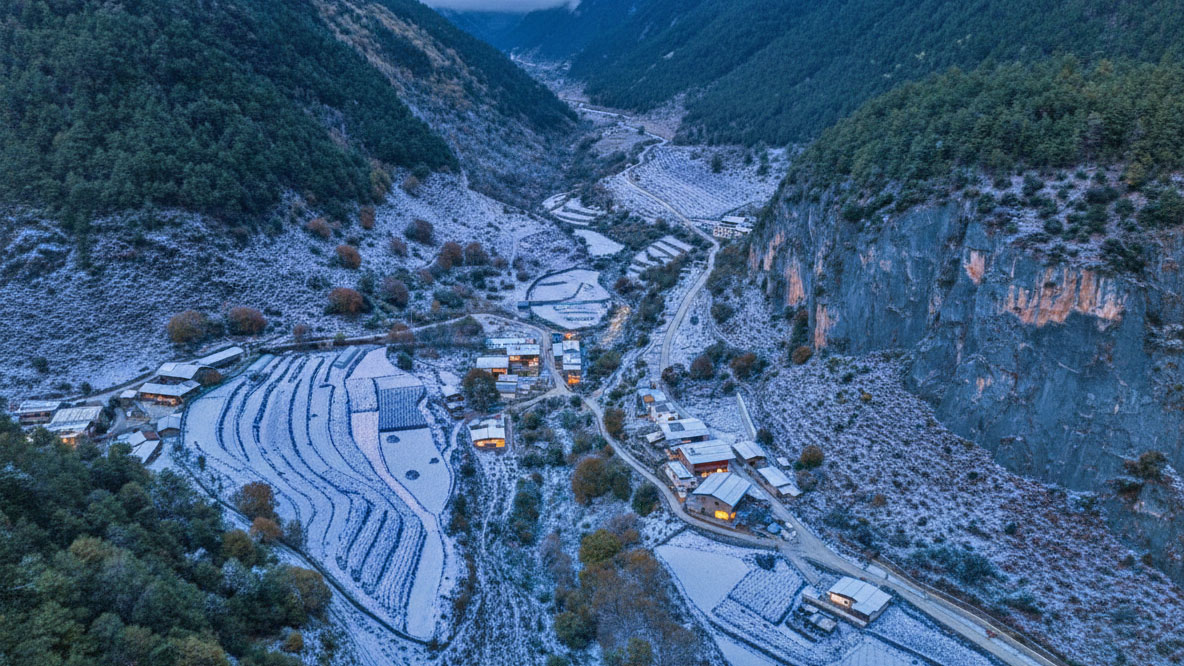
尼汝村位于世界自然遗产“三江并流”区域的核心腹地,是一个深藏于横断山脉褶皱中的藏族古村落,被联合国专家誉为”世界第一村”。作为香格里拉深处的秘境,尼汝北连稻城亚丁的圣洁雪山南接普达措国家公园的湖光山色东至丽江宁蒗泸沽湖的神秘风情串联起雪山、森林、湖泊、草甸、牧场、溪流与古村。阿若康巴·尼汝庄园作为这片秘境中心的“尼仓”希望为每一位徒步者打造出理想的身心度假空间,无需刻意寻觅抬眼便是大自然中最原始的壮丽闭目便能感受内心最纯粹的宁静。在的绝美画卷里,尼汝宛如一颗隐匿的明珠。阿若康巴・尼汝庄园,就静卧于这片秘境的中心,它曾承载着过往的故事,如今迎来建筑改造的新生契机。
Niru Village, nestled in the heart of the “Three Parallel Rivers” World Natural Heritage site, is an ancient Tibetan village hidden deep within the folds of the Hengduan Mountains. It has been hailed as the “World’s Premier Village” by United Nations experts. As a hidden gem deep in Shangri-La, Niru links the sacred snow-capped mountains of Daocheng Yading to the scenic lakes and mountains of Pudacuo National Park, and extends east to the mysterious ambiance of Lugu Lake in Ninglang, Lijiang. The ARRO KHANPA – NYEZUR, situated at the heart of this hidden paradise, aspires to create an ideal space for every hiker to relax both physically and mentally. Without seeking, one can behold the most pristine grandeur of nature at a glance, and close their eyes to experience the purest tranquility within. In this breathtaking tapestry, Niru resembles a hidden pearl.The ARRO KHANPA – NYEZUR, quietly nestled in the heart of this hidden paradise, once carried the stories of the past and now embraces a new opportunity for architectural transformation.
∇ 村子肌理,Village Texture © 扎西培楚
溯源:珍视原始底蕴
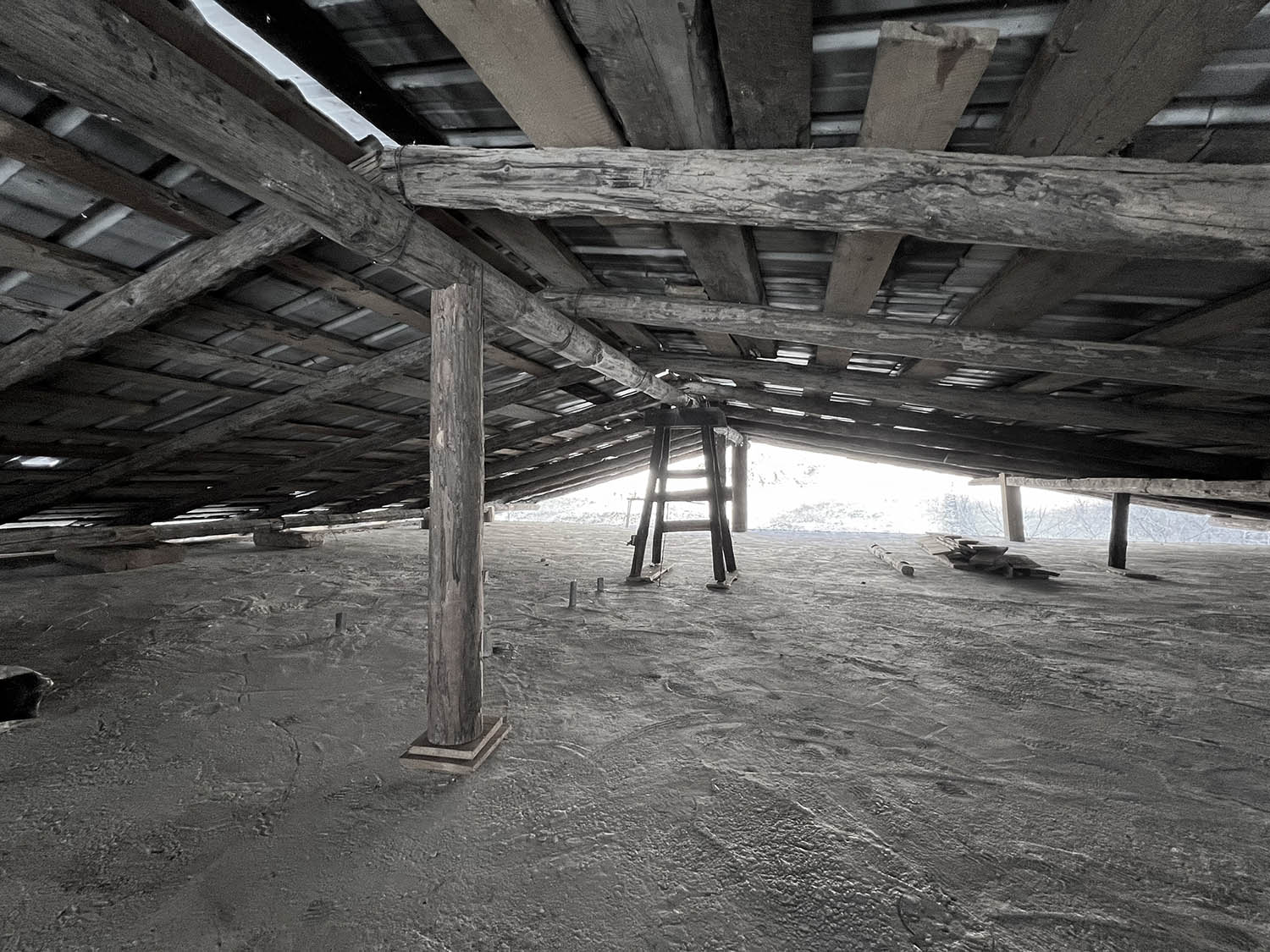
传统建筑是尼汝村适应自然、改造生活的智慧体现。以松木为骨、土石为为墙的民居,三层结构的民居首层与二层为夯土墙体围合木架而形成主体结构,三层为木质的“凳架”双坡屋顶结构,主要用于保护主体结构免受雨雪侵蚀及储存各类杂物,建筑兼具畜养、居住与储物功能,同时村民跟随季节在房屋、田地与高山牧场之间“逐时令而居”,这种半农半牧的方式恰似建筑与自然的默契,展现着当地与自然动态共生的生活生产智慧。
Traditional architecture in Niru Village embodies the wisdom of adapting to nature and transforming life. The residential houses, with pine as the framework and earth and stone as the walls, feature a three-story structure. The first and second floors are enclosed by rammed earth walls and wooden frames, forming the main structure. The third floor, with a wooden “stool frame” double-pitched roof structure, is primarily used to protect the main structure from rain and snow erosion and to store various miscellaneous items. The buildings serve multiple functions, including livestock breeding, living, and storage. Meanwhile, villagers follow the seasons, residing between houses, fields, and alpine pastures “according to the changing times.” This semi-agricultural and semi-pastoral lifestyle mirrors the harmony between architecture and nature, showcasing the local wisdom of dynamic symbiosis with nature in both life and production.
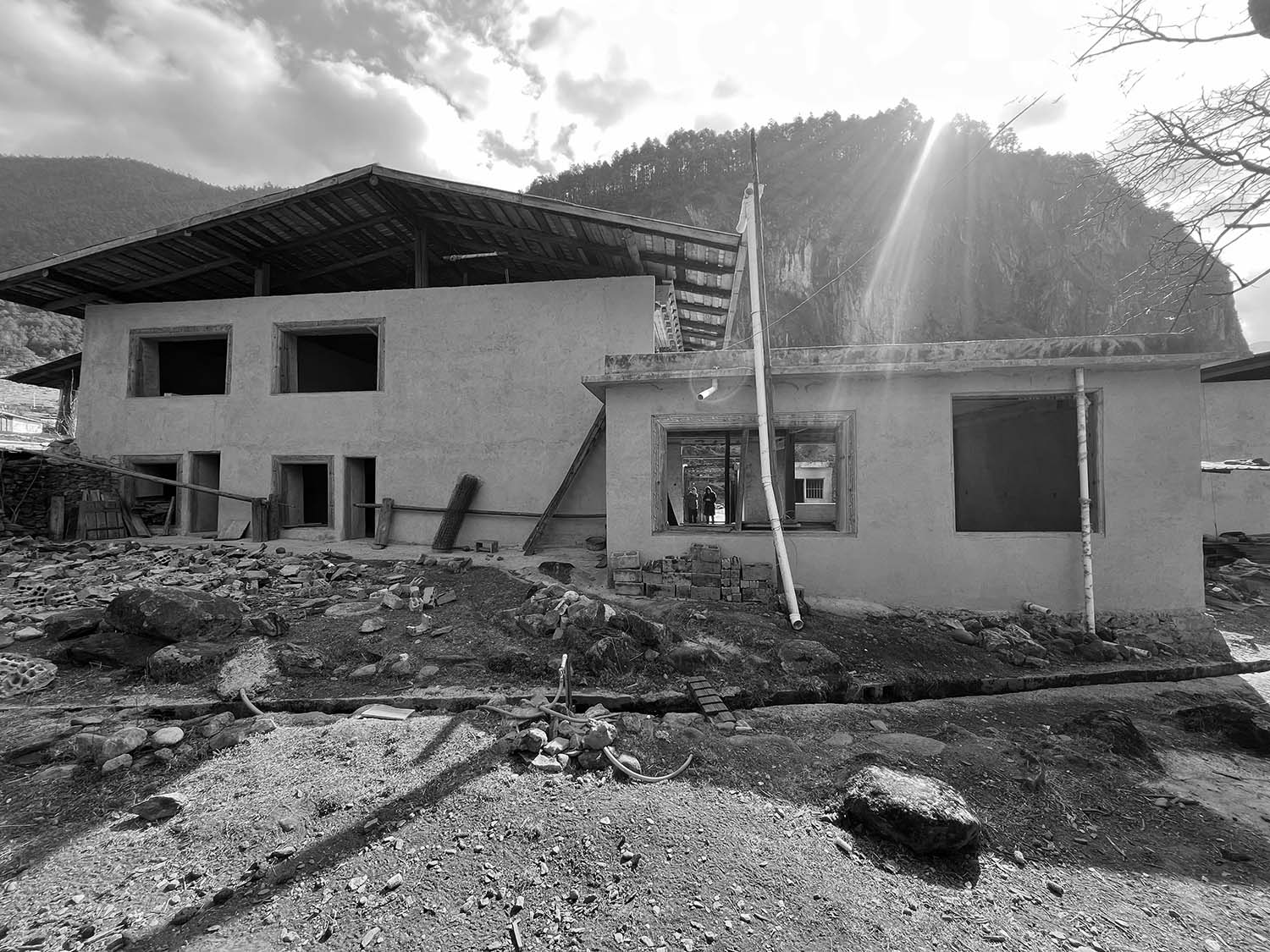
尼汝庄园的前身,是一座当地传统的民居建筑,拥有典型的传统结构形态,融合了当地传统与岁月痕迹。它的布局与构造,带着地域的独特印记,是当地居民生活智慧的结晶,也是尼汝历史文化的物质载体。在改造伊始,我们深入探寻其过往,研究建筑的历史脉络与文化意义,从传统建筑元素中提取精髓,比如当地特有的木构工艺、质朴的石砌技法,这些都将成为改造后新建筑独特气质的根基。
The predecessor of the ARRO KHANPA – NYEZUR was a traditional local residential building, featuring a typical traditional structural form that blends local traditions with the traces of time. Its layout and construction bear the unique imprint of the region, embodying the wisdom of local residents and serving as a material carrier of Niru’s historical and cultural heritage. At the beginning of the renovation, we delved into its past, studying the historical context and cultural significance of the building. We extracted the essence from traditional architectural elements, such as the unique local wood construction techniques and rustic stone masonry techniques, which will become the foundation of the unique character of the newly renovated building.
∇ 场地原状,Original condition © 扎西培楚
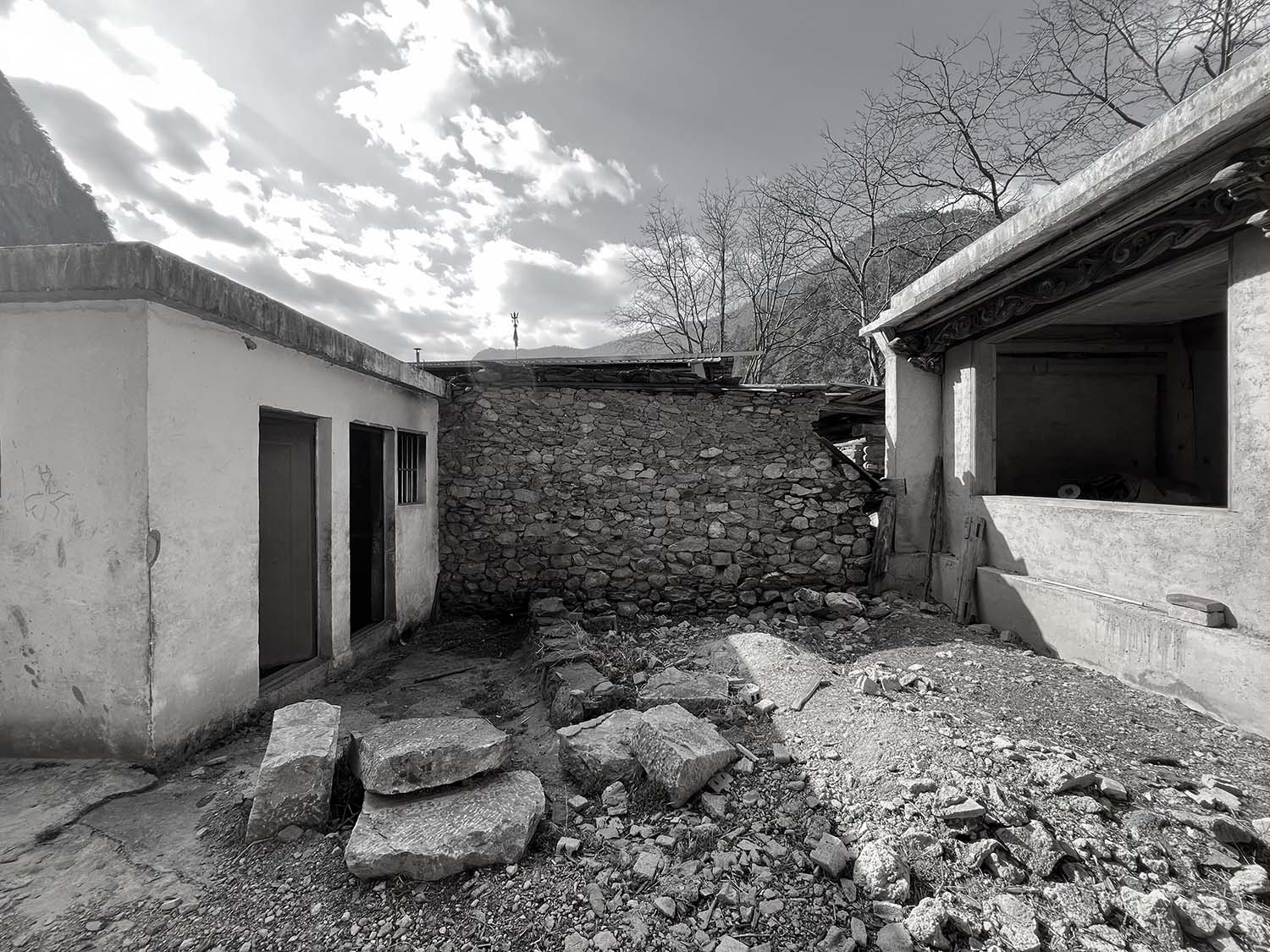
∇ 场地内坍塌的石砌围墙,The collapsed stone masonry wall within the site © 扎西培楚
∇ “凳架”双坡屋顶结构,Stool frame double-pitched roof structure © 扎西培楚
理念:生态与文化共融
尼汝的自然生态是其最为珍贵的财富。改造秉持生态共生理念,力求将建筑对环境的影响降至最低。选用当地废弃房屋拆解后的旧木材、石材,减少运输能耗与碳排放。在建筑布局上,依据场地的自然地形与风向,优化空间规划,提升自然通风与采光效果,降低能源消耗。同时,引入生态景观设计,利用本地植物打造庭院,营造与周边雪山、森林、溪流相呼应的生态小环境,让庄园成为自然的有机组成部分。
The natural ecology of Niru is its most precious treasure. The renovation adheres to the concept of ecological symbiosis, striving to minimize the impact of the building on the environment. Old wood and stone materials dismantled from local abandoned houses are selected to reduce transportation energy consumption and carbon emissions. In terms of building layout, based on the natural terrain and wind direction of the site, space planning is optimized to enhance natural ventilation and lighting effects, reducing energy consumption. At the same time, ecological landscape design is introduced, using local plants to create courtyards, creating an ecological micro-environment that echoes the surrounding snow mountains, forests, and streams, making the manor an organic part of nature.
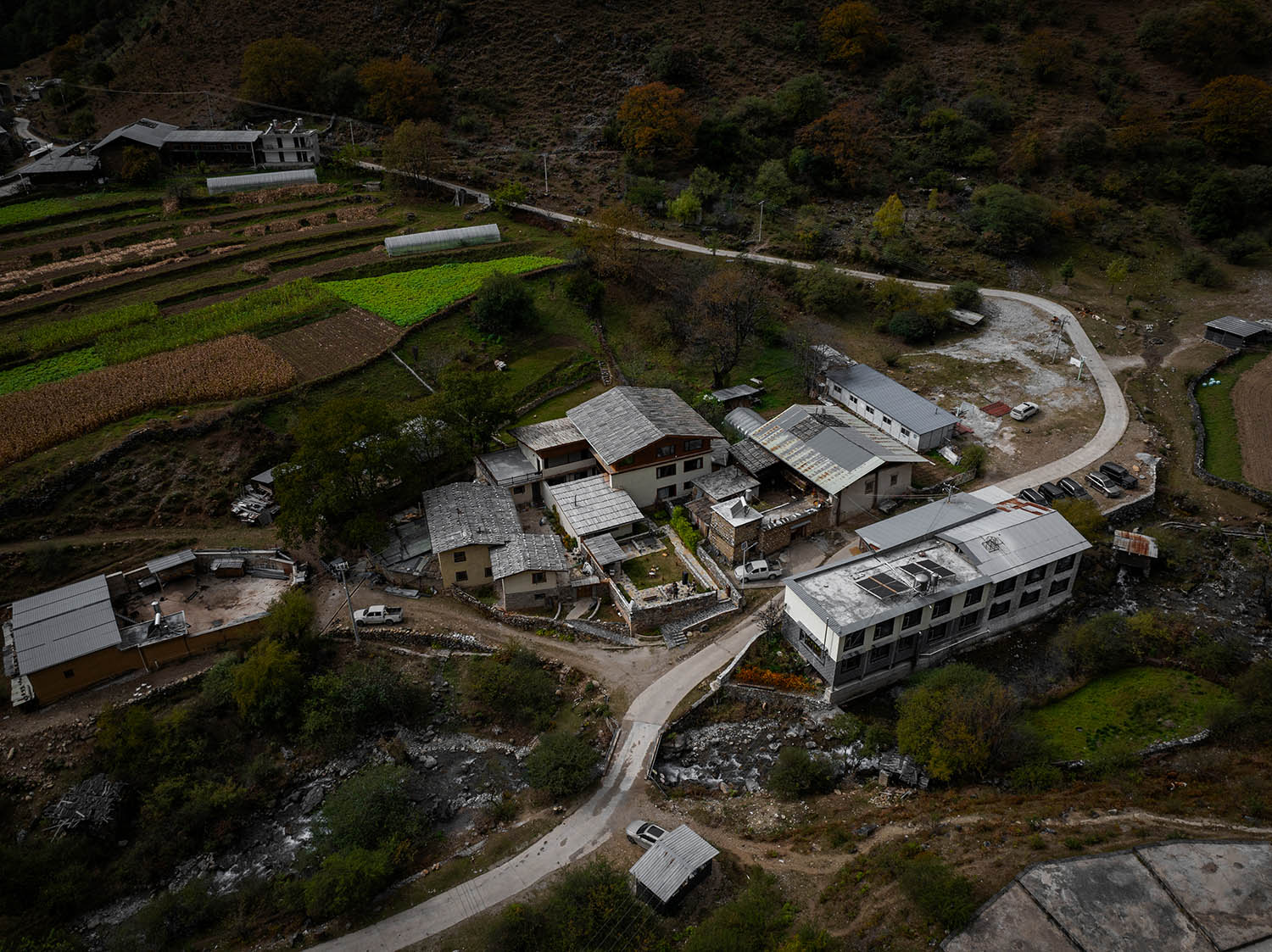
∇ 项目鸟瞰,Project Overview © 扎西培楚
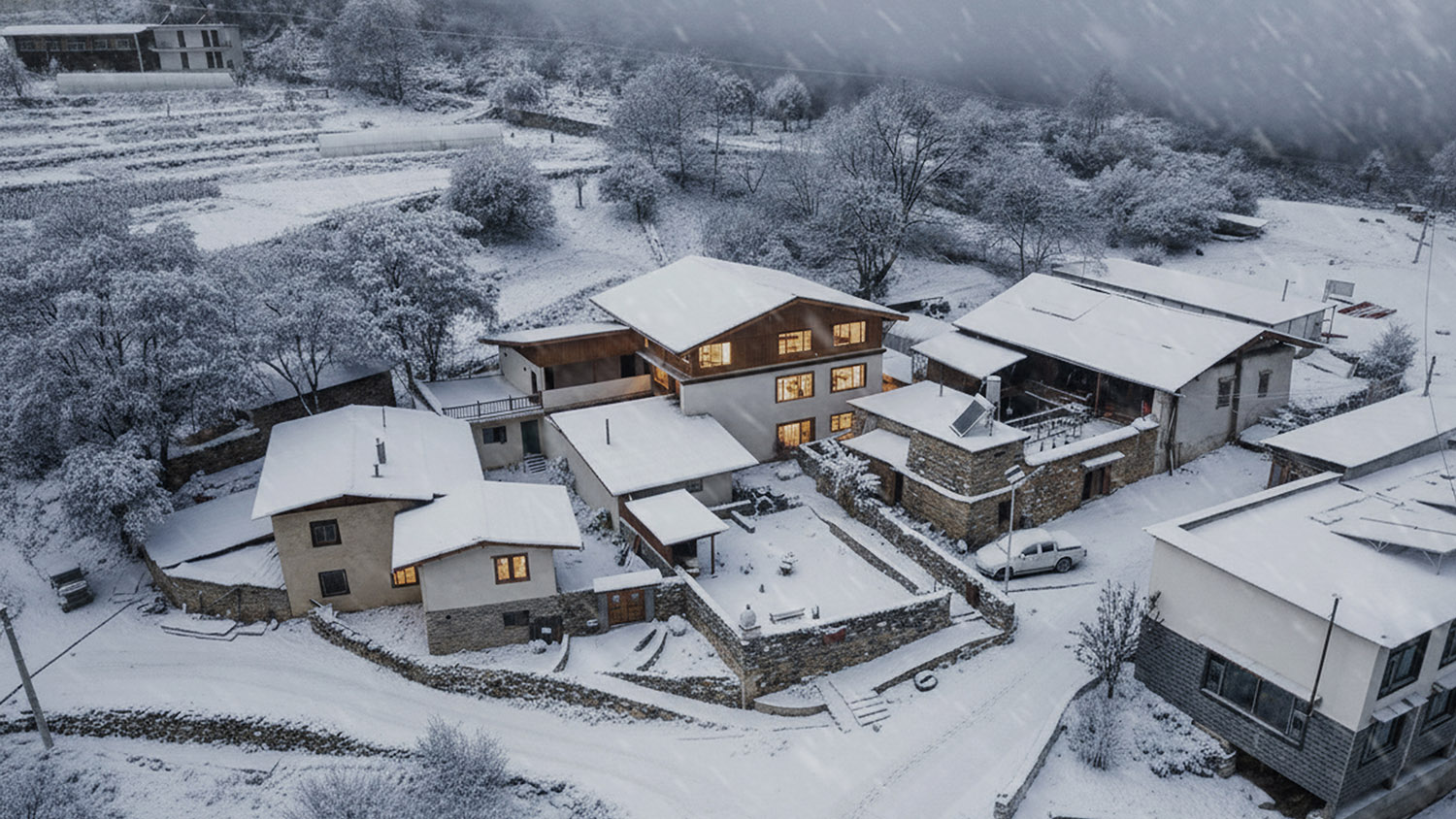
∇ 项目鸟瞰雪后,Aerial view of the project after snowfall © 扎西培楚
相关文章推荐




评论(0)