
01 愿景与统筹:高密度肌理下的技术集成与空间织补
Vision and Coordination: Technical Integration and Spatial Stitching within Dense Urban Fabric
三里屯北区的更新并非单纯的界面重塑,而是针对高密度城市存量空间的一次深度“缝合”。项目致力于将北区从原有的商圈边缘逆转为具备全球影响力的“目的地型”旗舰集群。作为本项目的“技术总牵头”,中国建研院(CABR)城乡规划院-城市与建筑设计分院团队凭借全过程管控优势,实现了从前期咨询、方案深化到施工图落地的完整技术闭环。在整合消防性能化论证、机电、绿建及BIM协同等多维度专项支持的基础上,CABR构建了“统筹设计与技术集成”的协作体系,精准调和了顶奢品牌的高标准叙事与复杂既有建筑的空间约束,从而在宏观尺度织补城市脉络,在微观层级缝合功能断层。
The renewal of Sanlitun North Area is not merely a reshaping of its interface, but a deep “suturing” of high-density urban existing space. The project is committed to transforming the North Area from the former periphery of the commercial district into a globally influential “destination”-oriented flagship cluster. As the “technical lead” of this project, the Urban-Rural Planning Institute – Urban and Architectural Design Branch of the China Academy of Building Research (CABR), leveraging itsadvantages in whole-process control, has achieved a complete technical loop from preliminary consulting and design development to construction drawing implementation. On the basis of integrating multi-dimensional specialized support such as fire performance-based design, MEP, green building, and BIM coordination, CABR established a collaborative system of “integrated design and technical integration,” precisely reconciling the high-standard narrative of top luxury brands with the spatial constraints of the complex existing building, thereby weaving the urban fabric at the macro scale and suturing functional gaps at the micro level.
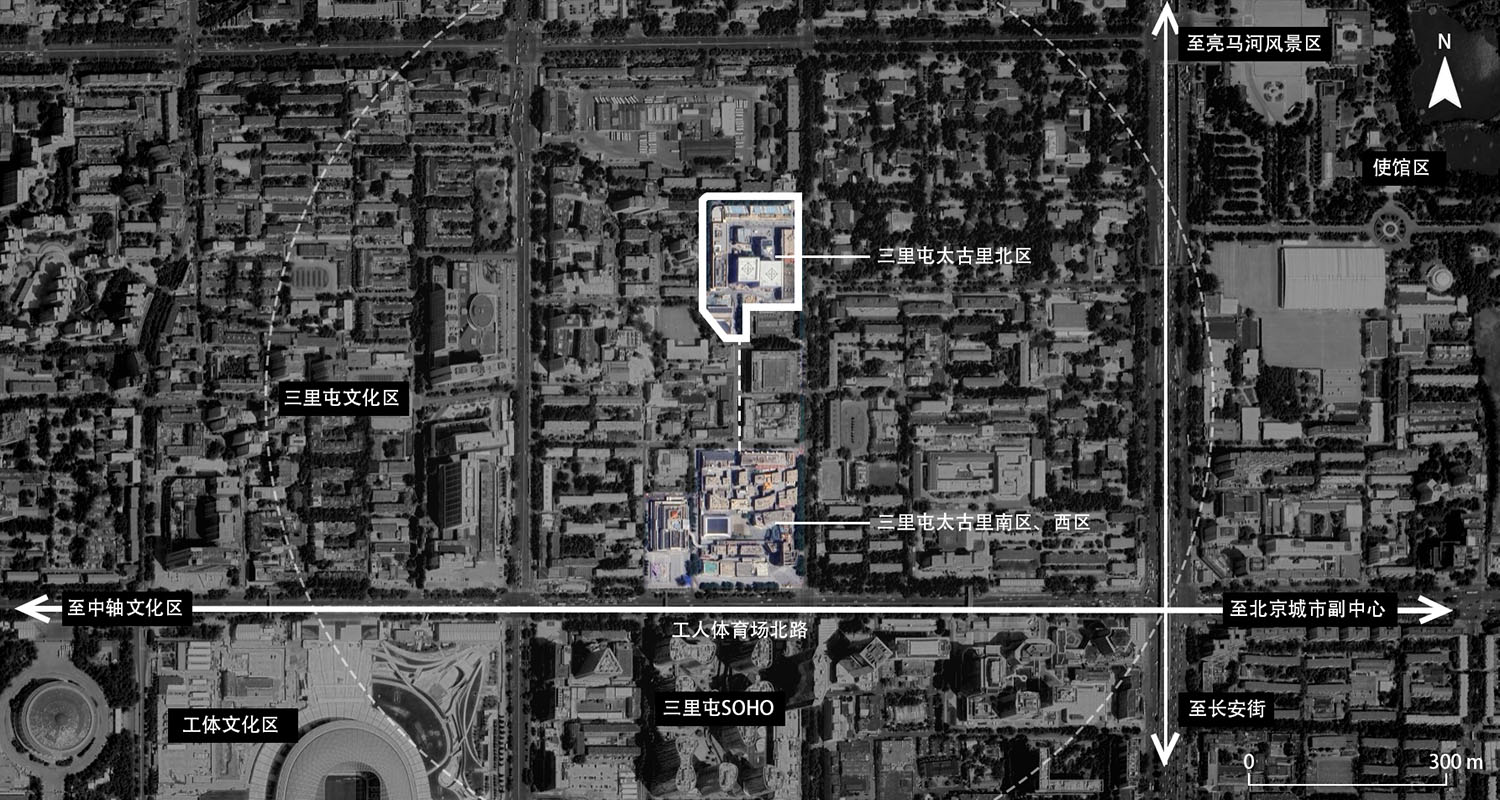
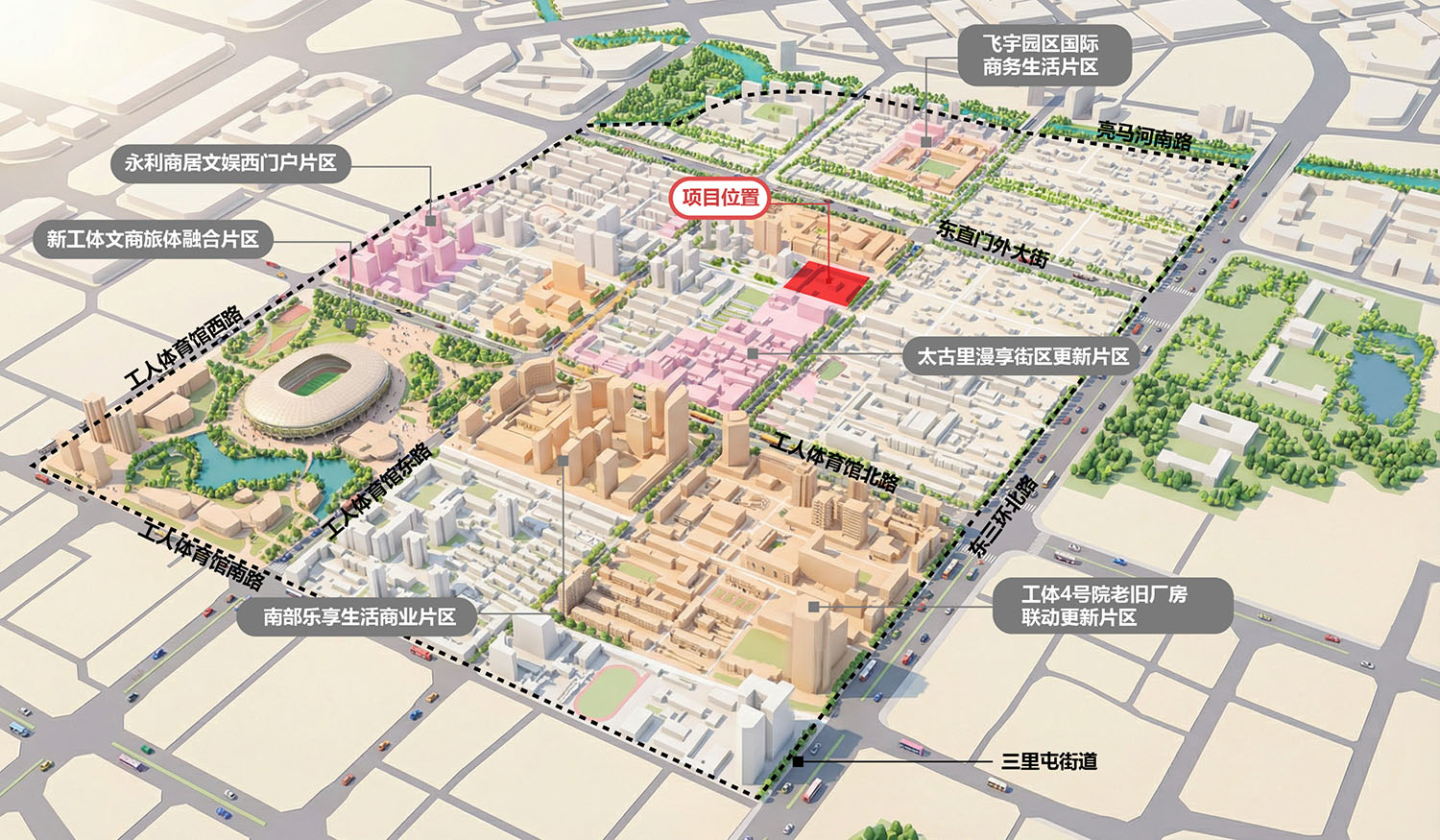
∇ 项目区位 / Location
02 秩序重塑:三级空间结构
Order Reconstruction: Three-tier Spatial Structure
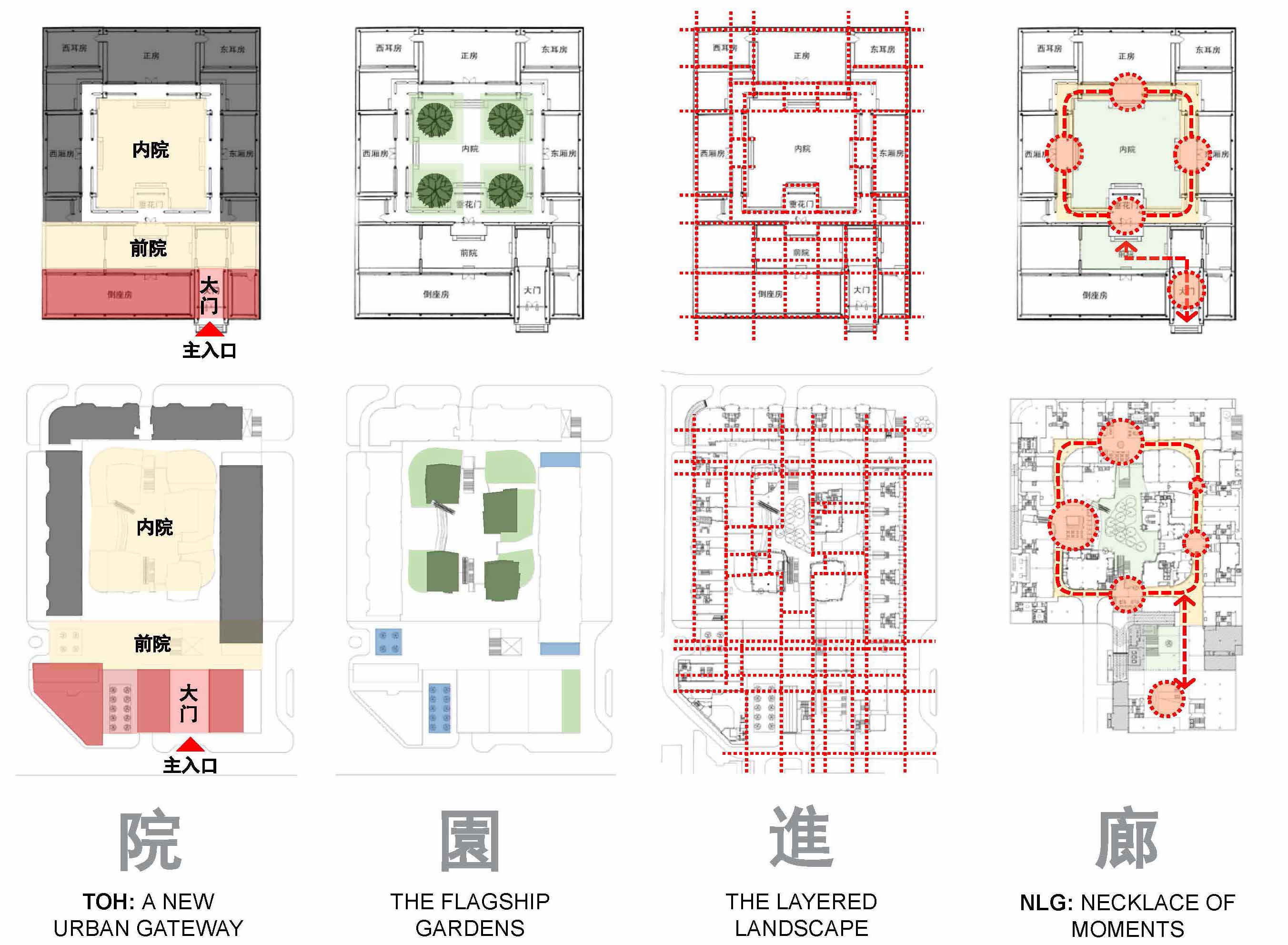
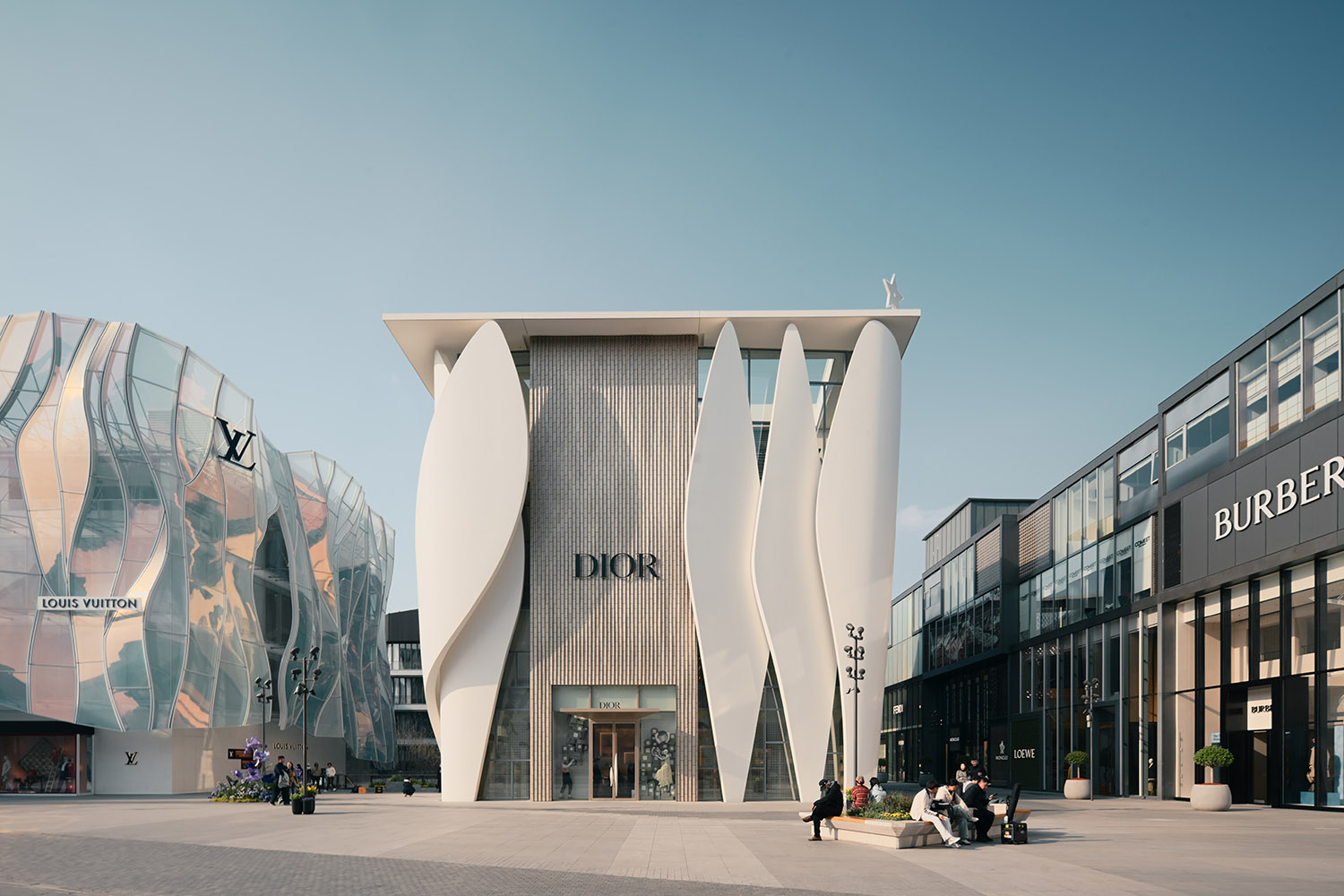
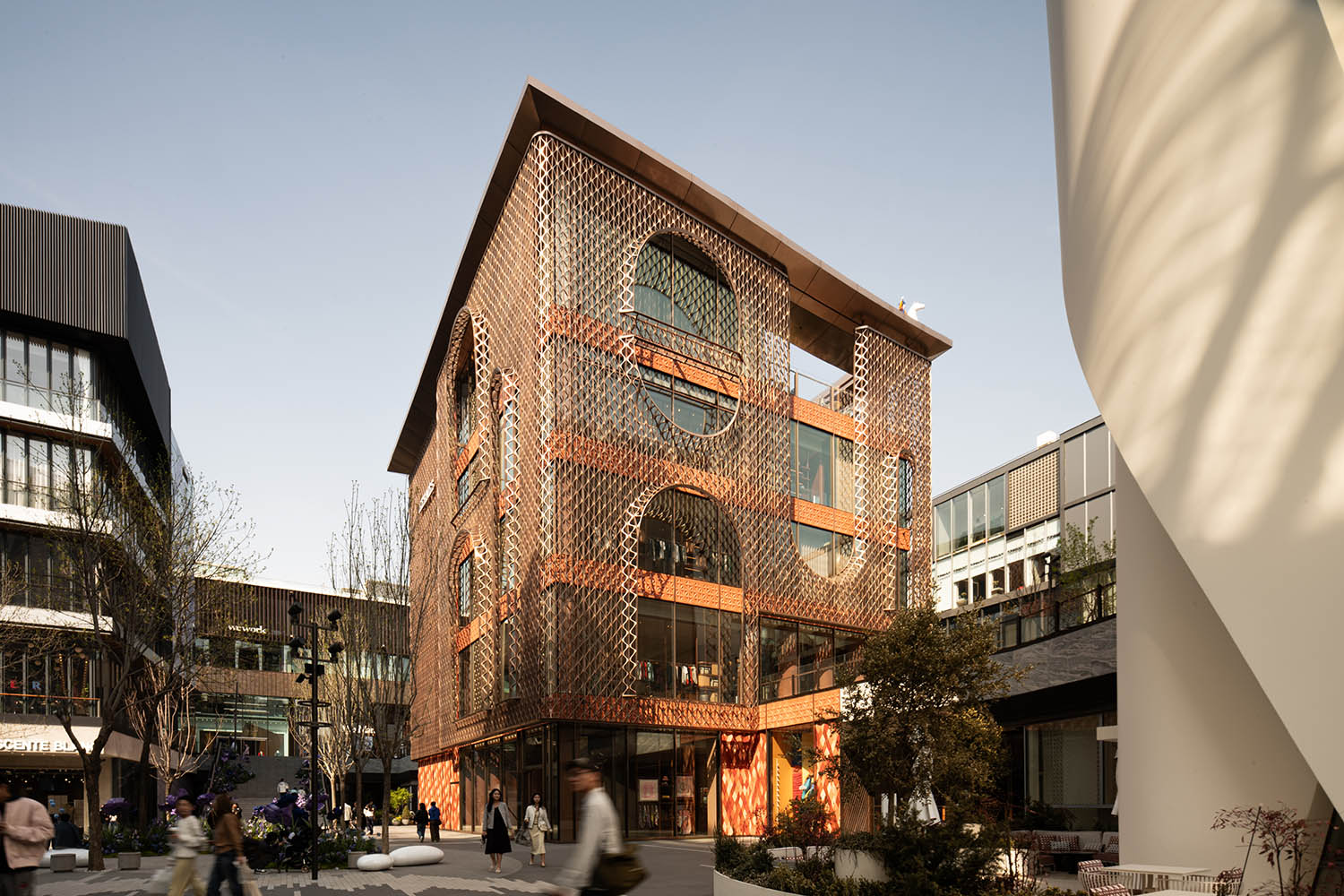
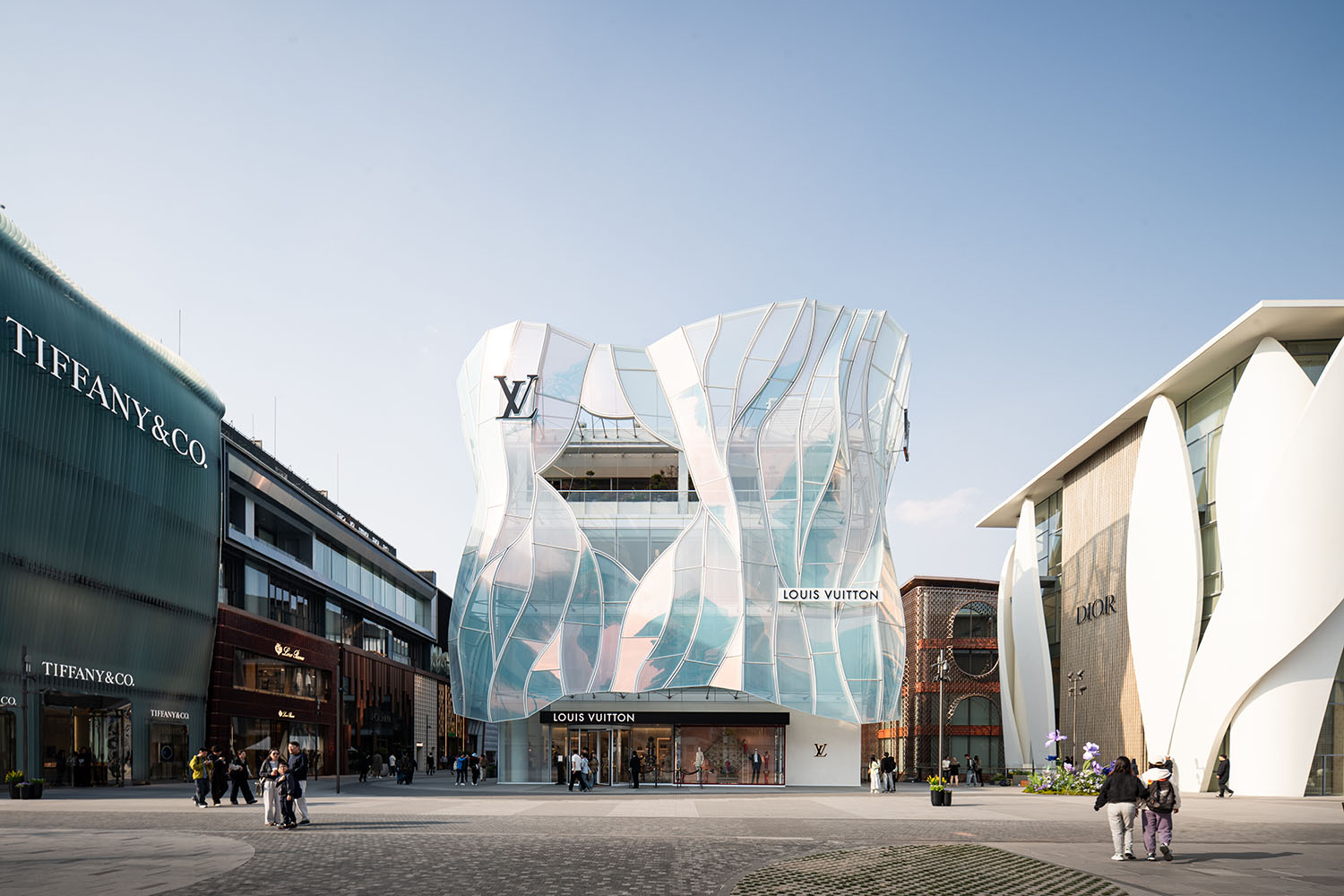
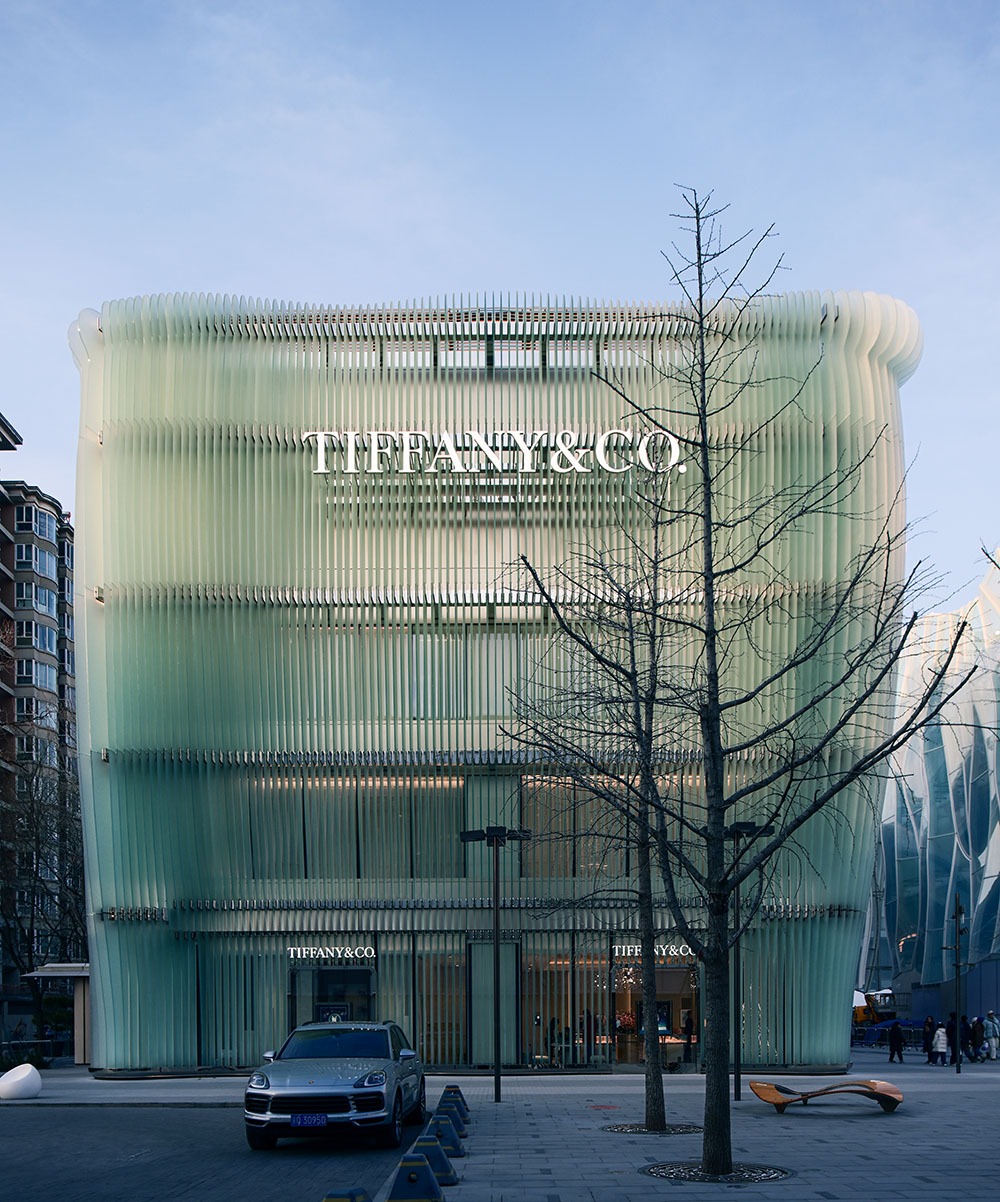
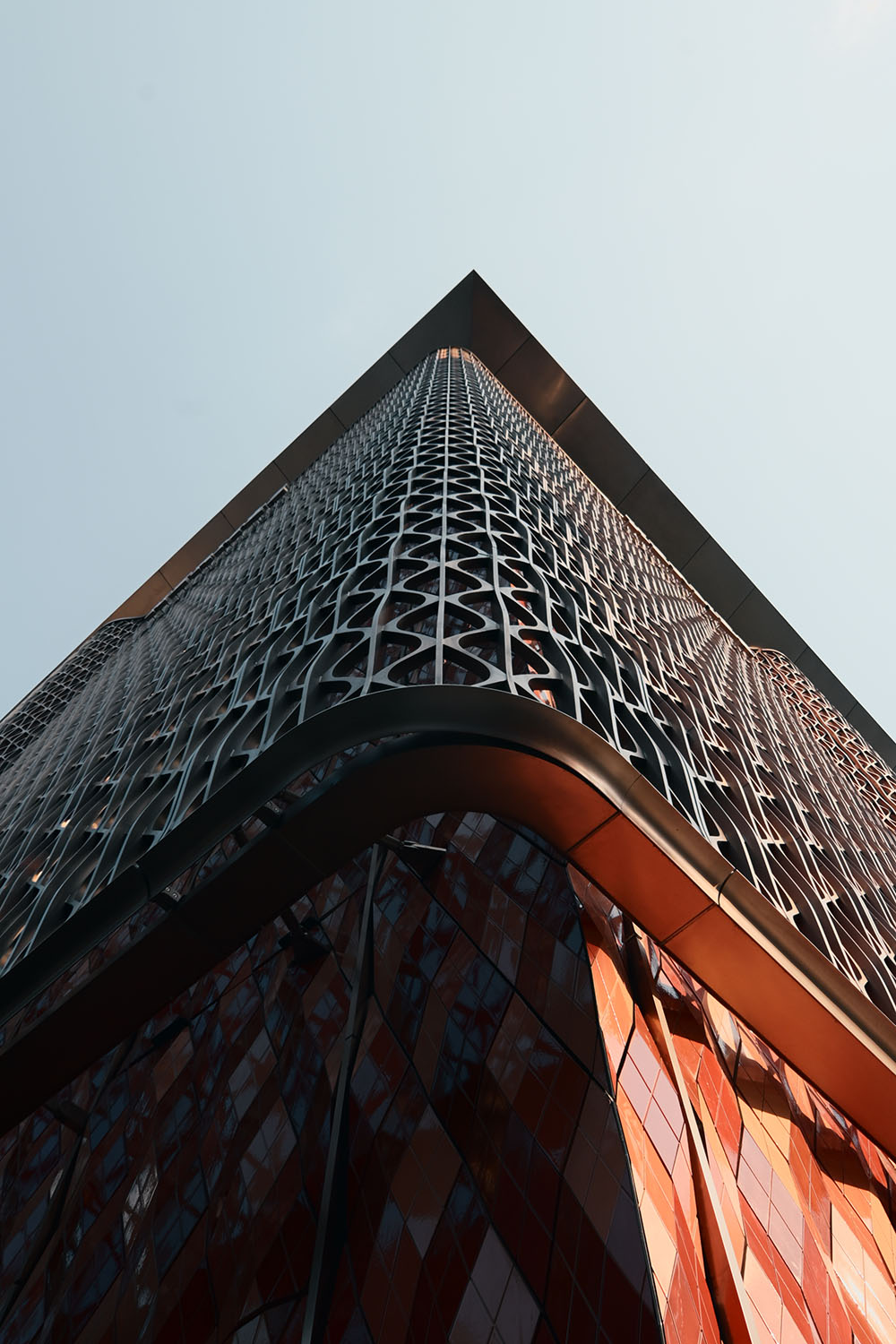
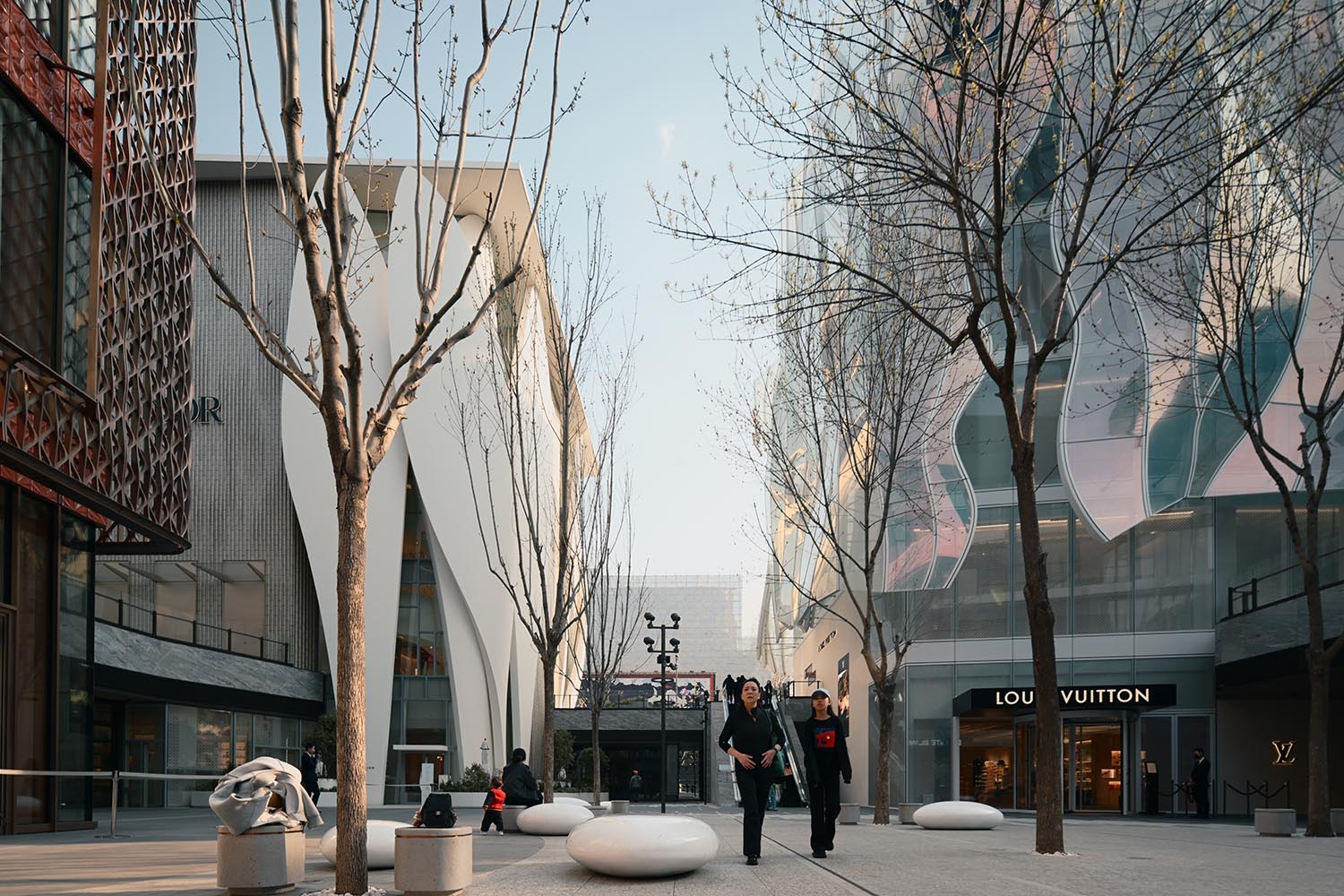
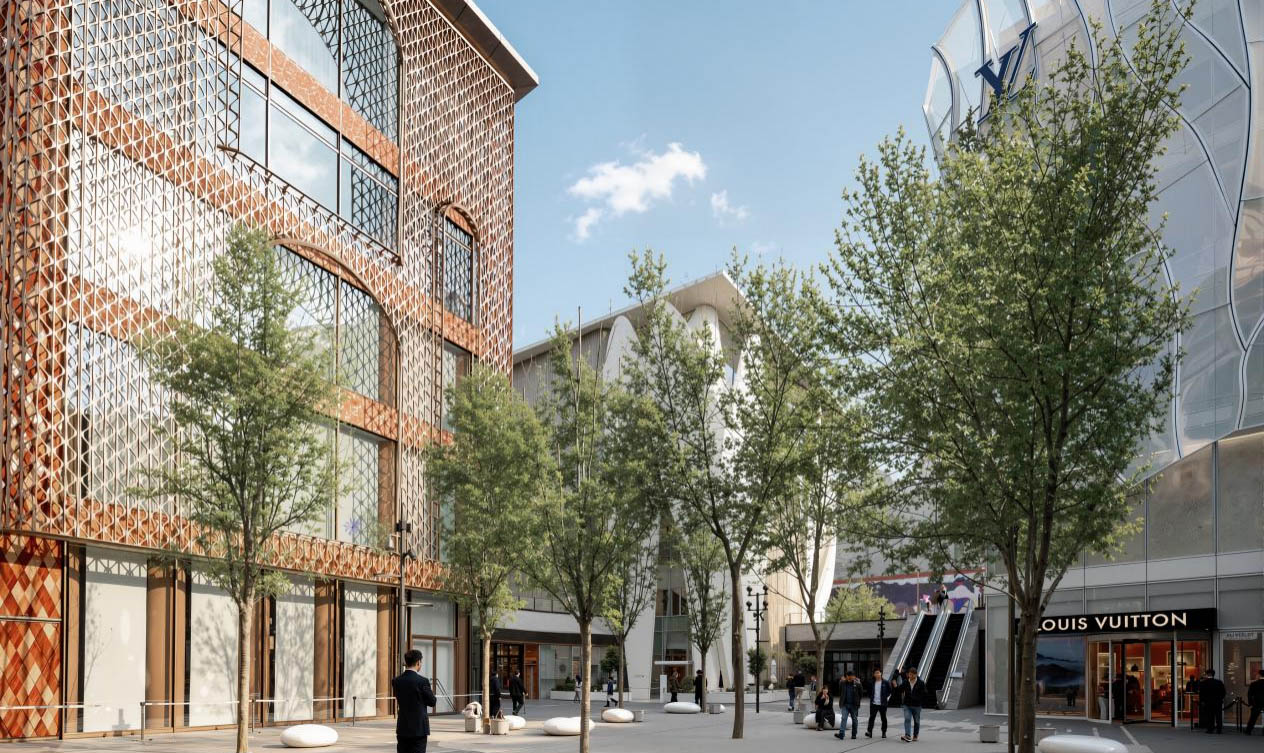
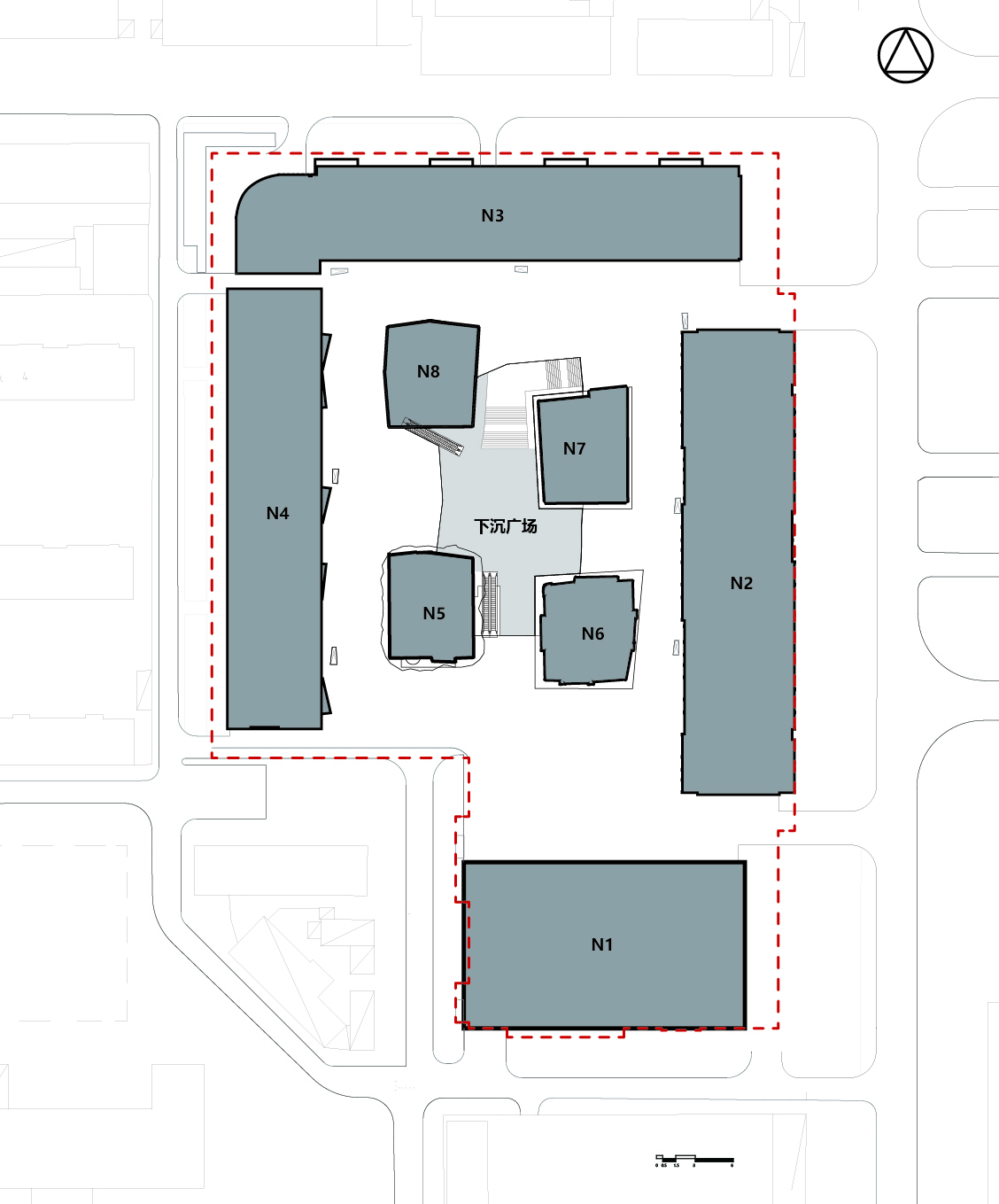
设计构建了“旗舰集群 + 沿街商业集群 + 地下街区”的三级结构。四个核心独栋定位为顶奢旗舰店,作为场地的视觉与功能锚点;外围商业集群通过“竖向切分”,为品牌提供了垂直完整的展示面及相对独立的入口。立面策略遵循“内外有别”原则:沿市政路界面延续原有脉络,维系城市界面连续性;内院界面则以传统四合院为空间意向,释放设计余量,为品牌的建筑形象提供“个性自由”。
Designed and constructed a three-level structure consisting of a “flagship cluster + street-front commercial cluster + underground retail street.” The four standalone flagship stores at the core are positioned as top-tier luxury flagships, serving as the visual and functional anchors of the site. The peripheral commercial cluster adopts a “vertical segmentation” approach, offering each brand a complete vertical display facade and a relatively independent entrance. The facade strategy follows the principle of “differentiated design languages for exterior and interior”: along the municipal road interface, the original architectural language is continued to maintain the continuity of the urban fabric; while the inner courtyard interface draws on the spatial concept of the traditional Chinese courtyard house (siheyuan), allowing design flexibility and granting each brand “individual freedom” in its architectural expression.
∇ 四合院意向的公共空间分析 / Analysis of Public Space in the Concept of Siheyuan (Courtyard House) Credit: the Oval Partnership
∇ 更新后的三里屯北区前广场 / The renovated Sanlitun North District front plaza
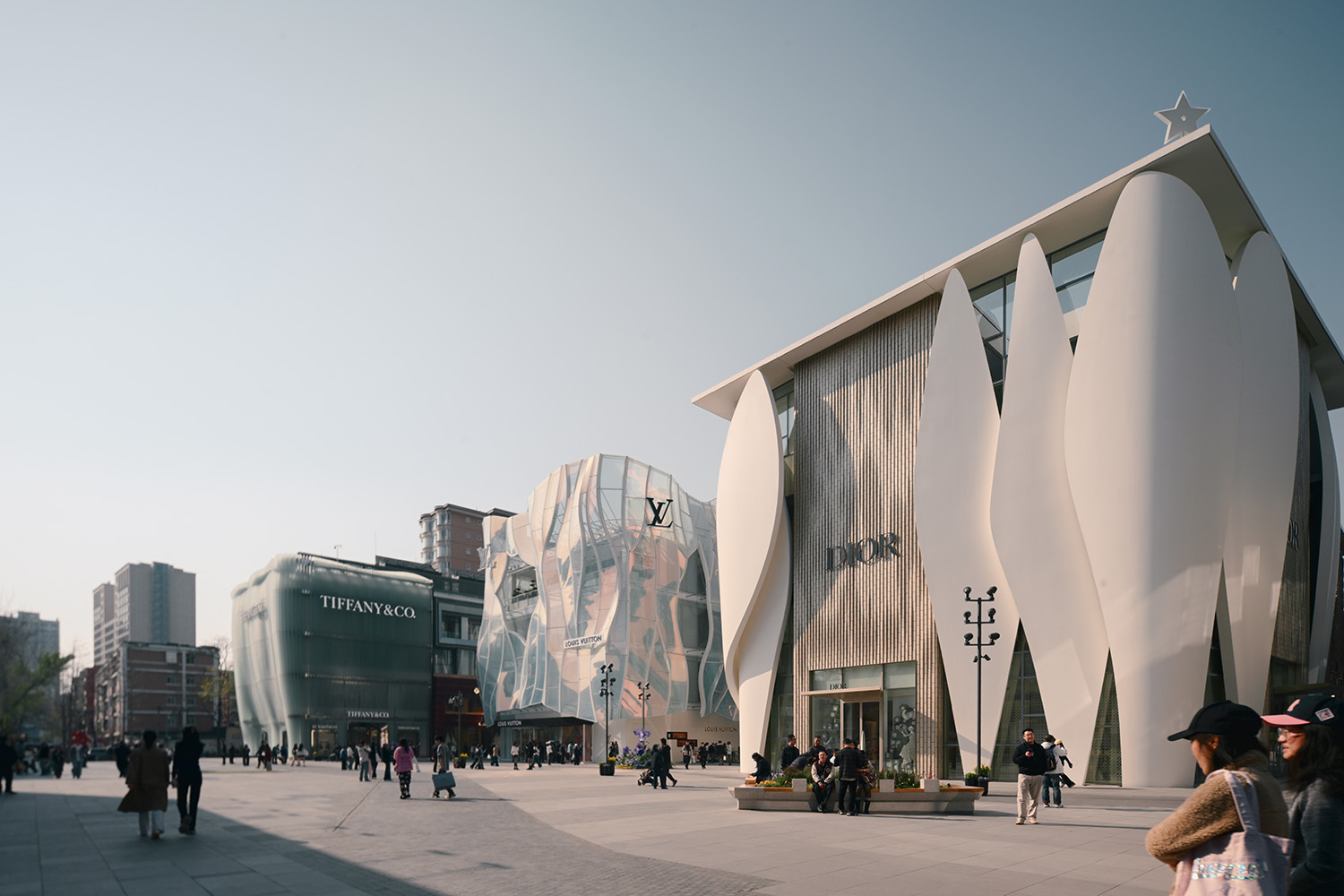
∇ 前广场——“前院”逻辑下的场域界定 / Front Plaza – Domain Definition via “Front Courtyard” Logic
∇ 建筑间隙——胡同尺度的“深巷”探索感 / Building Interstices – “Deep Alley” Exploration in Hutong Scale
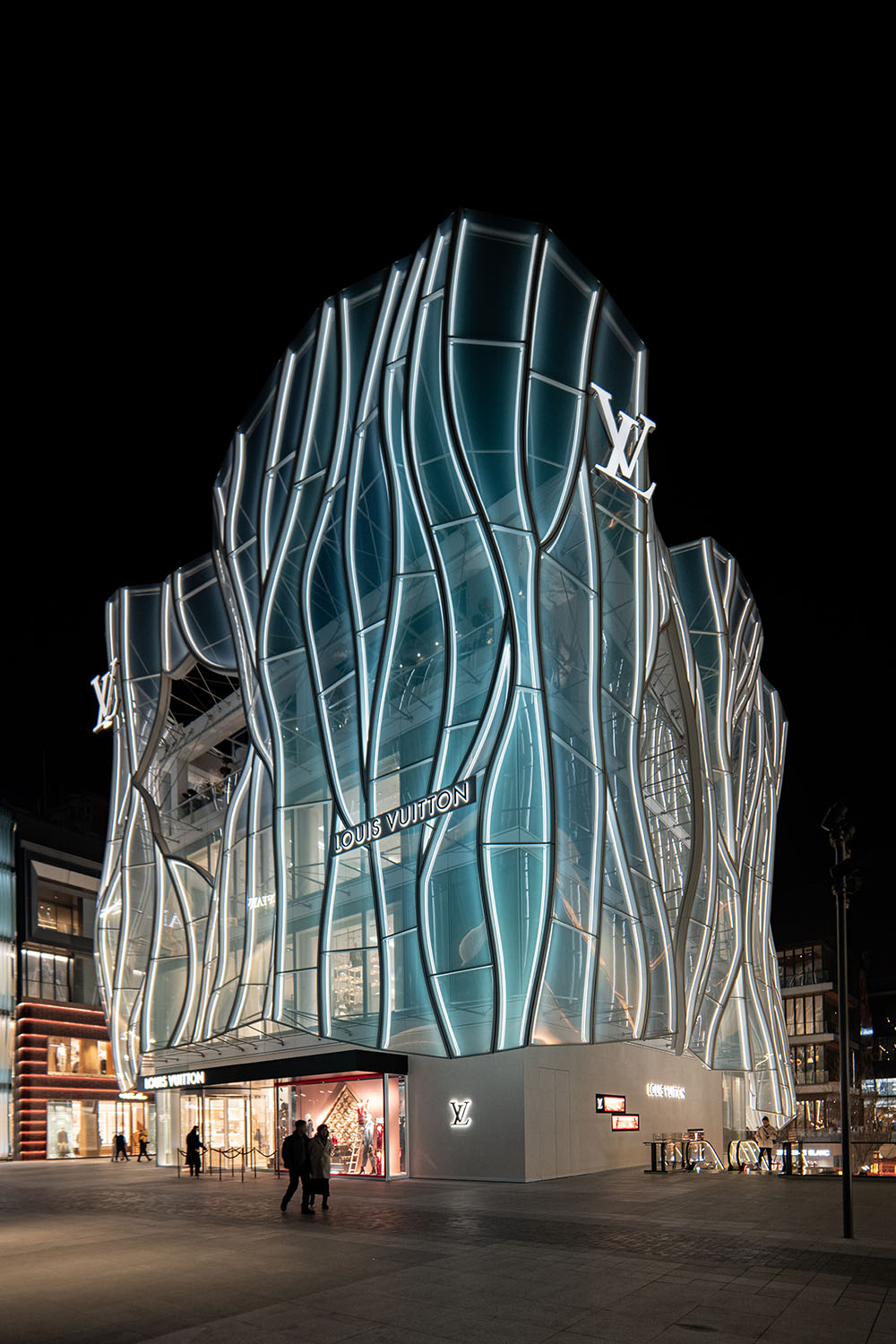
∇ 前广场–路易威登立面 / Front Plaza – Louis Vuitton Facade
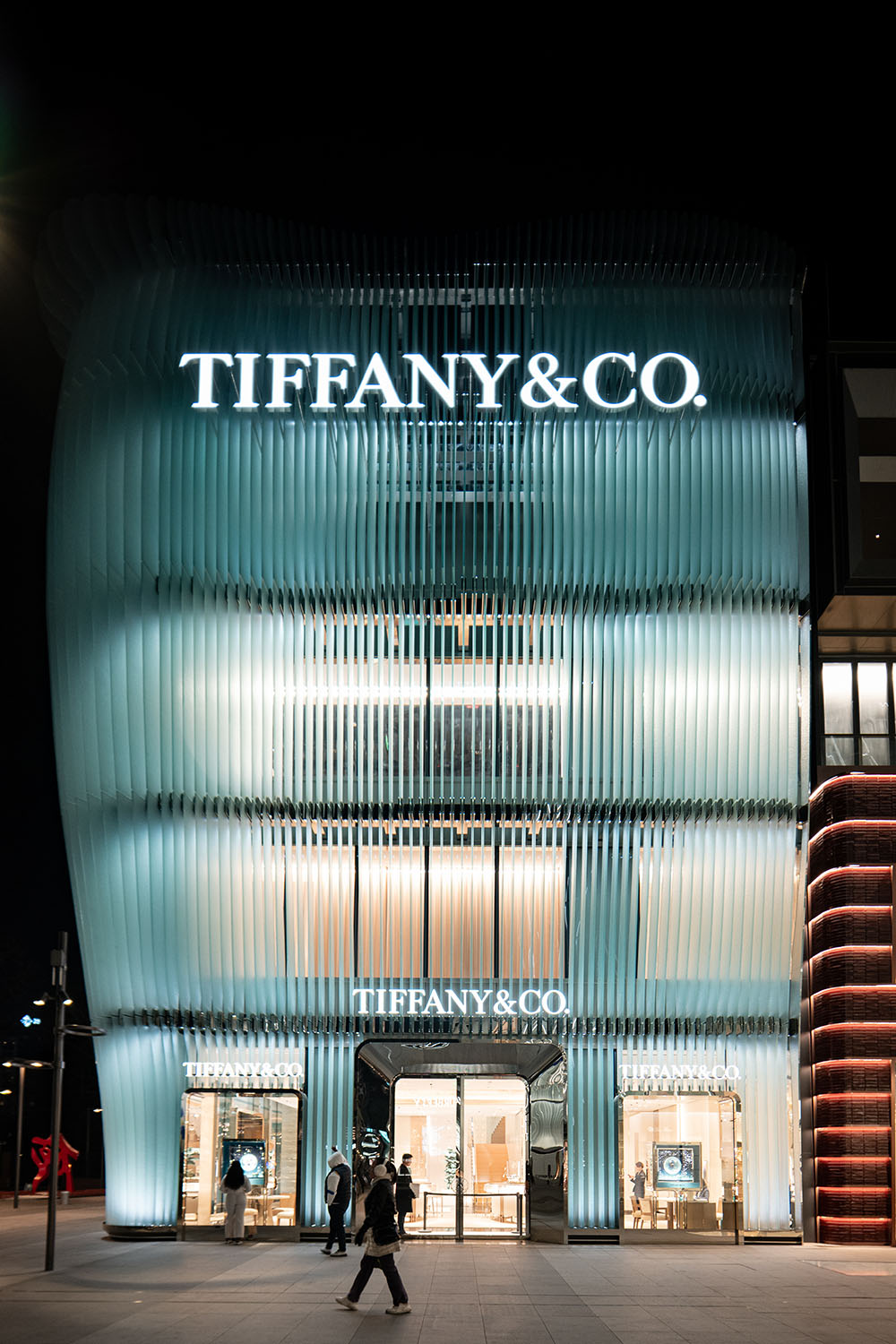
∇ Tiffany 旗舰店近景 / Close-up View of Tiffany & Co. Flagship Store
∇ LV 建筑与节日装置 / Louis Vuitton Building with Festive Installation
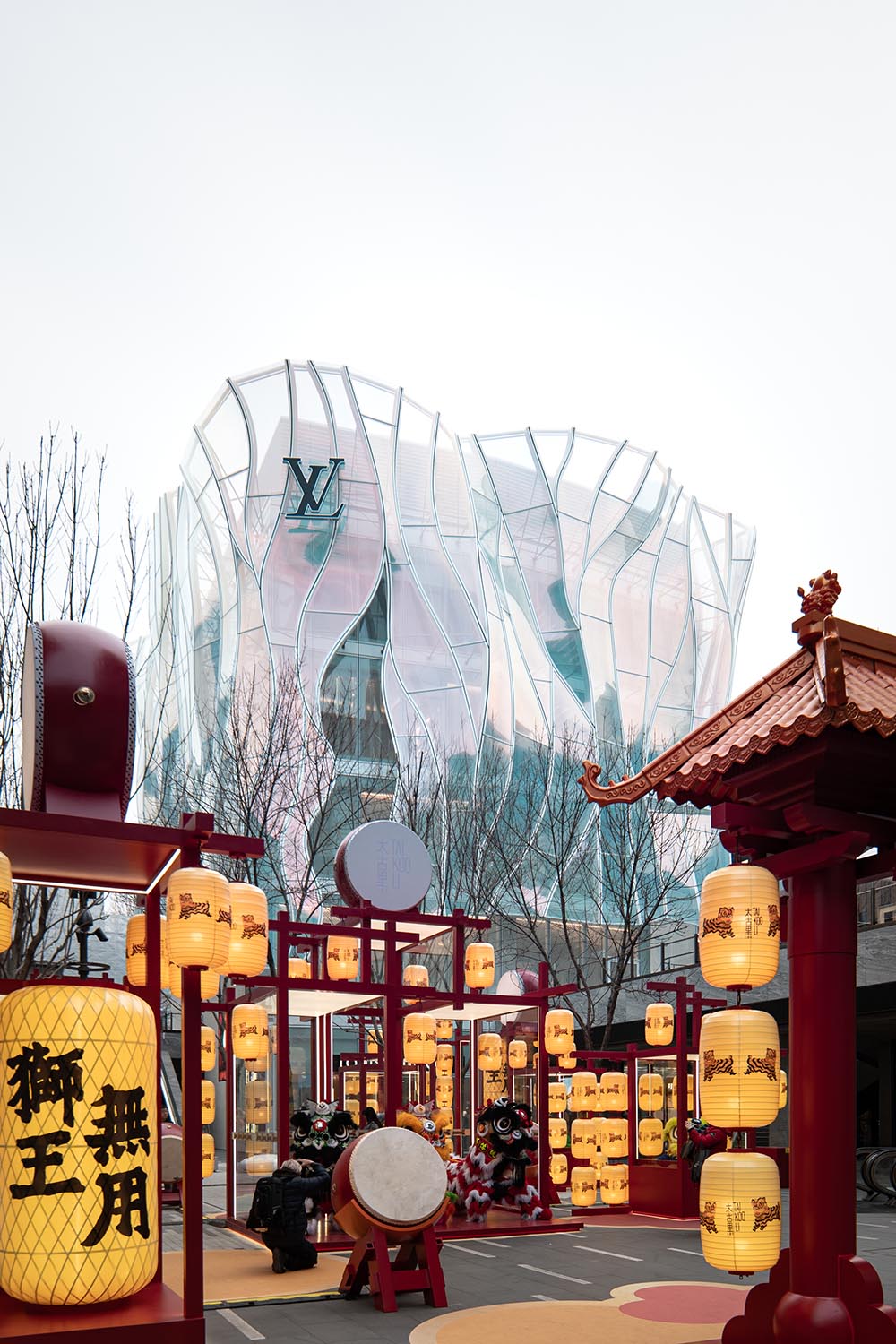
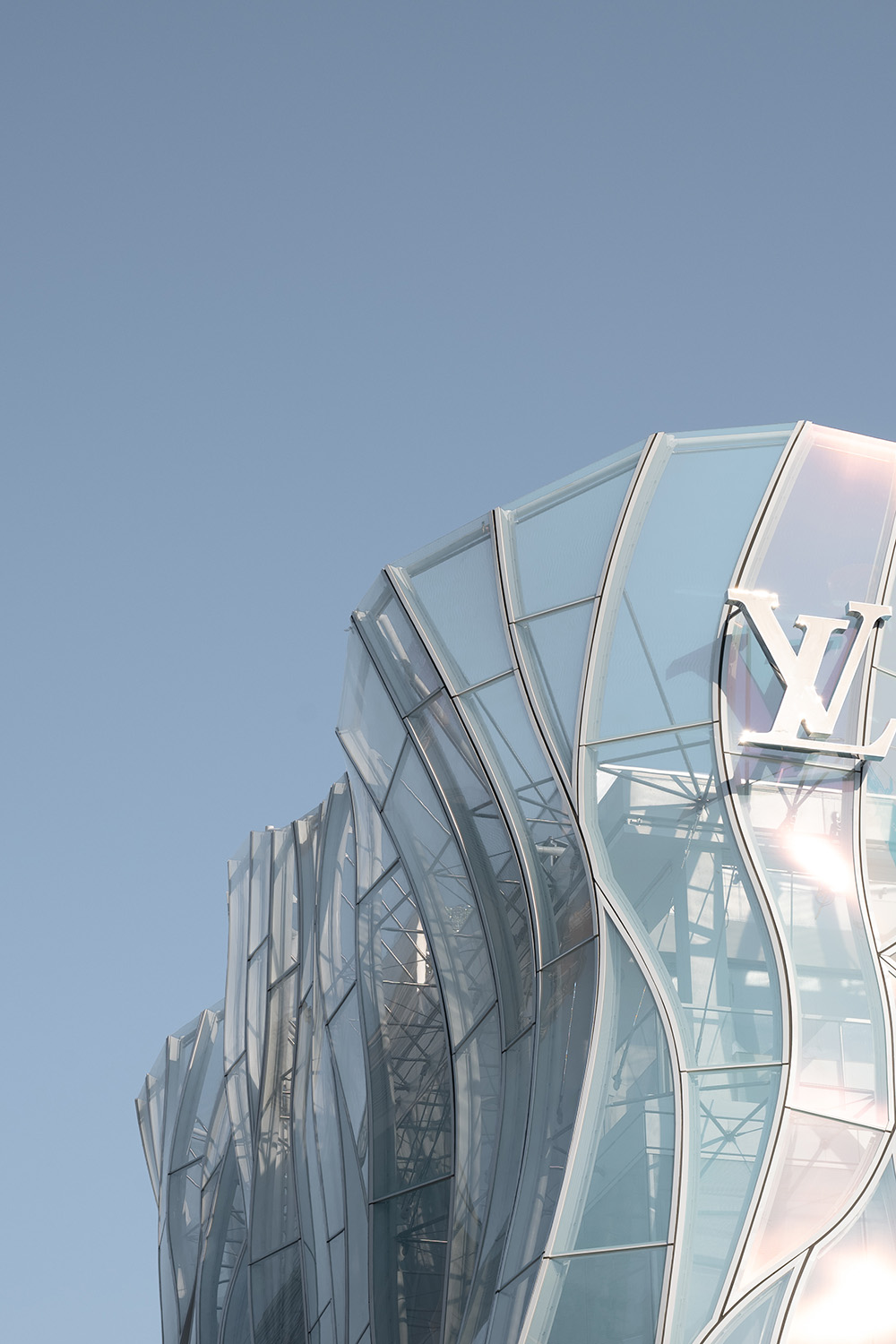
∇ Tiffany 旗舰店全景与入口 / Tiffany & Co. Flagship Store Panorama & Entrance
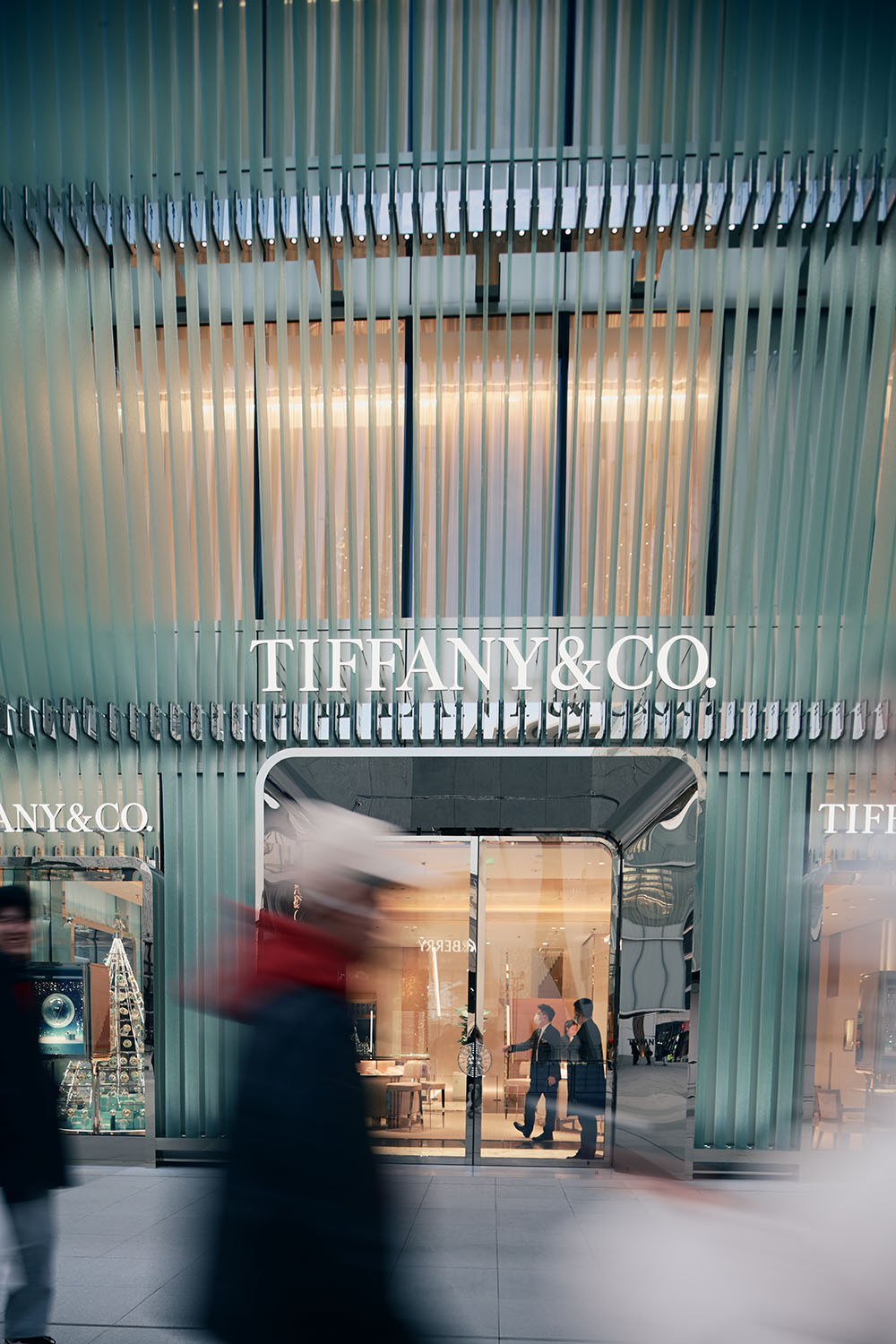
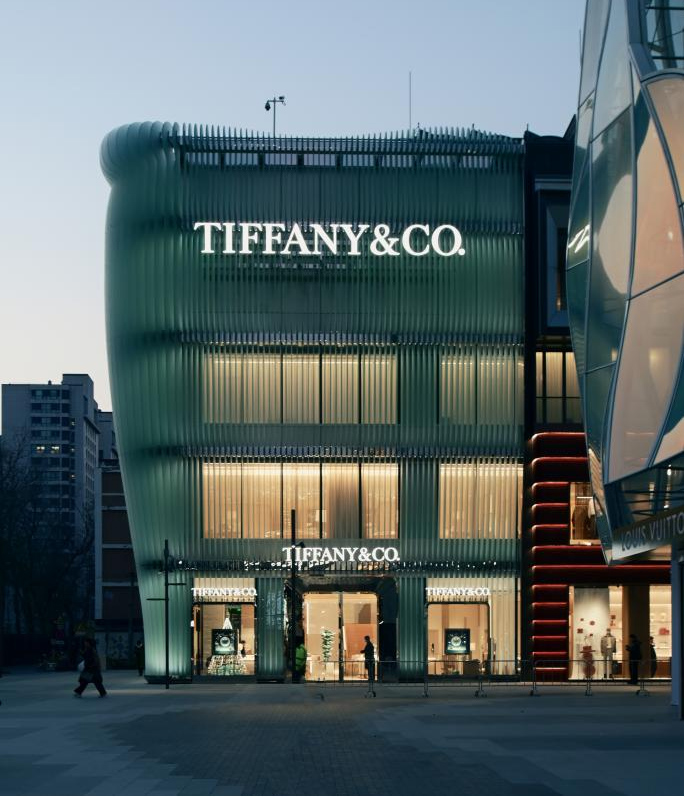
∇ 品牌立面——顶奢叙事与既有结构的精密对位 / Brand Facade – Precise Alignment of Luxury Narratives with Existing Structures
03 动线重构:双层平面的活力核心
Circulation Reconfiguration: A Dual-level Vitality Core
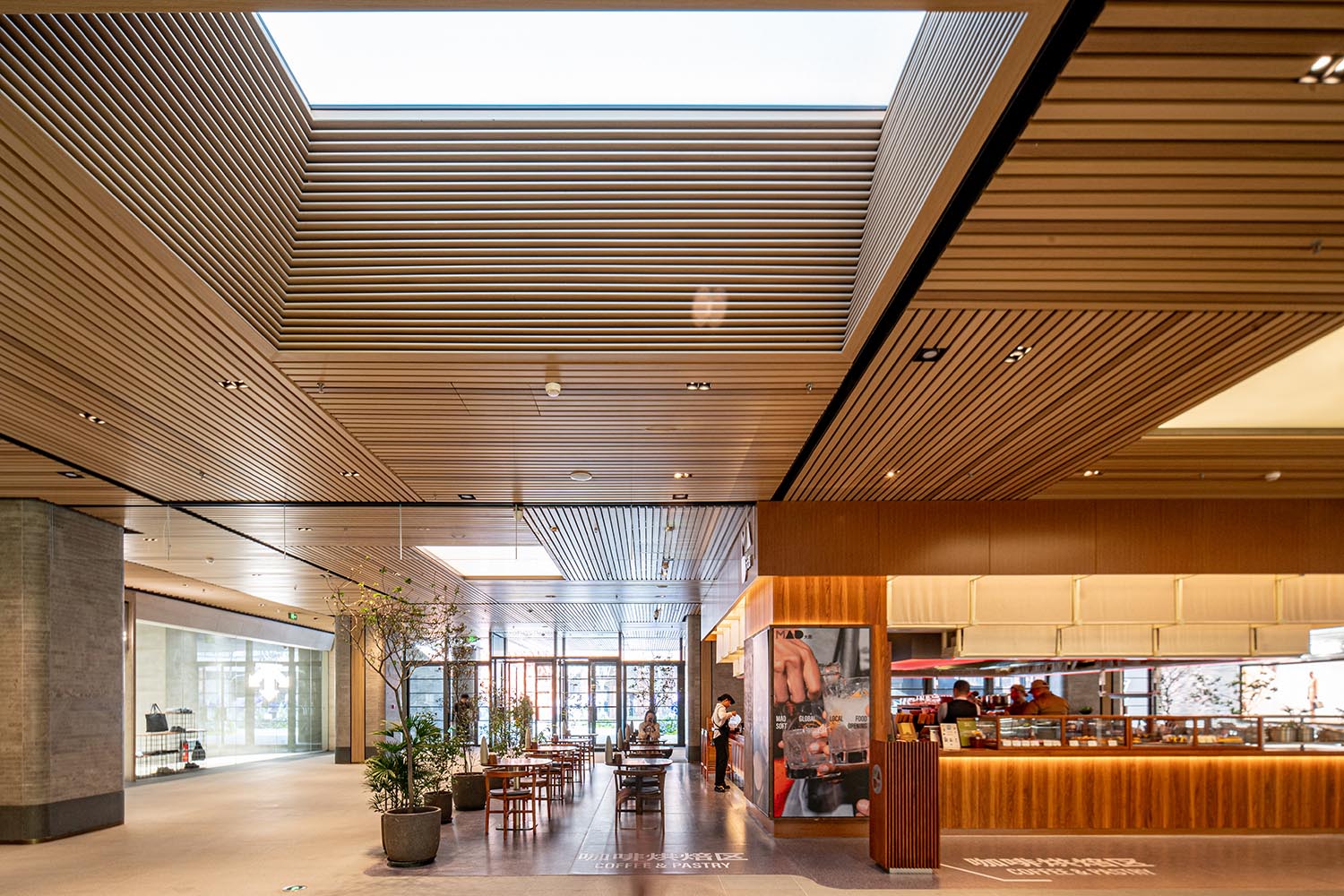
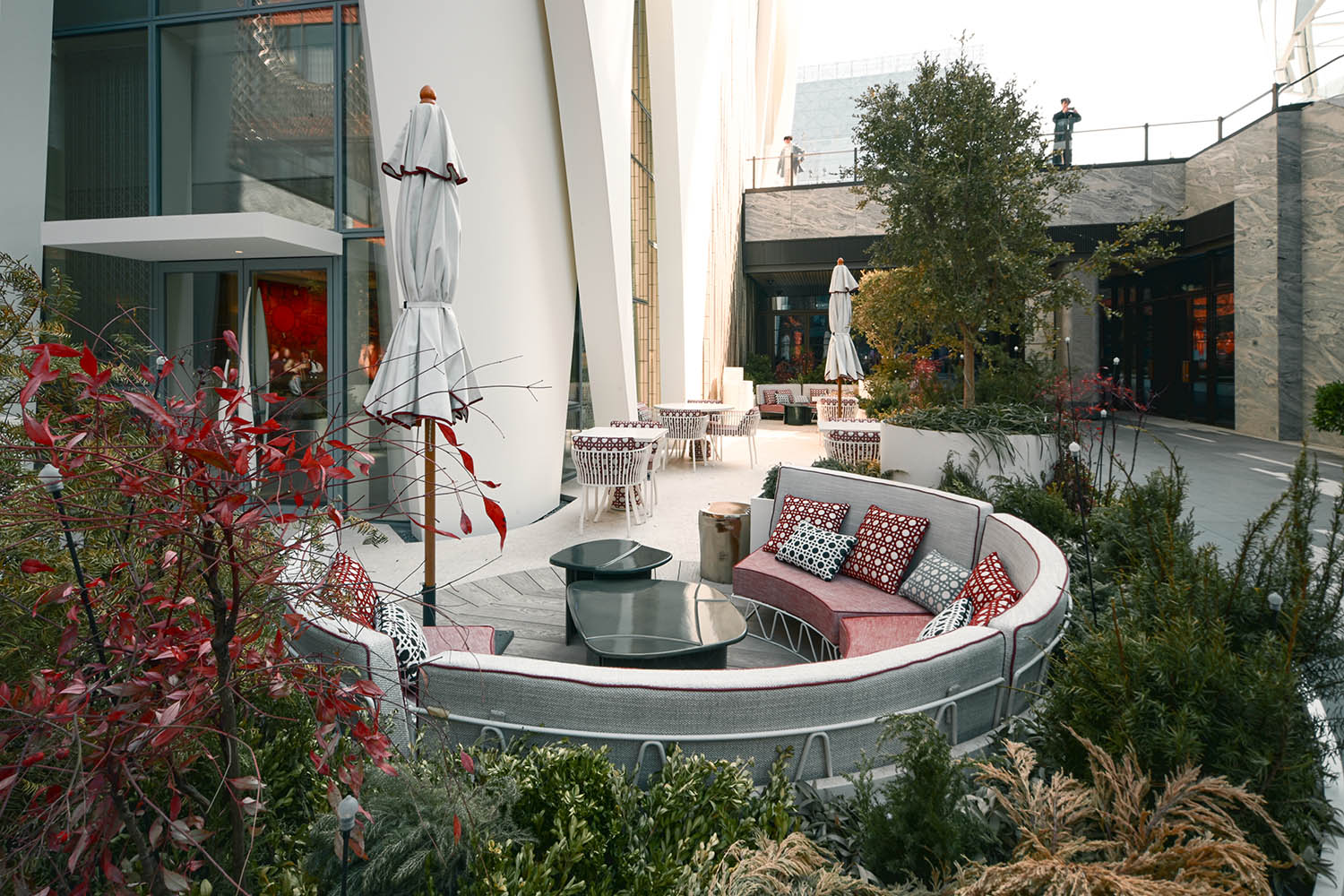
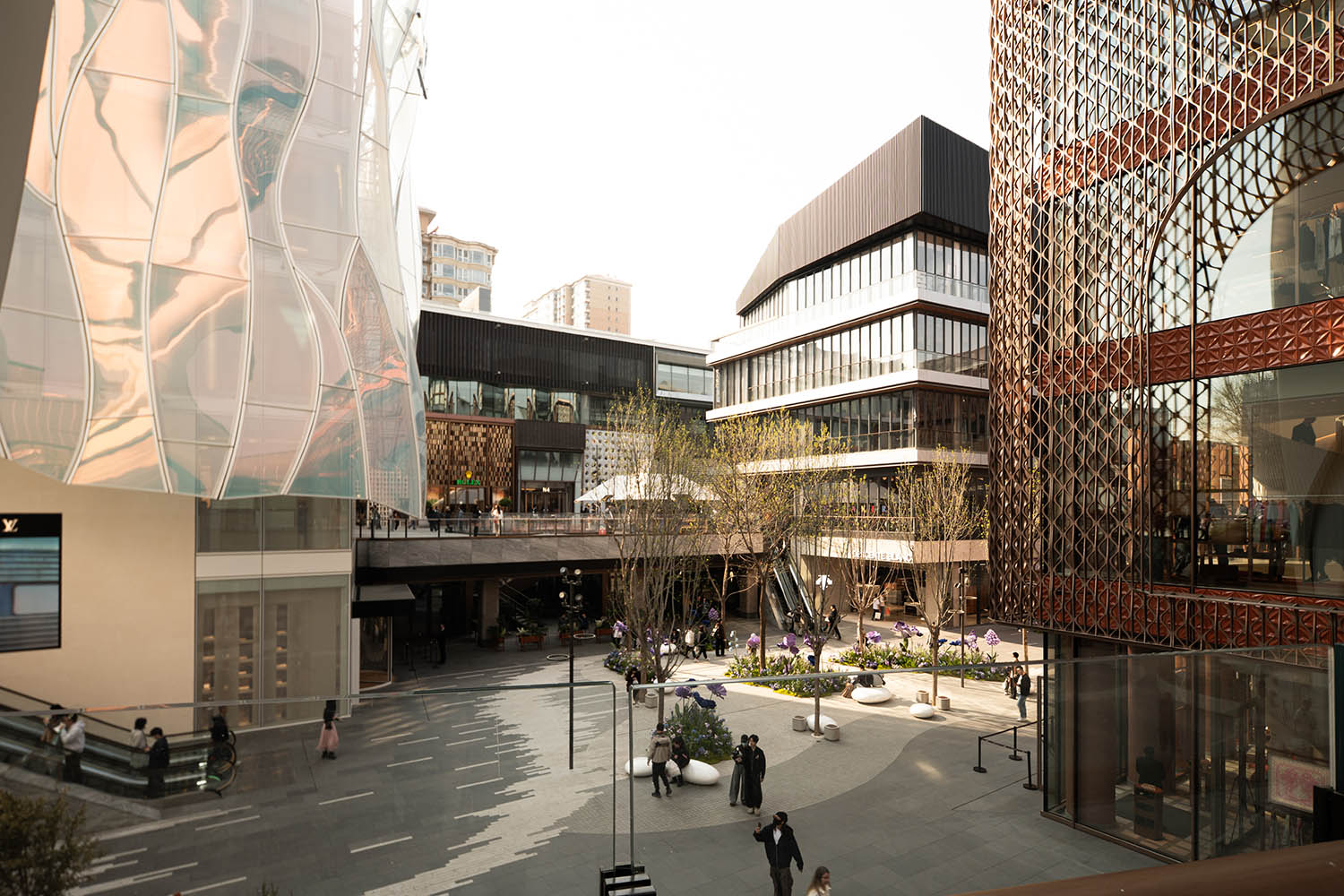
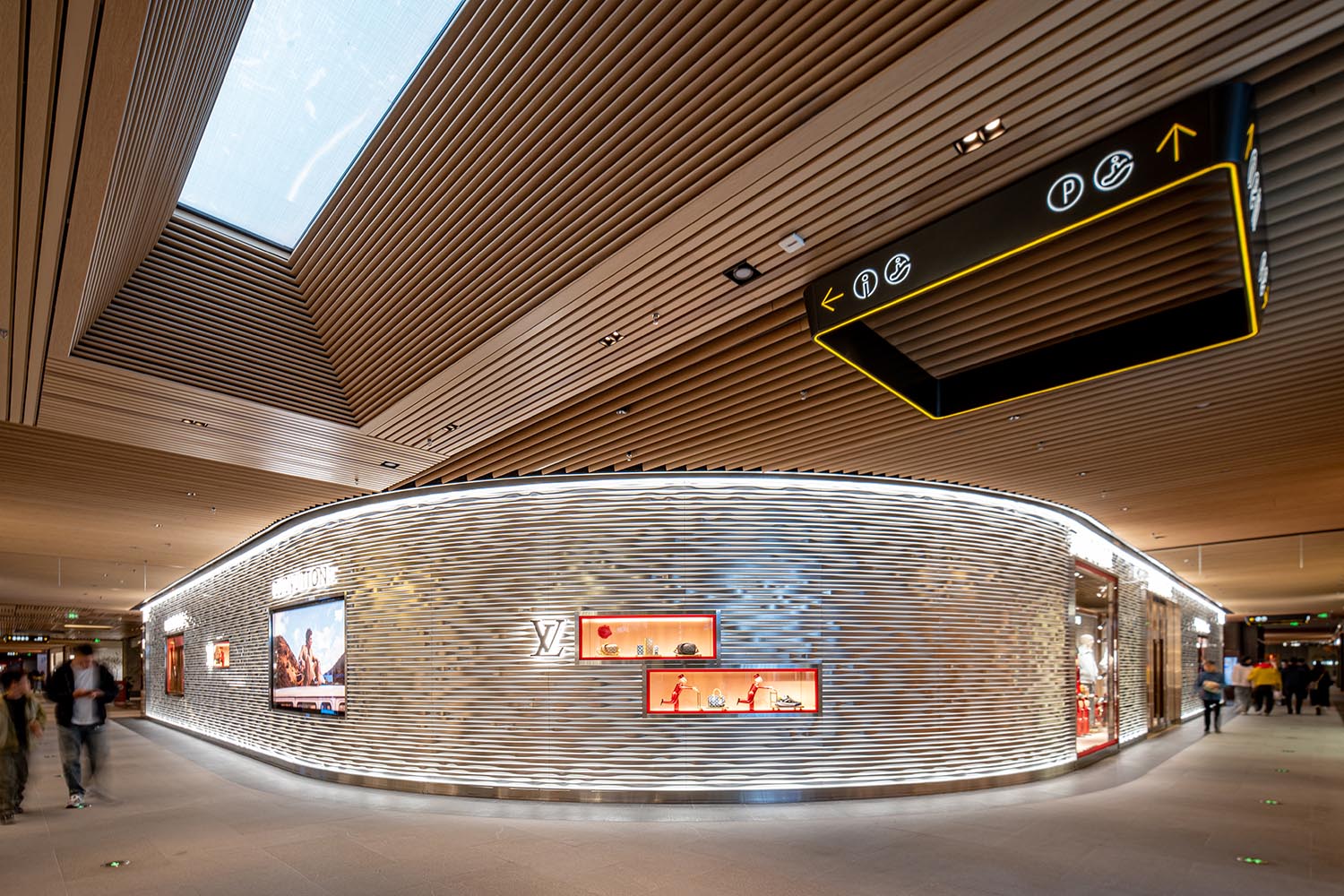
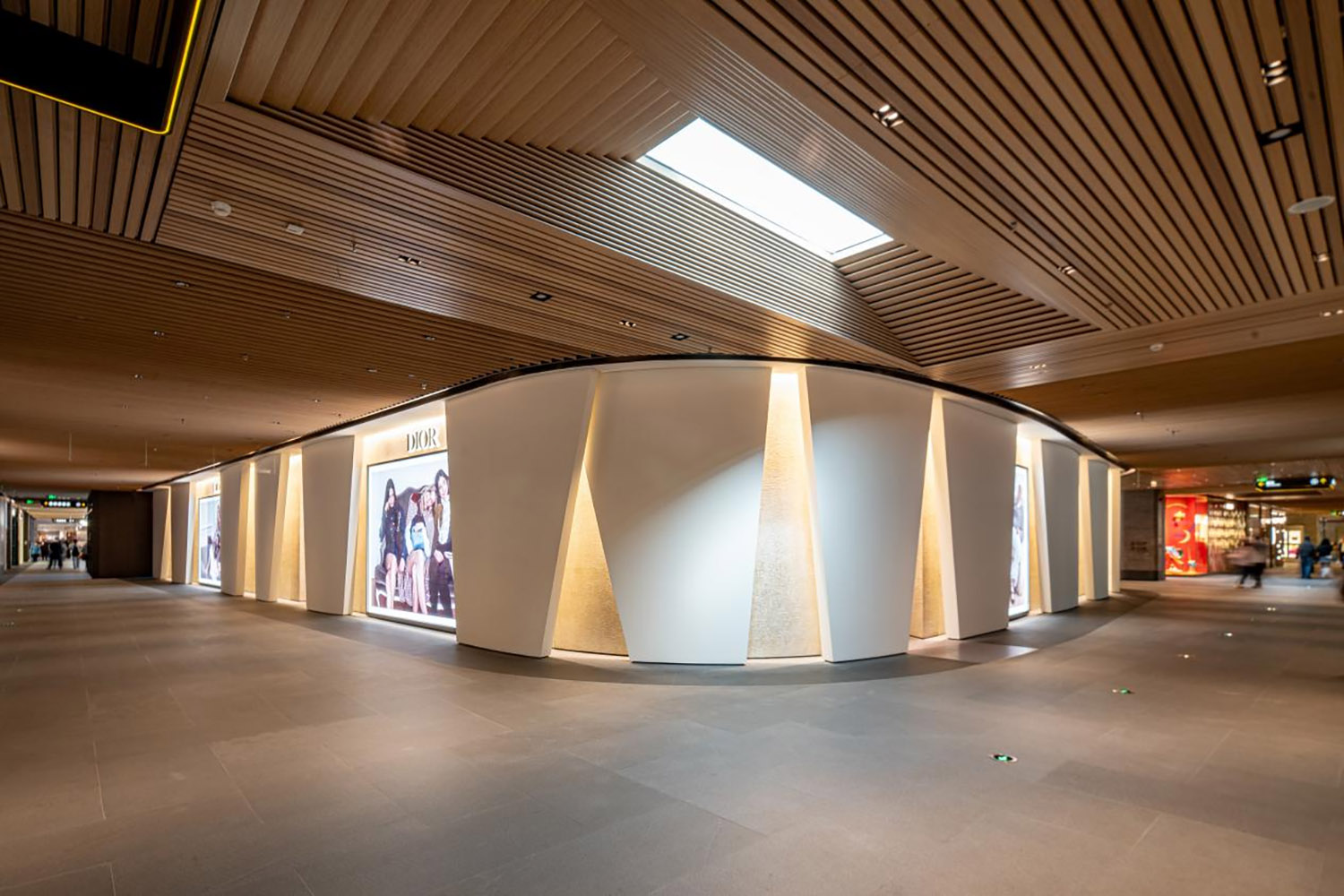
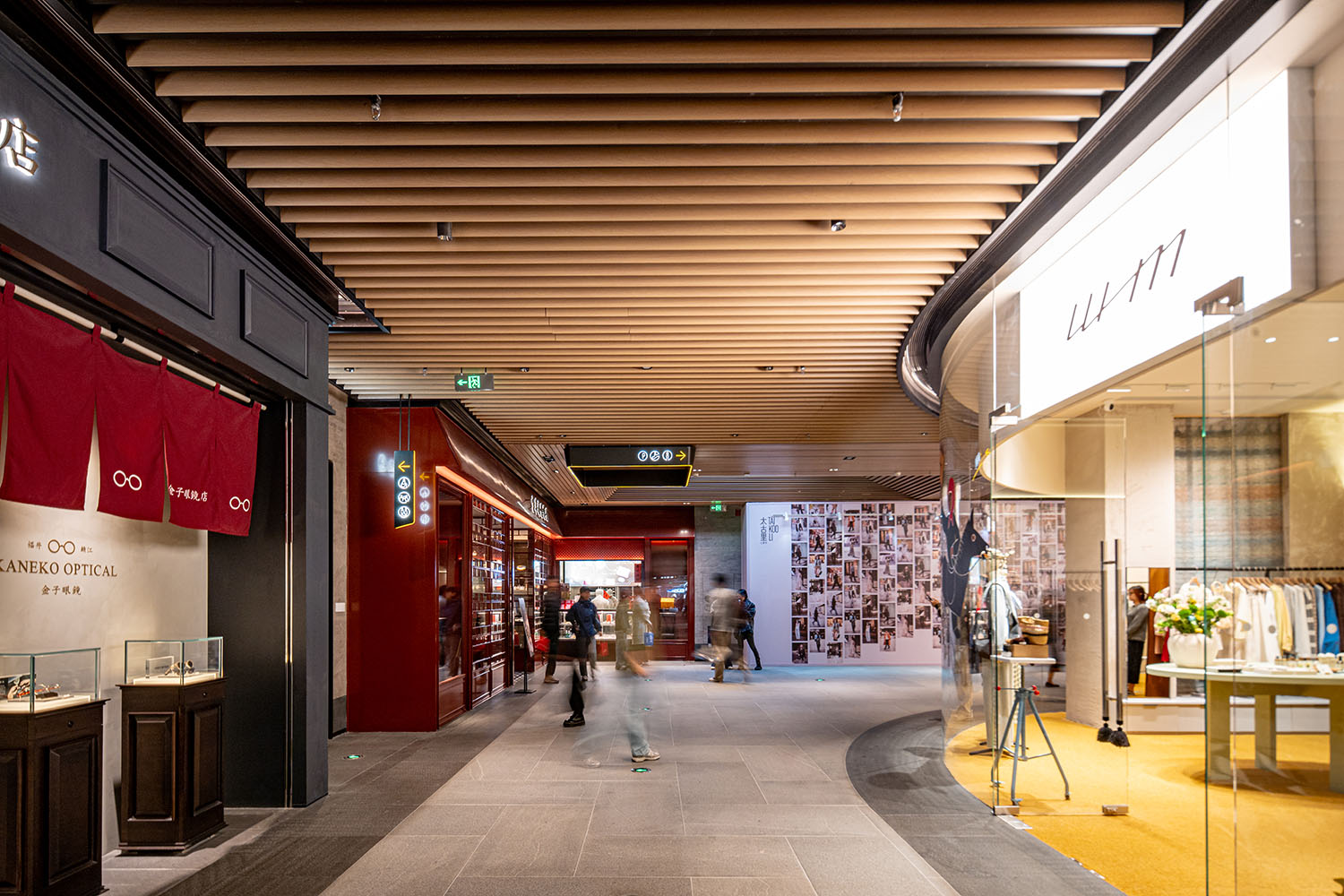
设计将零散的建筑间隙梳理为“观览、休憩、展示”三类功能广场。下沉广场作为核心节点,通过景观大台阶与观光电梯打破了地面与地下的物理隔阂。大台阶在承载公共活动的同时兼具消防疏散功能,地下商业公区也转化为具备自然光影的“城市客厅”,构建了“空间吸引人、品牌留住人”的消费闭环。
The design reorganizes the scattered building gaps into three types of functional plazas: “viewing, resting, and exhibition.” The sunken plaza serves as the core node, where landscape stairs and sightseeing elevators break the physical barrier between the ground and the underground. The grand staircase not only accommodates public activities but also fulfills fire evacuation functions. Meanwhile, the underground commercial public area is transformed into a “city living room” enriched with natural light and shadow, creating a consumption loop where “space attracts people, and brands retain them.”
∇ 立体“游廊”与竖向空间缝合 / Elevated “Verandas” & Vertical Spatial Stitching
∇ 立体游廊与竖向空间缝合 / Elevated Corridors and Vertical Spatial Integration
∇ NLG 地下中庭走廊 / NLG Underground Atrium Corridor
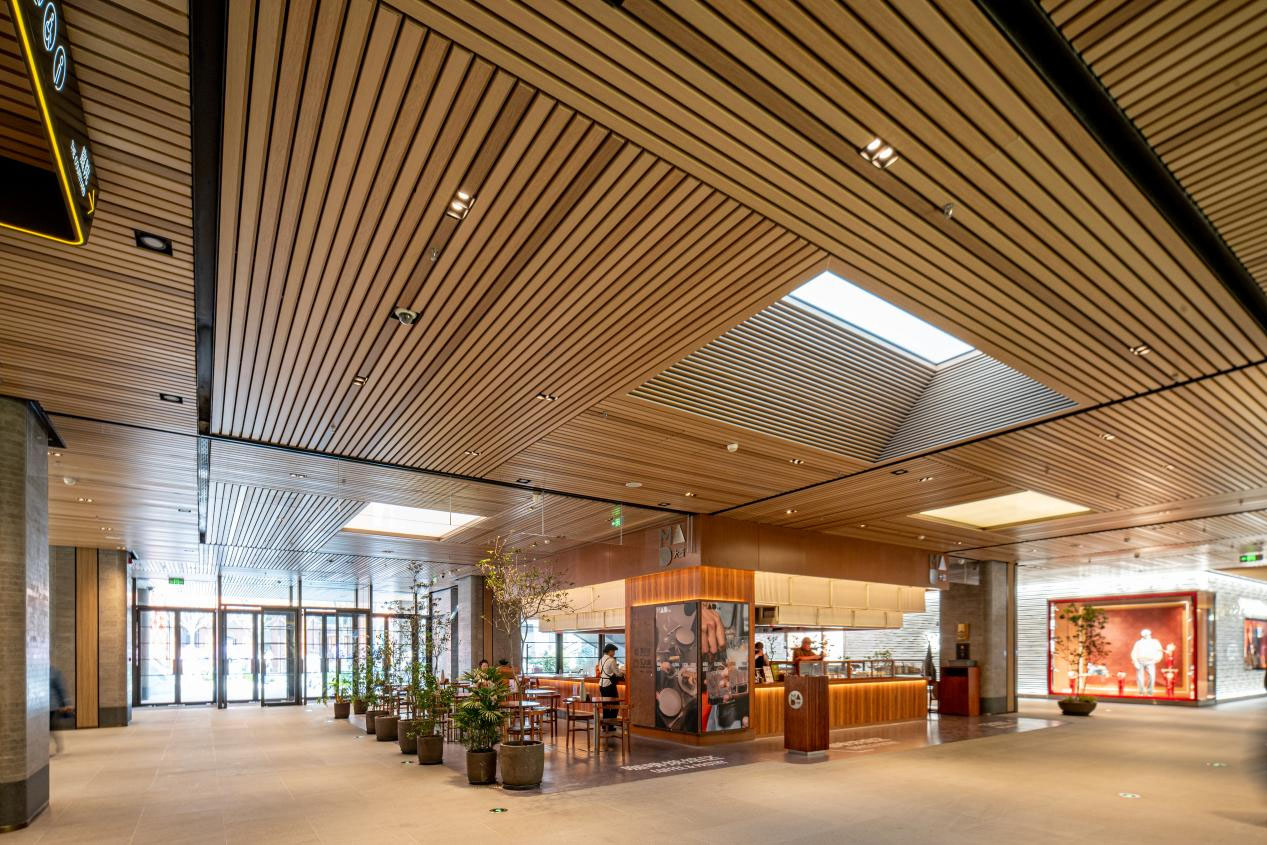
∇ NLG 地下 LV 旗舰店弧形界面 / NLG Underground LV Flagship Store Curved Facade
∇ NLG 地下 Dior旗舰店弧形界面 / NLG Underground Dior Flagship Store Curved Facade
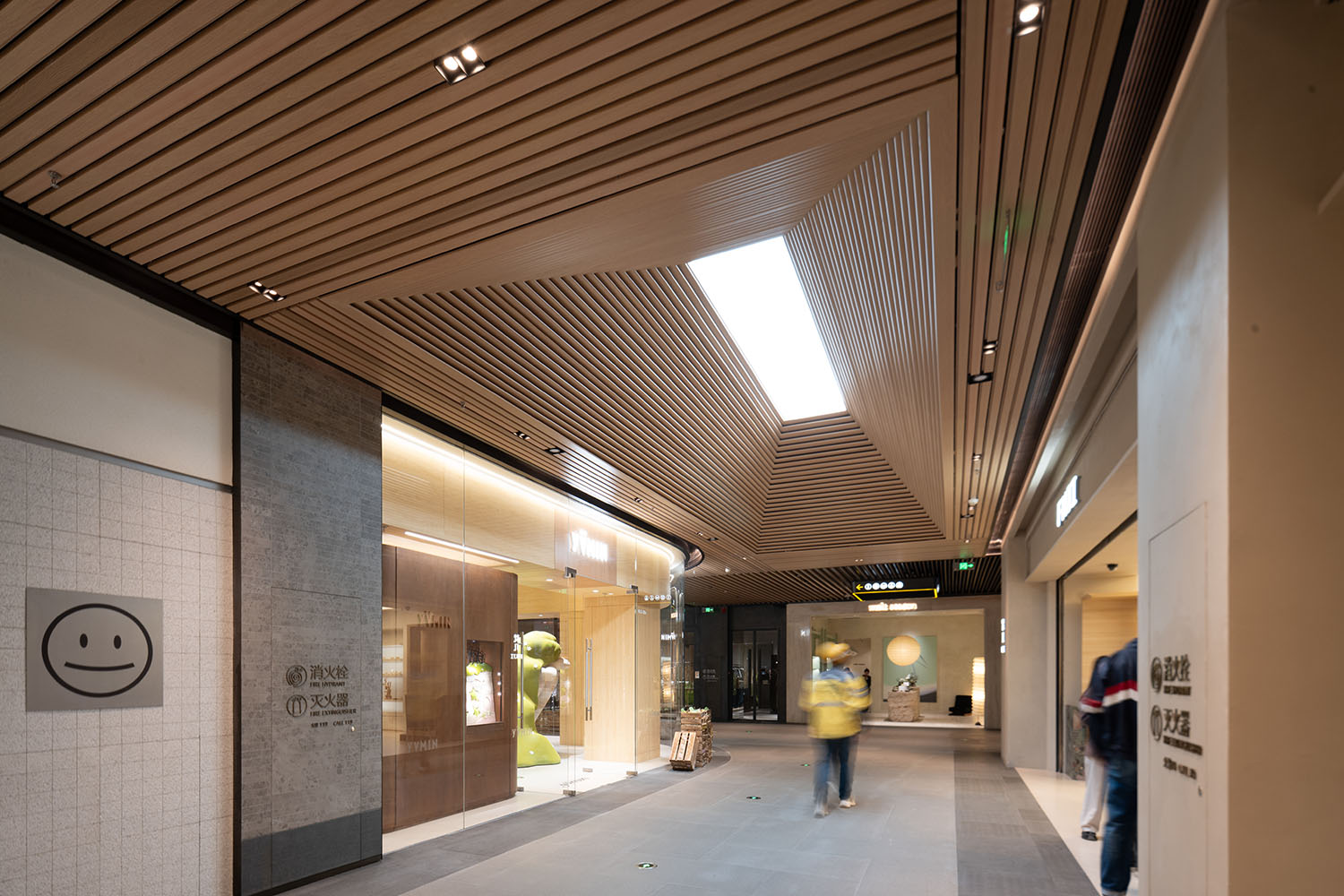
∇ 地下品牌店铺界面 / Underground Brand Store Facade
∇ 地下中庭服务节点 / Underground Atrium Service Node
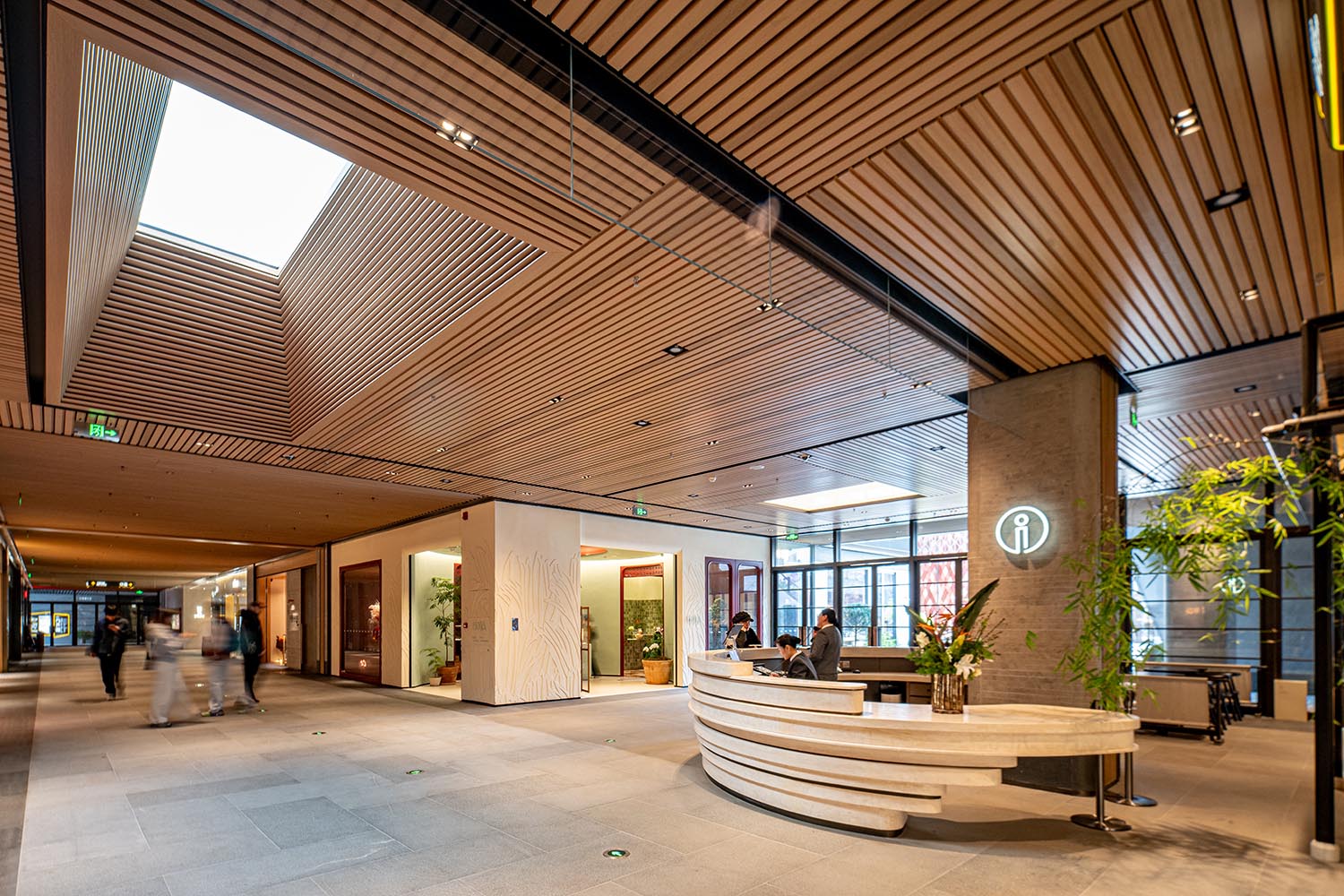
∇ 地下次级通道与店铺 / Underground Secondary Corridor and Stores
04 技术范本:复杂条件下的消防创新
Technical Exemplar: Fire Safety Innovation under Complex Conditions
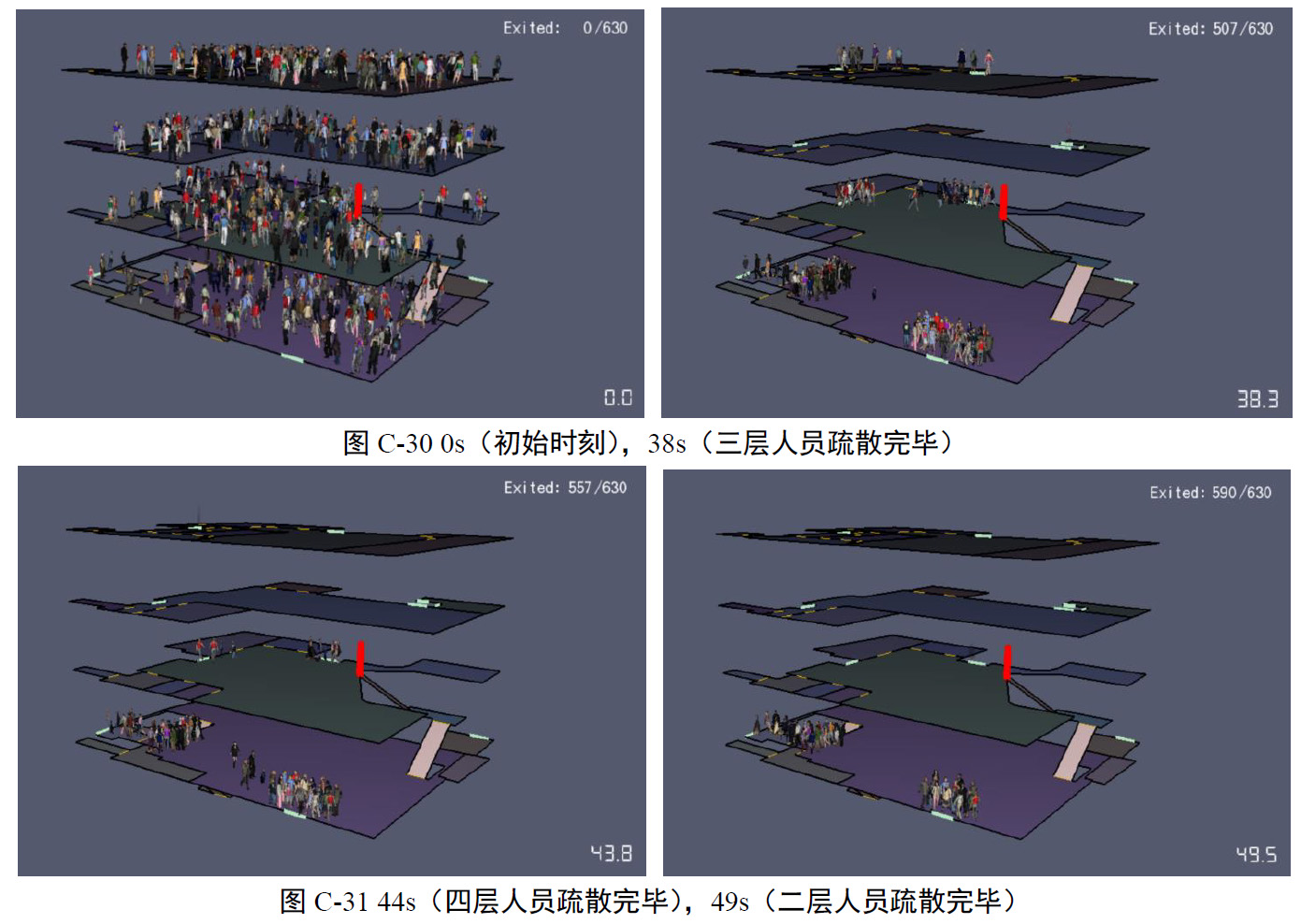
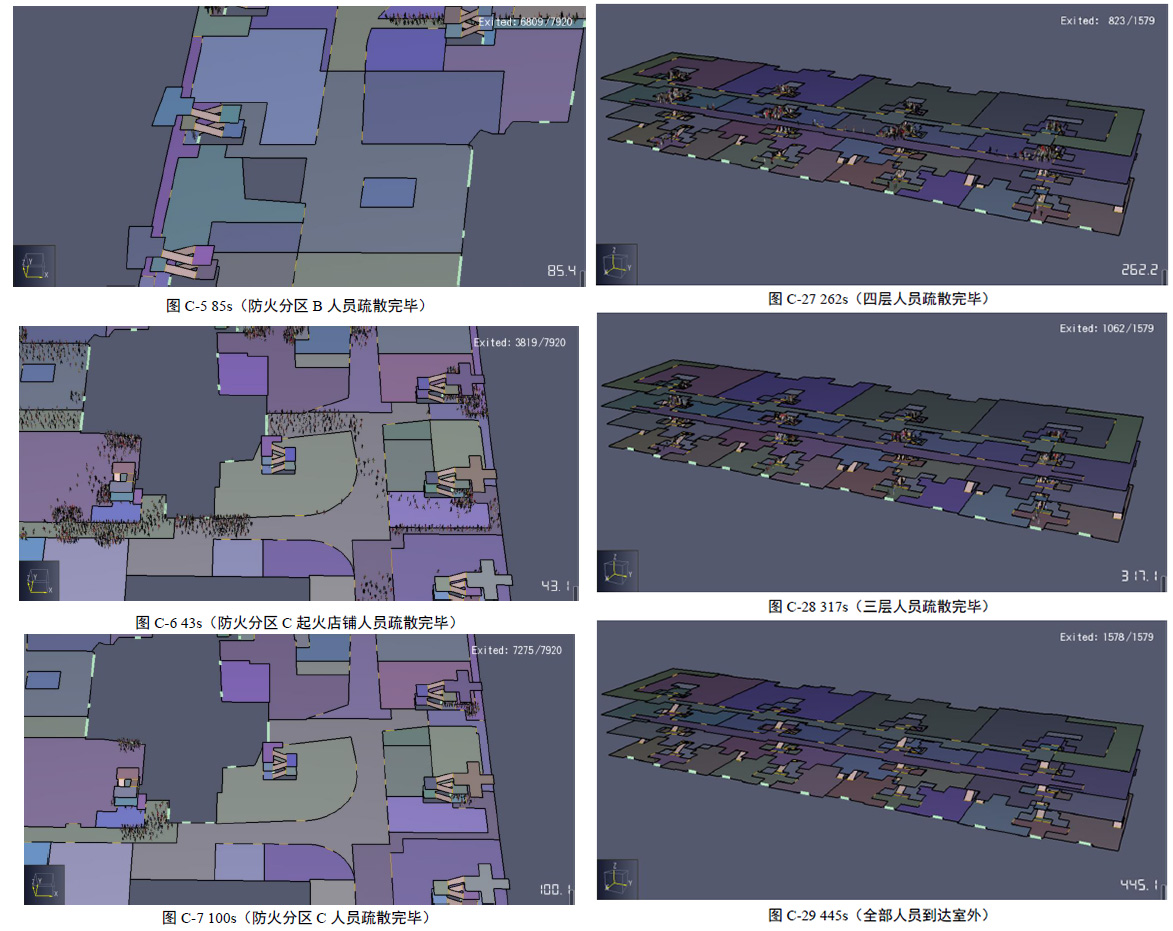
作为北京市既有建筑改造消防设计的首批试点,项目面对新旧规范衔接的挑战,采取了“分类施策”的性能化论证路径。通过精细化的防火分区边界优化与下沉广场的有效利用,团队实现了整体消防安全性能的“动态平衡”。这一探索不仅为国际品牌扫清了定制化设计的技术障碍,也为全国同类城市更新项目提供了可复制的范本。
As one of the first pilot projects in Beijing for the fire safety design of existing building renovations, the project faced the challenge of bridging old and new codes and adopted a “category-based” performance-based approach. Through refined optimization of fire compartment boundaries and the effective utilization of the sunken plaza, the team achieved a “dynamic balance” in overall fire safety performance. This exploration not only removed technical barriers to customized design for international brands but also provided a replicable model for similar urban renewal projects across the country.
∇ 消防疏散行动时间模拟图 / Fire evacuation operation time simulation diagram Credit:建研防火科技有限公司
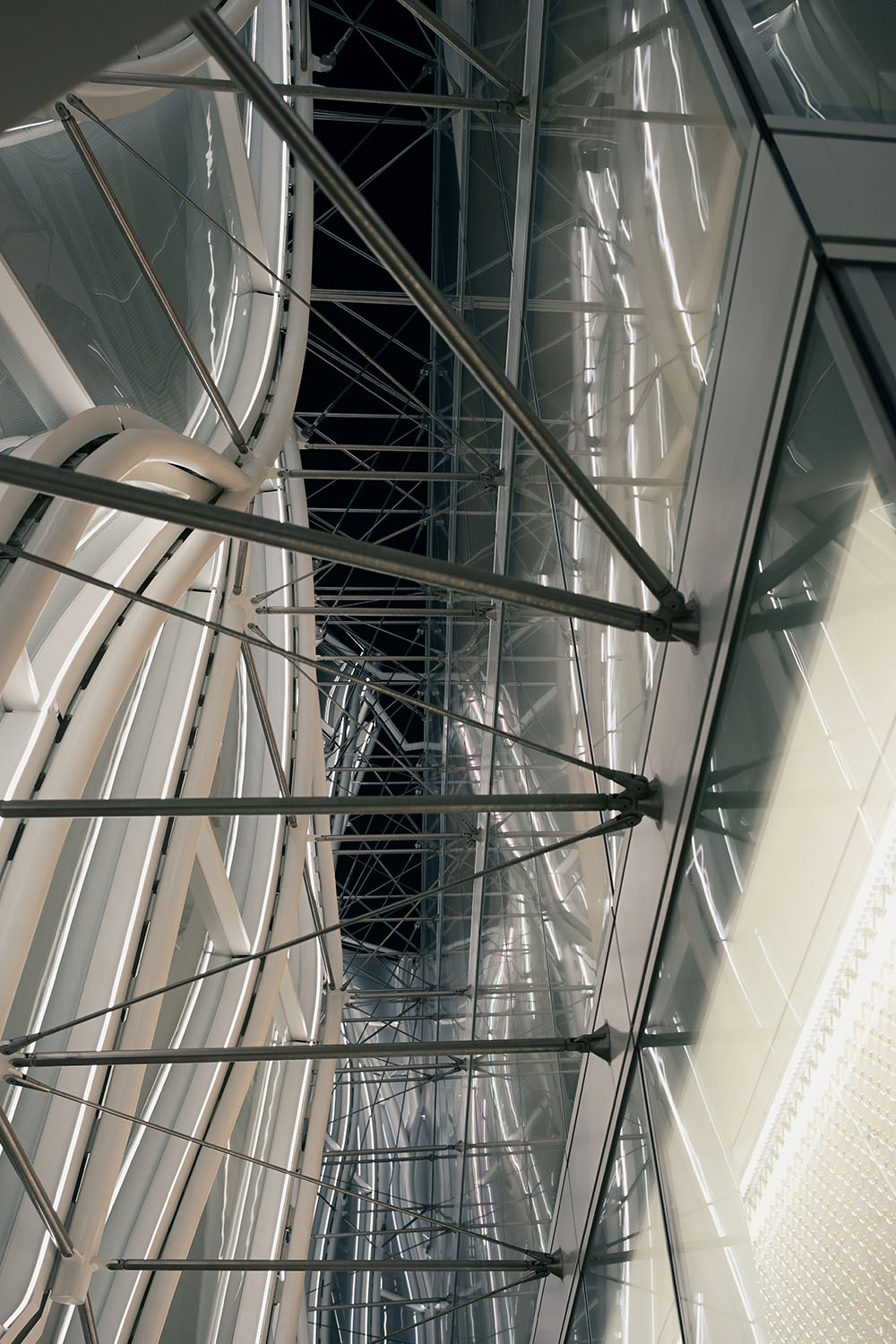
∇ 轻钢龙骨结构加固节点 / Light Steel Keel Structure Reinforcement Joint
05 绿色低碳与健康环境
Green Low-carbon and Healthy Environment
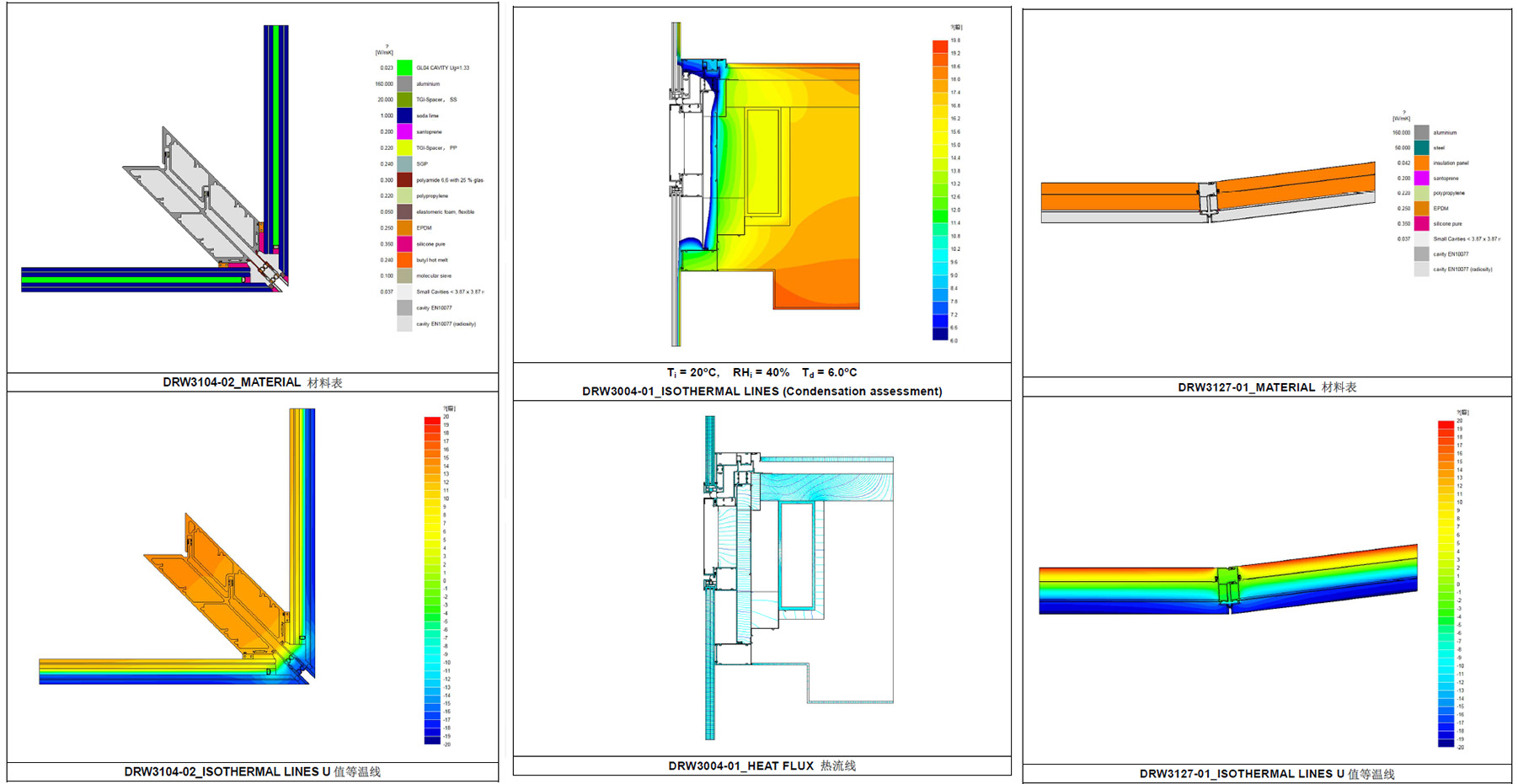
本项目深度贯彻“绿建二星”与WELL健康理念。外立面应用双银Low-E玻璃提升热工性能,冷热源系统升级为高效机组。设计通过下沉广场与采光天窗将自然采光引入地下一层,辅以智能能源管理平台与PM2.5联动新风系统,实现了品牌美学诉求与低碳性能的协同统一。
This project thoroughly implements the “Two-Star Green Building” standard and WELL health concepts. The facade utilizes double-silver Low-E glass to improve thermal performance, and the heating and cooling source system has been upgraded with high-efficiency units. Natural lighting is introduced to the first underground floor through the sunken plaza and skylights, supplemented by an intelligent energy management platform and a PM2.5-linked fresh air system, achieving a harmonious integration of brand aesthetics and low-carbon performance.
∇ 幕墙节点热工性能模拟报告 / Thermal performance simulation report of curtain wall nodes Credit: Permasteelisa Group
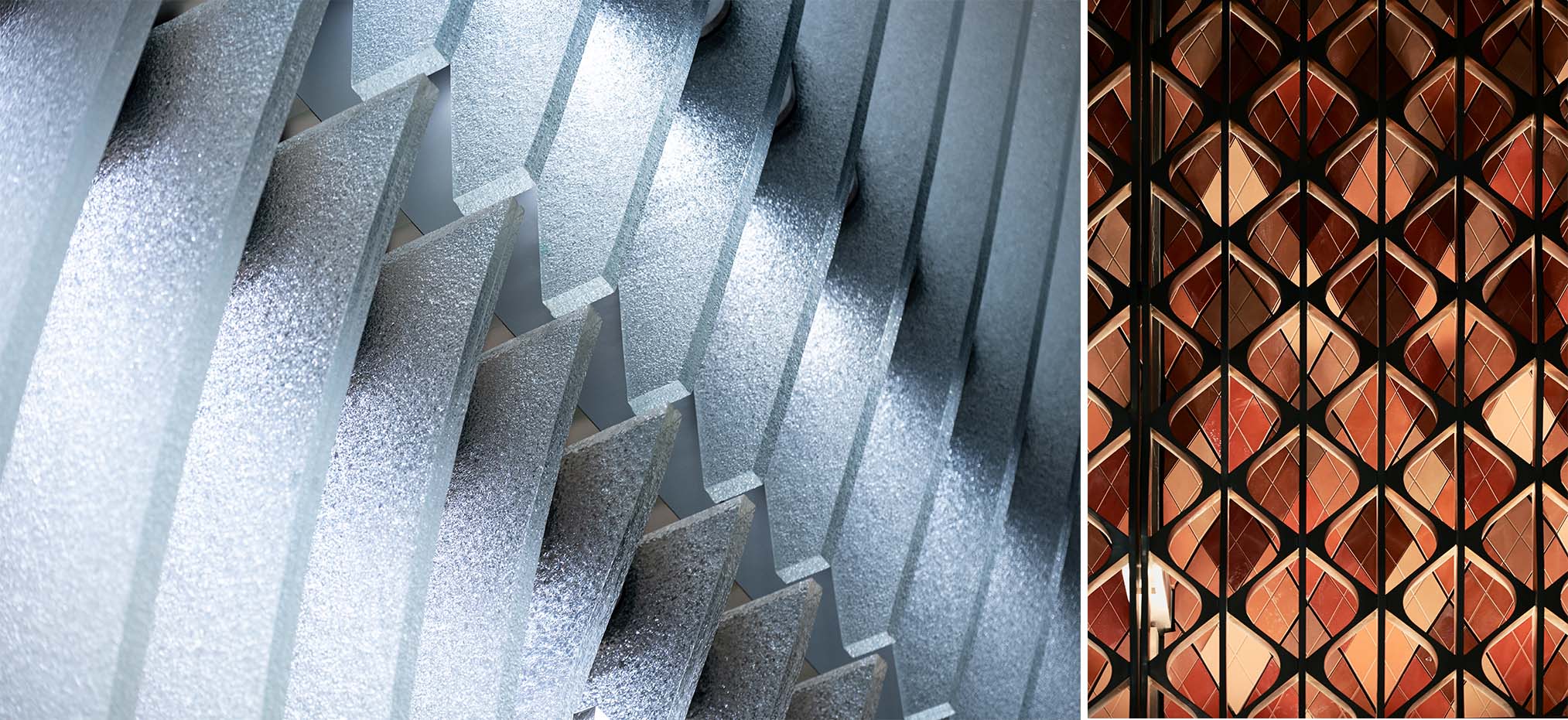
∇ 高品质绿色建材在光影下的质感 / Close-up of materials showing the texture of high-quality green building materials under light
06 数字化协同:从点云到数字孪生
Digital Collaboration: From Point Cloud to Digital Twin
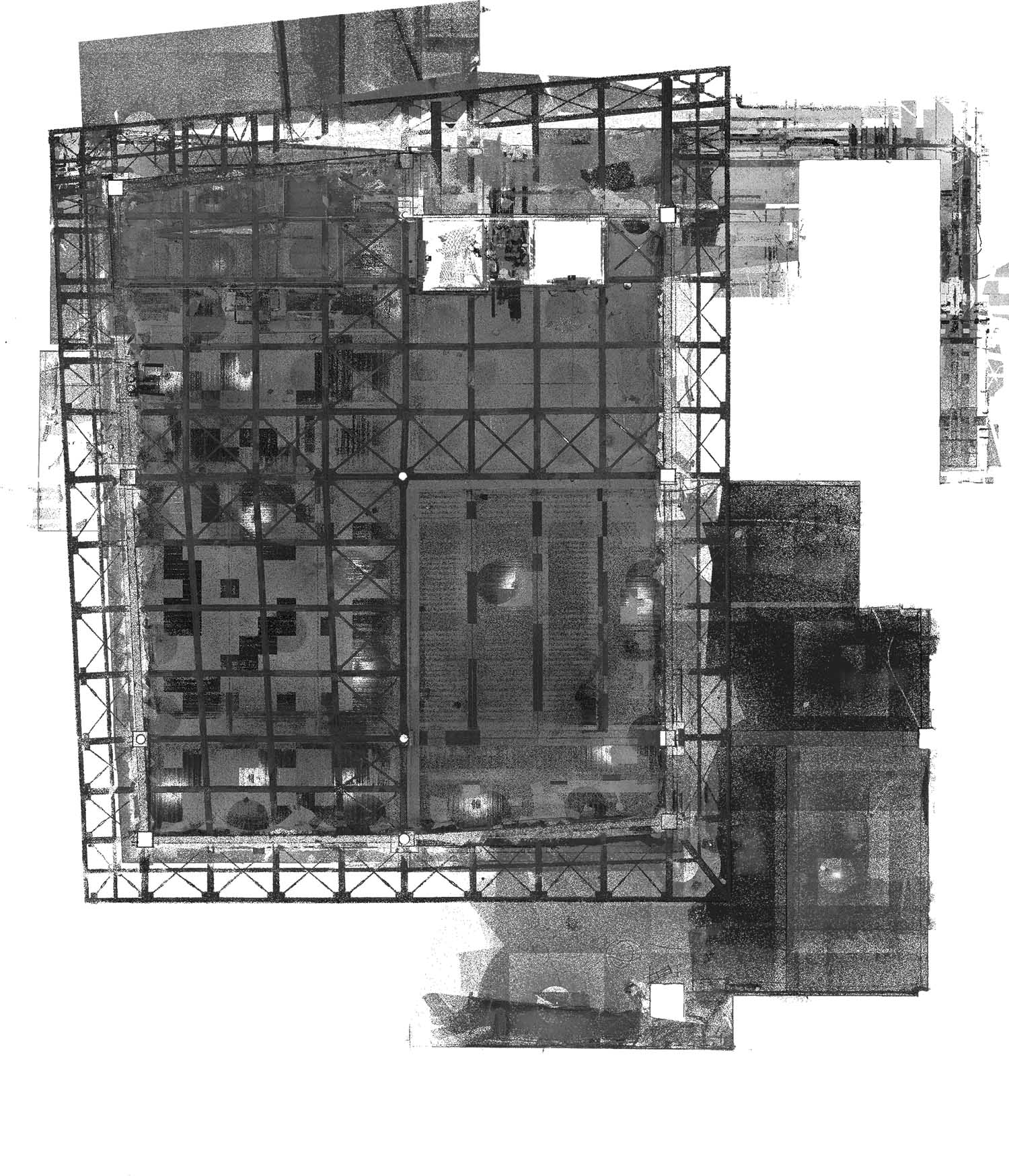
项目全过程采用BIM正向设计。参数化工具不仅用于幕墙方案的成本控制与美学比选,更确保了独特造型与绿色性能的统一。交付的竣工BIM模型集成了所有构件信息,作为一套可控制、可复制、可追溯的精益建造与管理系统,为后续的精细化运营奠定了“数字孪生”基础。
The entire project process adopts BIM forward design. Parametric tools are not only used for cost control and aesthetic comparison of curtain wall schemes but also ensure the integration of unique form and green performance. The delivered as-built BIM model integrates all component information, serving as a controllable, replicable, and traceable lean construction and management system, laying a “digital twin” foundation for subsequent refined operations.
∇ 三维激光扫描点云模型 / 3D laser scanning point clouds model
07 城市价值与公众评价
Urban Value and Public Perception
改造后的三里屯北区不再只是商业空间,而是以“无界秀场”的身份重新定义了区域品质,形成了一个以策展思维驱动、融合高奢美学与叙事性品牌的沉浸式商业聚落。截至2026年,通过顶级品牌的聚集效应与公共空间的焕新,项目成功激发了大三里屯商圈的升级势能。它通过“外部统一、内部解放”的精准操作,证明了在高度密集的城市核心区,通过技术赋能与协同整合实现空间价值最大化的可能性。
The renovated Sanlitun North Area is no longer merely a commercial space but has redefined the regional quality as a “boundless showground,” forming an immersive commercial cluster driven by curatorial thinking, integrating high-end luxury aesthetics with narrative-driven brands. As of 2026, leveraging the agglomeration effect of top-tier brands and the revitalization of public spaces, the project has successfully stimulated the upgrading potential of the greater Sanlitun commercial district. Through the precise strategy of “external unity and internal liberation,” it demonstrates the possibility of maximizing spatial value in a highly dense urban core by means of technical empowerment and collaborative integration.
∇ 更新开放前的城市活动 / City events before the update opens
∇ 总平面图 / Site Plan
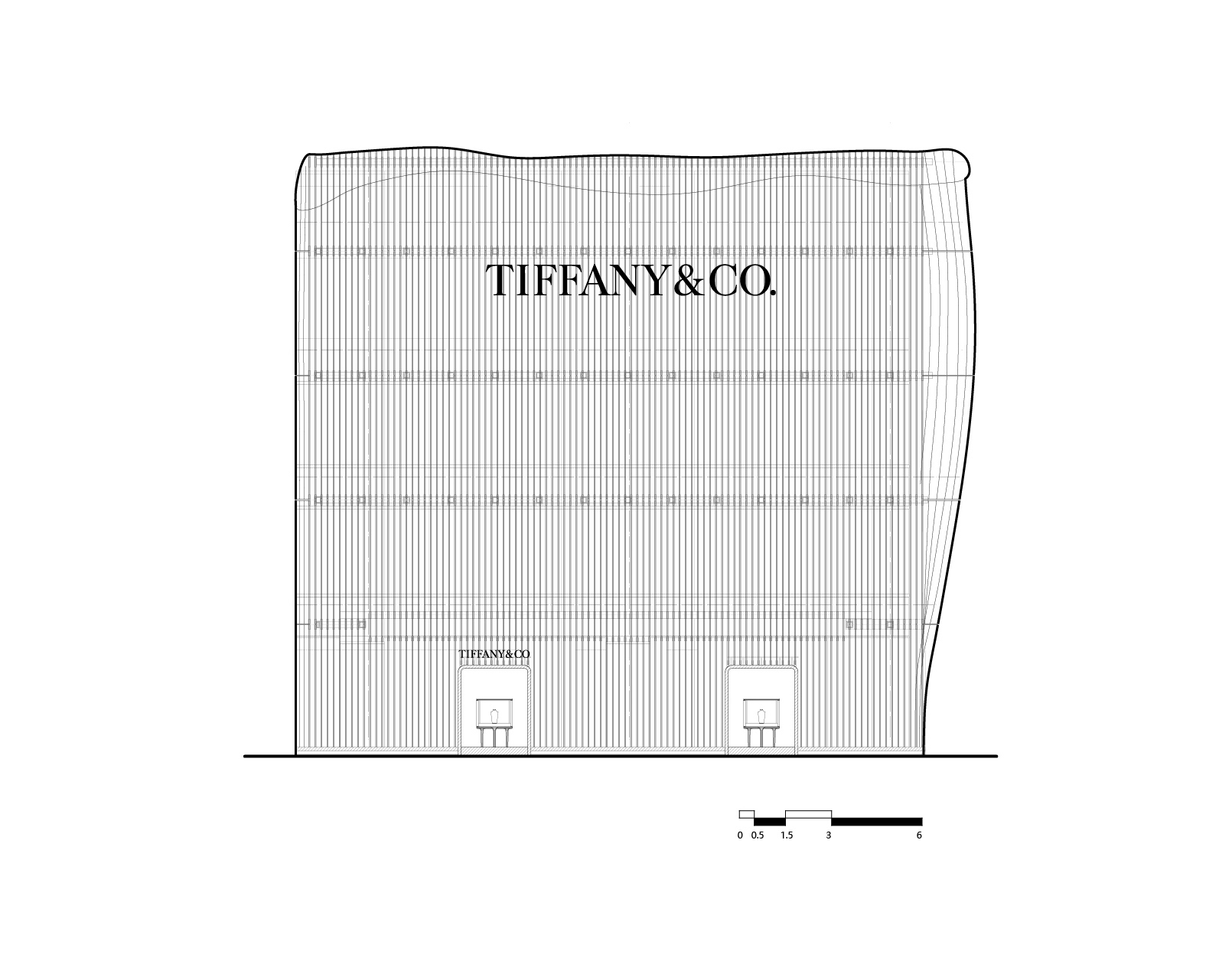
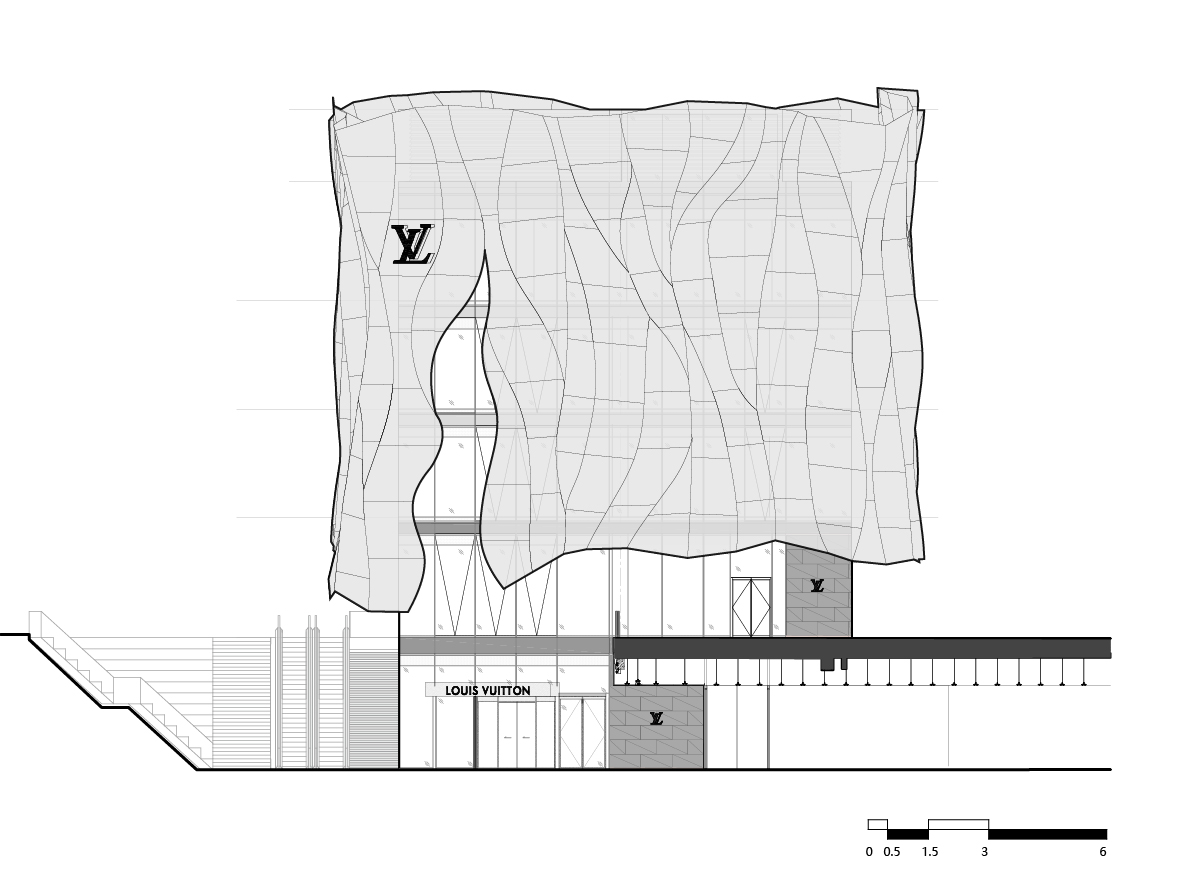
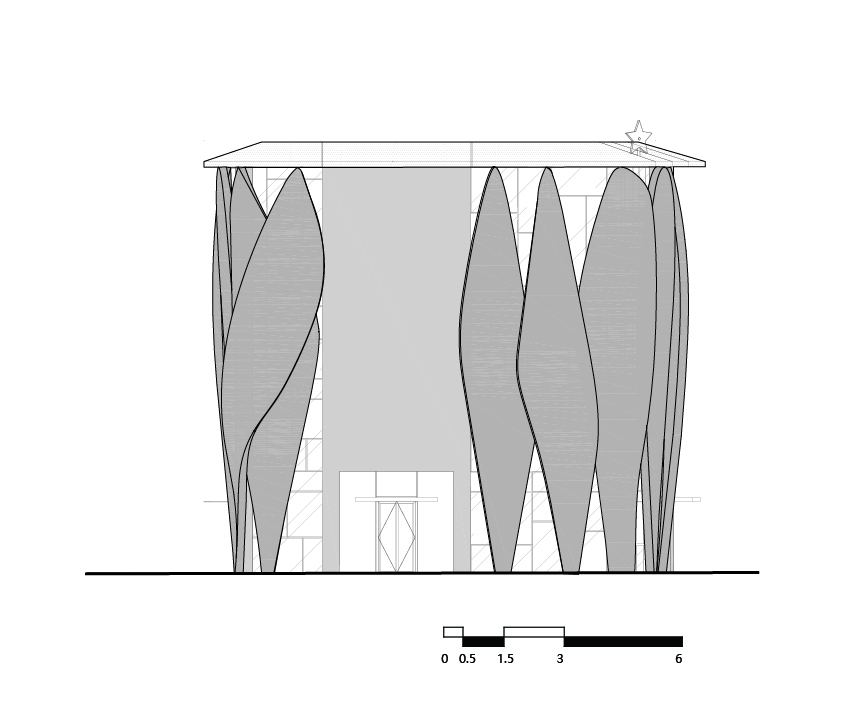
∇ 典型立面与剖面图 / Typical Elevations and Sections
项目名称:三里屯太古里北区改造工程
设计单位(LDI):中国建筑科学研究院有限公司
联系邮箱:urban-arch@cabr-jygh.com
咨询及方案:中国建筑科学研究院有限公司; 欧华尔顾问公司;青木淳建筑计画事务所; 包赞巴克事务所;Atelier Pacific Ltd. ; ARUP奥雅纳工程咨询(上海)有限公司;RFR阿法建筑设计咨询(上海)有限公司;RDAI;广州市德臣装饰工程有限公司 CT-2;上海原聿建筑装饰工程有限公司;PURE CREATIVE INTERNATIONAL(PCI);利士有限公司 Ferrier Chan & Partners Limited;
中国建筑科学研究院有限公司设计团队:
项目负责人:傅少鹏
建筑:傅少鹏 郑岩 黄厦 卢博 杨洋 张宇 周宣彤 尹霁阳
结构:关洪成 康佩佩 张非凡
给排水:张之川 王熠宁 焦凡凡
暖通:周海珠 周立宁 刘佩枝
电气:张凡伟 侯艳丽
室内精装:万伟民 卢博 杨洋
场地景观:何苗 卢博 郑岩
完成年份:202602
建筑面积(平方米/坪):34350㎡
项目位置:北京市朝阳区三里屯北区
摄影师:李泊洋





评论(0)