
项目定位:以艺术语言织补老城文脉
Project Positioning: Weaving and Mending the Cultural Context of the Old City Through Art Language
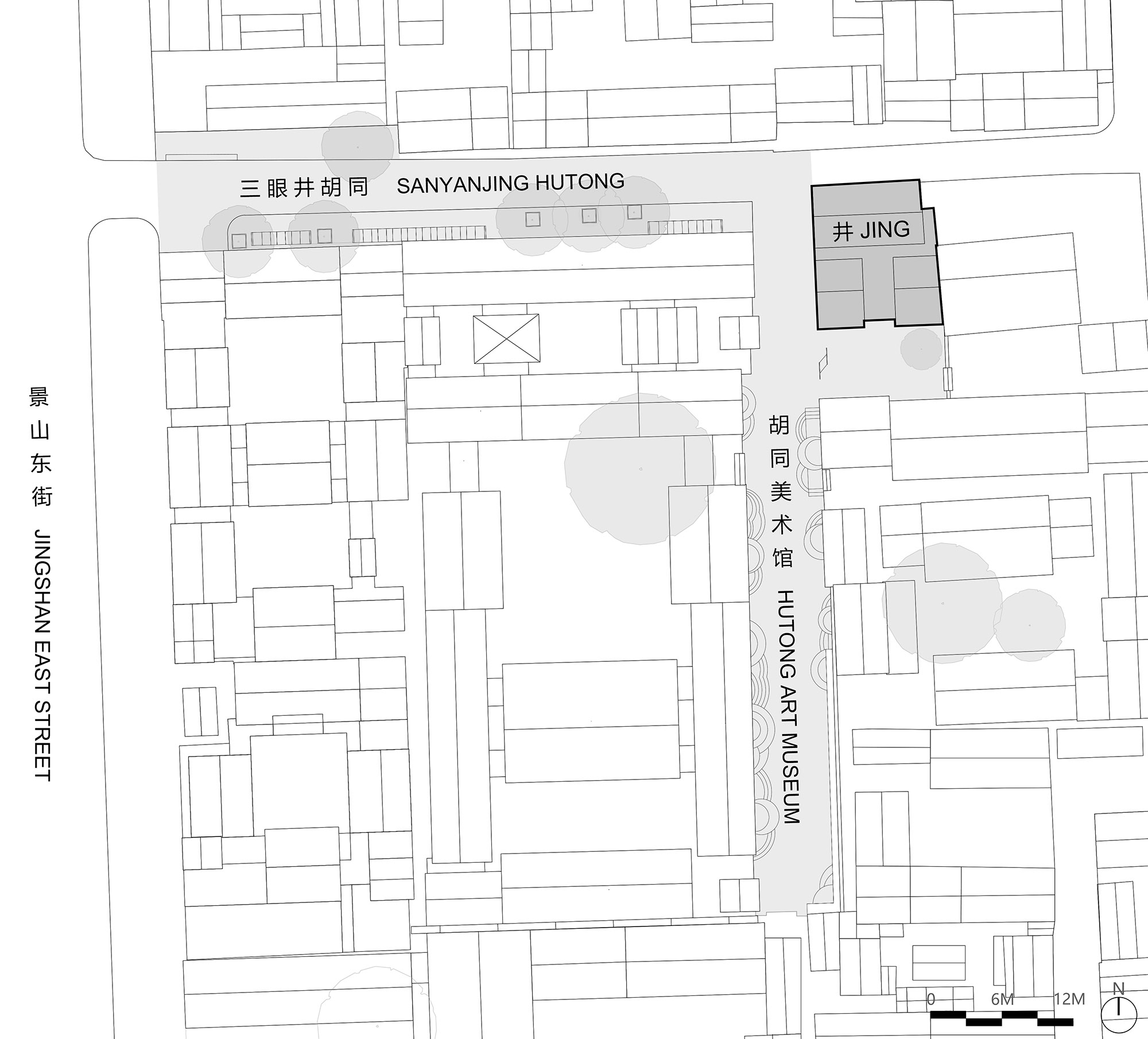
在北京老城的肌理深处,景山东路东侧的三眼井胡同,曾是老北京“围井而居”生活记忆的鲜活载体。这里不仅保留着四合院灰砖叠砌的建筑遗存,更承载着“甜水井”滋养下的胡同文化脉络。朱小地工作室以“一砖一瓦”入口装置、“井JING”和”胡同美术馆”三个空间为载体,通过建筑与艺术语言延续历史记忆,使当代人得以真切触摸老城的人文温度与传统智慧。
Deep within the texture of Beijing’s old city, Sanyanjing Hutong, located on the east side of Jingshan East Road, was once a vivid carrier of the living memory of “living around a well” in old Beijing. This place not only preserves the architectural remains of siheyuan (courtyard houses) built with stacked gray bricks but also carries the cultural context of hutongs nurtured by the “sweet well”. Taking three spaces – the entrance installation “One Brick, One Tile” , “JING”, and “Hutong Art Museum” – as carriers, ZXD Architects extends historical memories through architectural and artistic language, allowing contemporary people to truly feel the humanistic warmth and traditional wisdom of the old city.
∇ 总平面图_site plan©ZXD Architects
设计理念:以空间流动串联时间记忆
Design Concept: Connecting Memories of Time Through Spatial Fluidity
项目以“井”文化为核心,采用“微介入+功能补位”策略,在保留胡同肌理的同时巧妙植入新功能,再现“围井取水、共享邻里”的生活场景。通过注入市井烟火气与公益情怀,使百年胡同在延续邻里记忆的同时,焕发新的生命力。
Centered on the “well” culture, the project adopts a “micro-intervention + functional supplementation” strategy. While preserving the texture of the hutong, it subtly embeds new functions to recreate the living scene of “gathering around the well to fetch water and sharing a neighborhood bond”. By infusing the vibrancy of local life and a public welfare spirit, the century-old hutong maintains the memory of neighborhood ties while radiating new vitality.
以“流动”为空间线索,通过建筑体量、装置形态与光影变化的互动,营造“记忆可感知、时光可对话”的空间意象。从“一砖一瓦”的入口序曲,到“井 JING”室内外空间的柔和渗透,再到“胡同美术馆”的线性延展,形成连贯而富有节奏的建筑体验序列。将老北京“串胡同、进院落”的传统生活场景,转化为现代人“可进入、可停留、可记忆”的当代场所。
With “fluidity” as the spatial thread, the project creates a spatial imagery of “perceivable memories and communicable time” through the interaction of architectural volume, installation form and light-shadow changes. From the “One Brick, One Tile” entrance as a prelude, to the gentle penetration of indoor and outdoor spaces in “Jing”, and then to the linear extension of “Hutong Art Gallery”, a coherent and rhythmic sequence of architectural experiences is formed. It transforms the traditional living scene of “wandering through hutongs and entering courtyards” in old Beijing into a contemporary venue that is “accessible, stayable and memorable” for modern people.
设计策略:艺术视角下的记忆唤醒
Design Strategy: Awakening Memories from an Art Perspective
“一砖一瓦”:建筑原型的当代表达
“One Brick, One Tile”: Contemporary Expression of Architectural Prototypes
∇ 位于三眼井胡同入口西的“一砖”_one brick located at the west entrance of Sanyanjing Hutong©张哲鹏
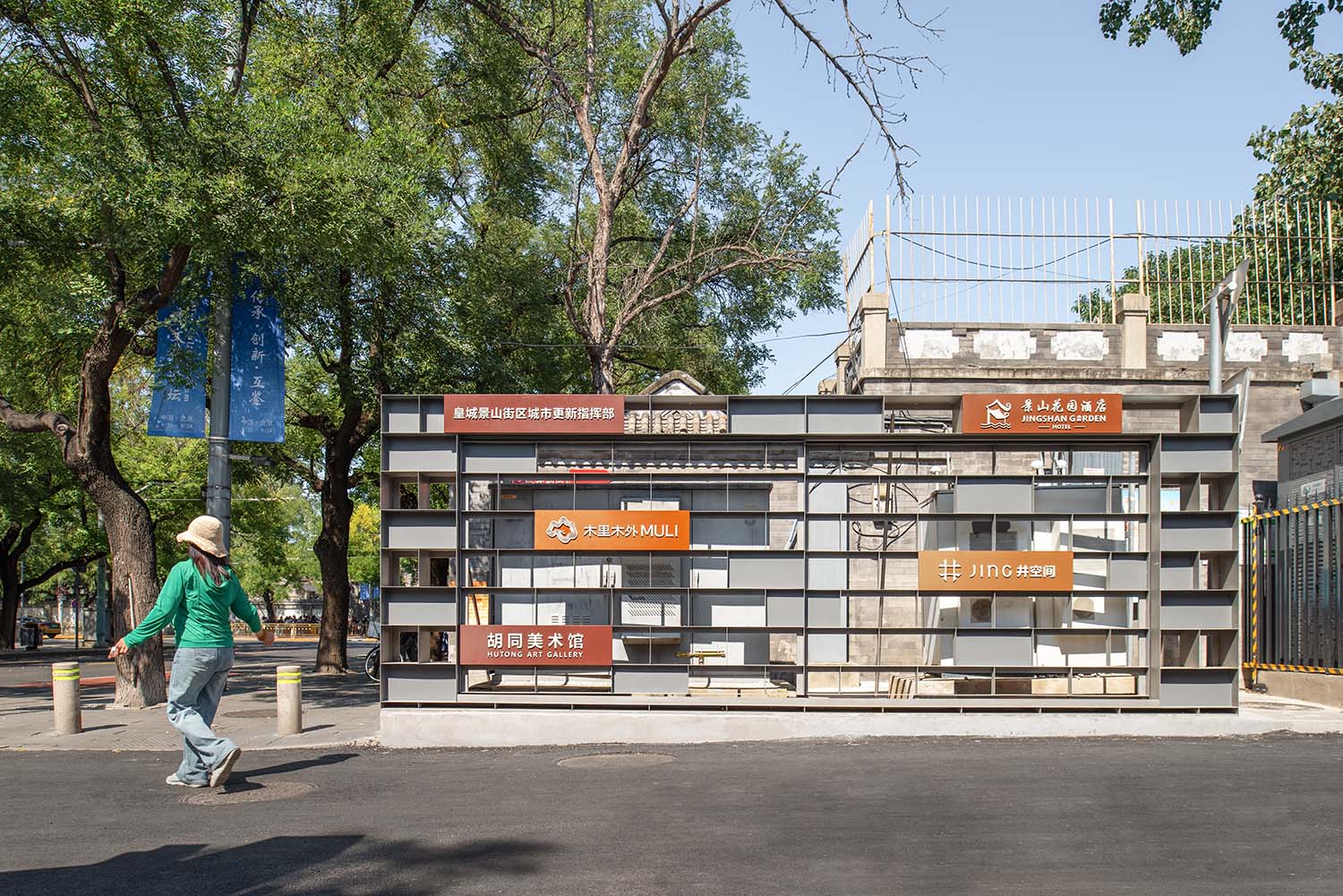
“一砖一瓦” 以三眼井胡同西口景观整治与形象提升为切入点,以公共艺术为城市更新植入载体,从胡同与四合院肌理中提炼 “砖”、“瓦” 这两个承载老北京记忆的原型。
Taking the landscape improvement and image enhancement of the west entrance of Sanyanjing Hutong as a starting point, “One Brick, One Tile” uses public art as a carrier for urban renewal. It extracts “brick” and “tile” – two prototypes carrying the memories of old Beijing – from the texture of hutongs and siheyuan (courtyard houses).
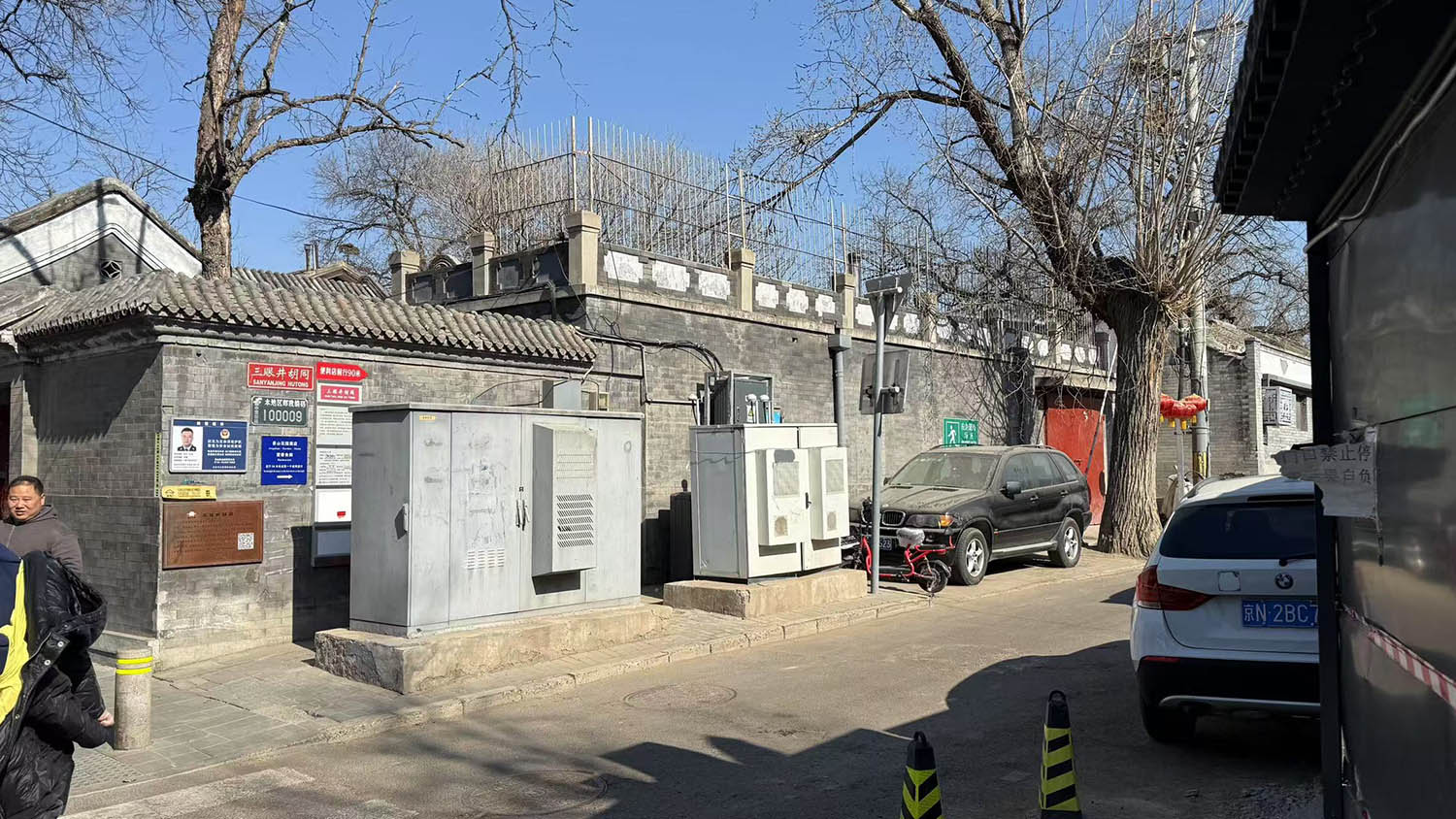
∇ “一砖”原状_one brick before©ZXD Architects
∇ “一砖”改造后_one brick after©张哲鹏
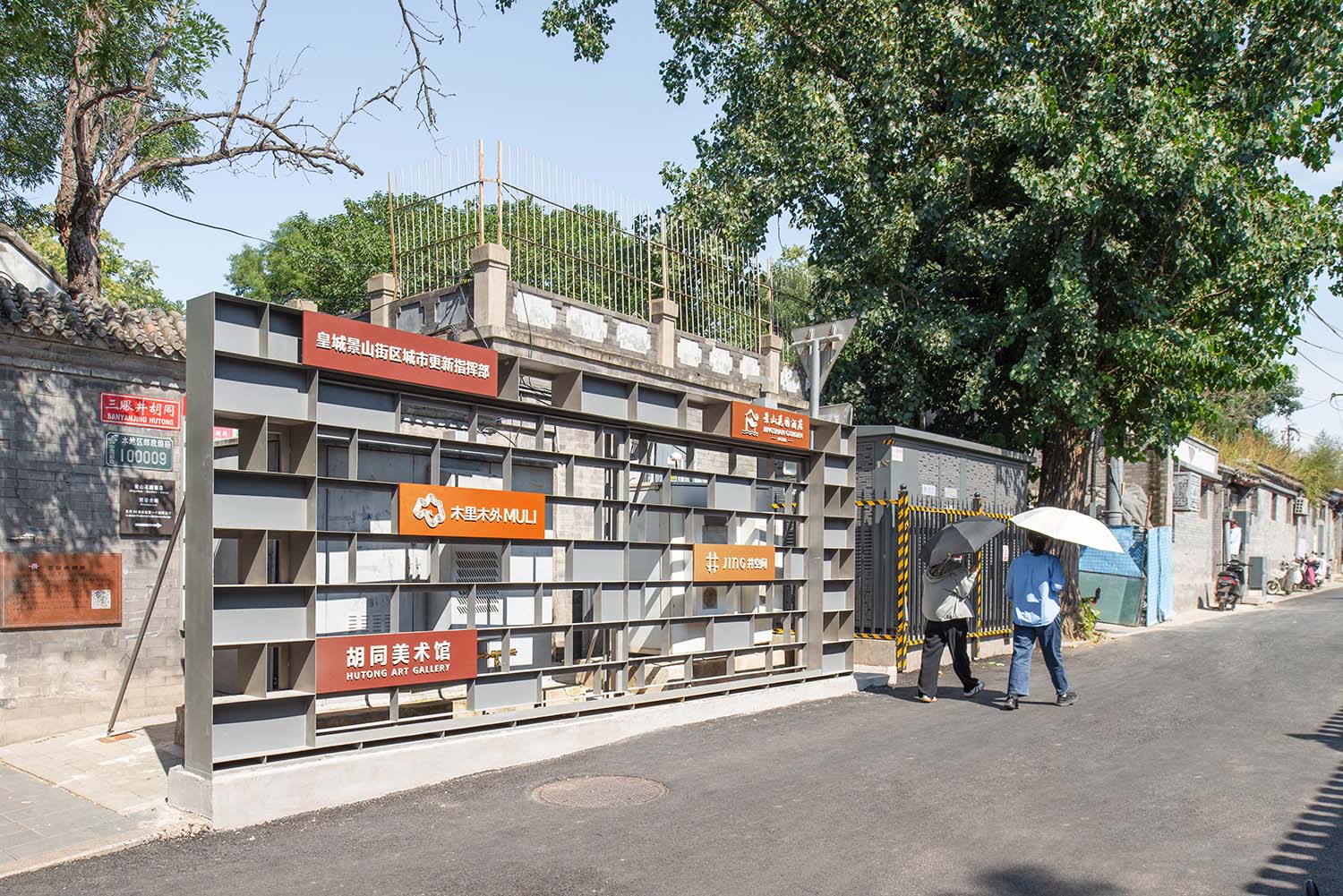
北侧“一砖”的灵感源于传统灰砖墙的砌筑逻辑。设计将其抽象为金属花格结构,巧妙地遮挡了街角的变压器。花格间嵌入已入驻胡同的商家标识,使装置既成为一面灵活的导示墙,不仅在虚实变化间创造出动态的视觉效果,同时成为胡同入口的建筑记忆锚点。
The “One Brick” on the north side draws inspiration from the masonry logic of traditional gray brick walls. The design abstracts it into a metal lattice structure, which subtly conceals the transformer at the street corner. Business signs of the shops that have settled in the hutong are embedded between the lattices, making the installation a flexible guide wall. It not only creates a dynamic visual effect through the alternation of solid and void but also serves as an architectural memory anchor at the hutong entrance.
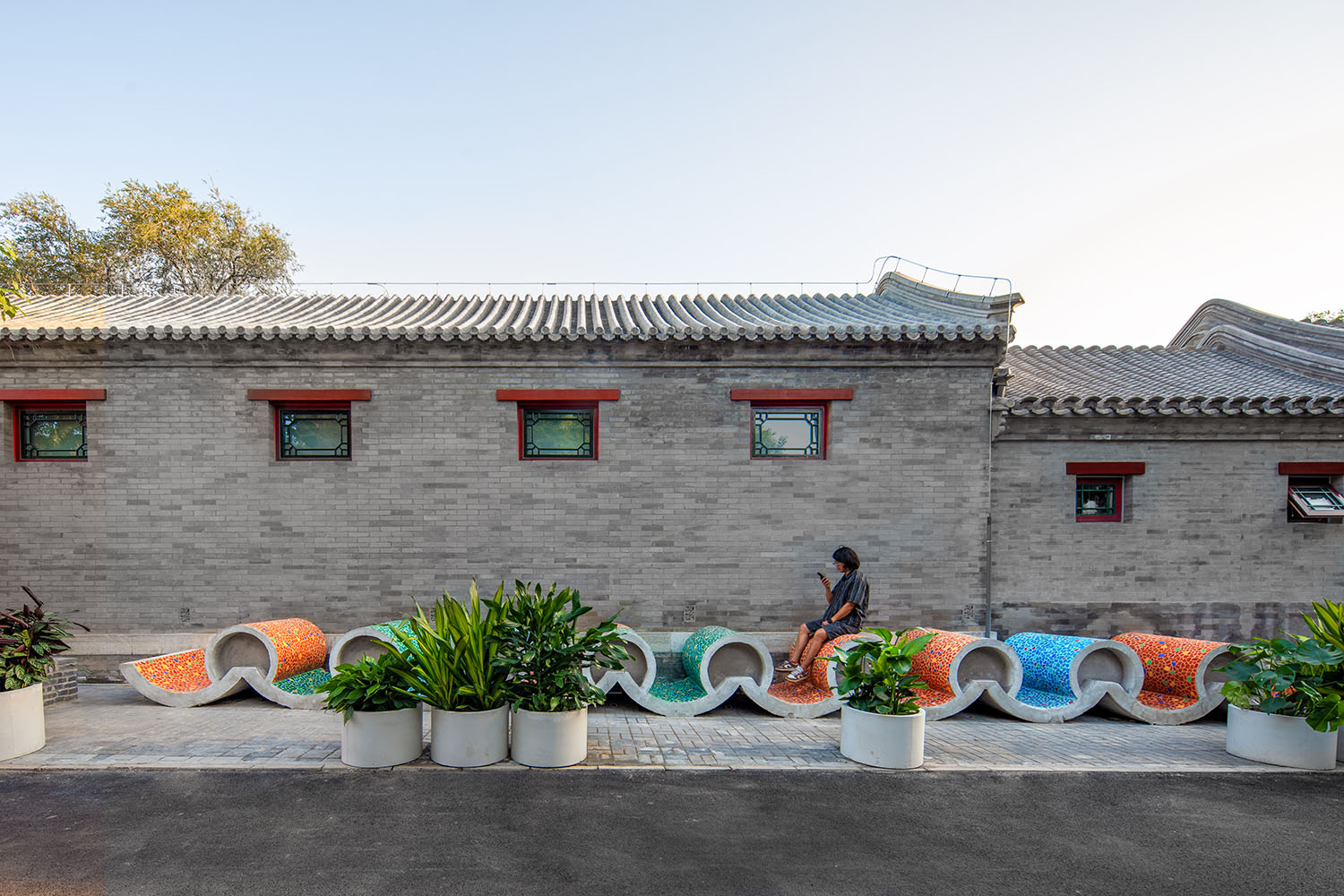
∇ “一瓦”_one tile©朱小地
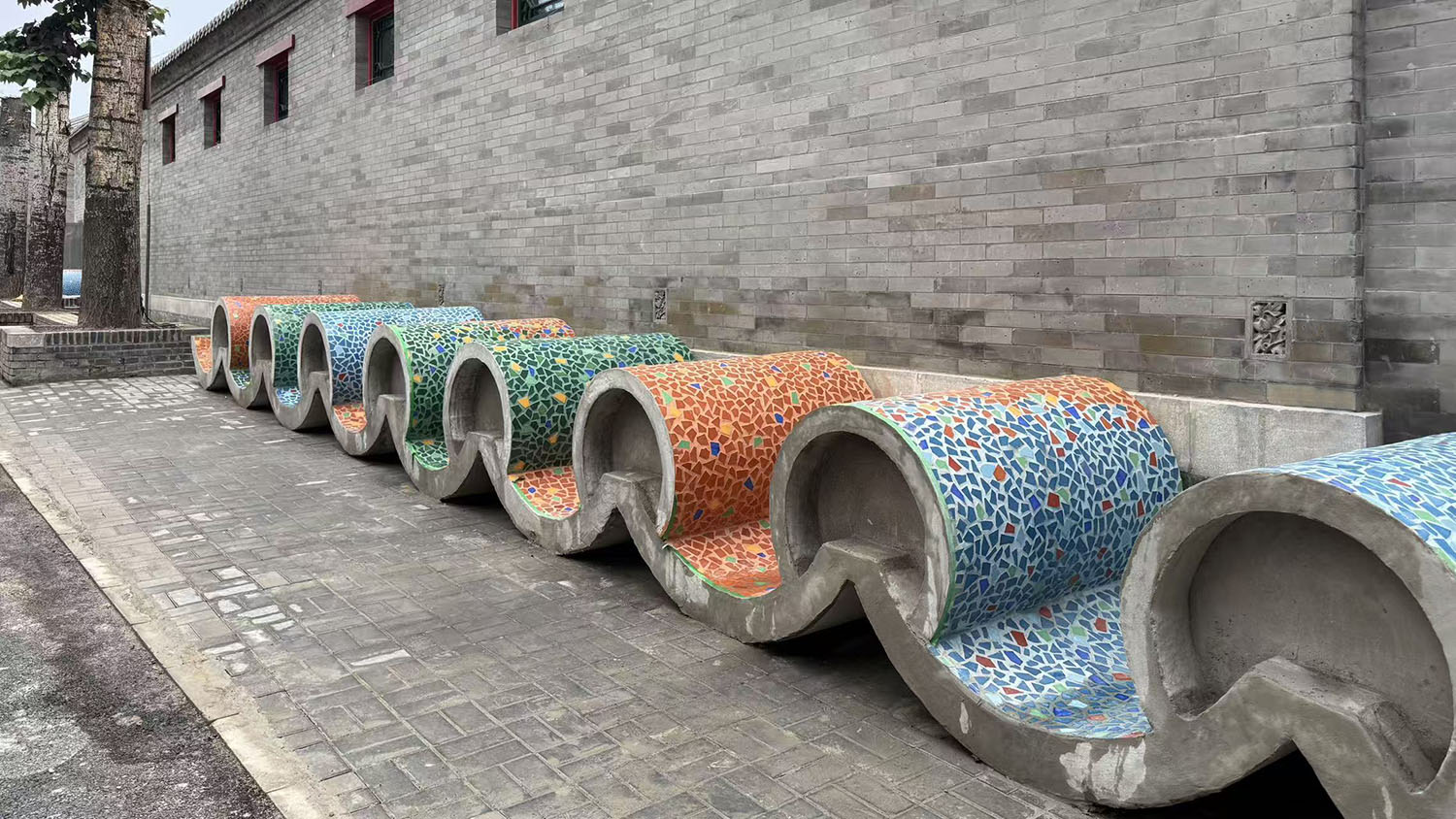
∇ “一瓦”_one tile©张哲鹏
相关文章推荐




评论(0)