
设计理念
光,为笔,作画。
木,温润,成茶。
一石一砖叠山水,
墨色深处,游园…
本项目旨在打造一处超越日常的沉浸式体验场所,它既是用餐的空间,更是心境转换、精神游历的载体。设计以中国古典园林的“游观”哲学为内核,脱胎于传统形制,转而以现代极简的黑白语汇和光影叙事,重塑一场当代的“游园”体验。
This project aims to create an immersive experience venue that transcends the everyday, serving not only as a dining space but also as a carrier for mindset transformation and spiritual journey. The design is rooted in the philosophy of “touring and viewing” in classical Chinese gardens, evolving from traditional forms and transforming into a contemporary “garden tour” experience through modern minimalist black and white vocabulary and light and shadow narratives.
最终,这一切思考凝结为一场静默的戏剧。访客的行走路径成为唯一的叙事线索,在明暗交错、虚实相生的序列场景中,完成一次对传统园林游观精神的当代朝圣,抵达物质性与精神性浑然一体的诗意栖居。
Ultimately, all these thoughts condense into a silent drama. The visitor’s walking path becomes the sole narrative thread, completing a contemporary pilgrimage to the spirit of traditional garden tours in a sequence of scenes that alternate between light and dark, illusion and reality, and arriving at a poetic dwelling where materiality and spirituality are seamlessly integrated.
1.设计思考:场地挑战与业主诉求
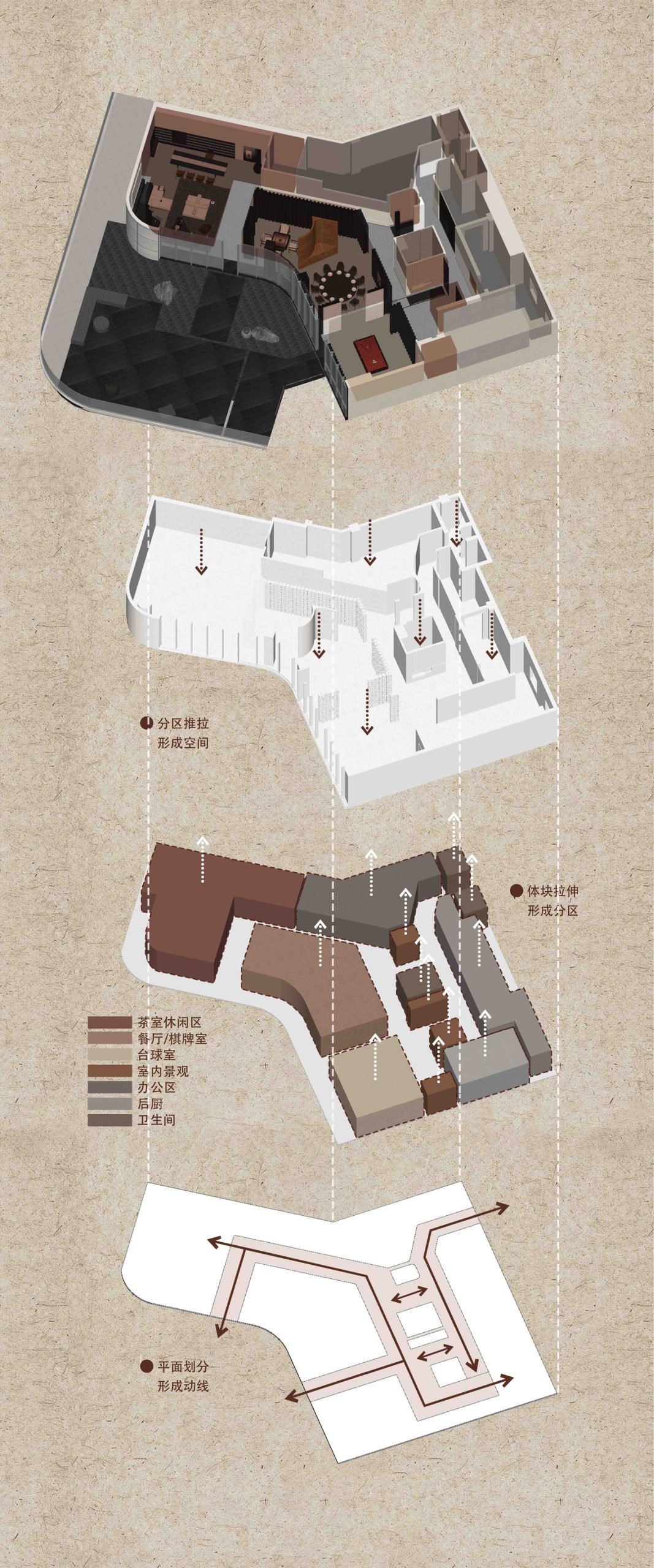
建筑位于特定角落,内部结构柱网密集,导致空间被零散分割,部分区域采光不足且动线迂回。其痛点在于,如何在有限的物理空间内,克服结构限制,并营造出“小中见大”、意蕴无穷的场所精神,从而在竞争激烈的市场中建立独特的品牌价值。
The building is located in a specific corner, with a dense internal structural column grid, resulting in fragmented space division. Some areas suffer from insufficient lighting and circuitous circulation routes. The pain point lies in how to overcome structural constraints within limited physical space and create a place spirit that is “small yet grand” and imbued with profound meaning, thereby establishing unique brand value in a fiercely competitive market.
业主的核心诉求在于:必须满足高端餐饮与会客的功能性需求,同时希望突破常规,打造一个极具辨识度、能提供深度沉浸体验的文化主题空间。面对上述挑战,我们的设计思考并未将劣势视为障碍,而是将其转化为塑造空间独特性的契机。
The core demands of the property owner lie in the need to fulfill the functional requirements of high-end dining and meeting guests, while also aspiring to break through conventions and create a cultural theme space that is highly recognizable and offers a deep immersive experience. Faced with these challenges, our design thinking does not view weaknesses as obstacles, but rather transforms them into opportunities to shape the uniqueness of the space.
2.虚实相生:光影与材质的呼吸对话
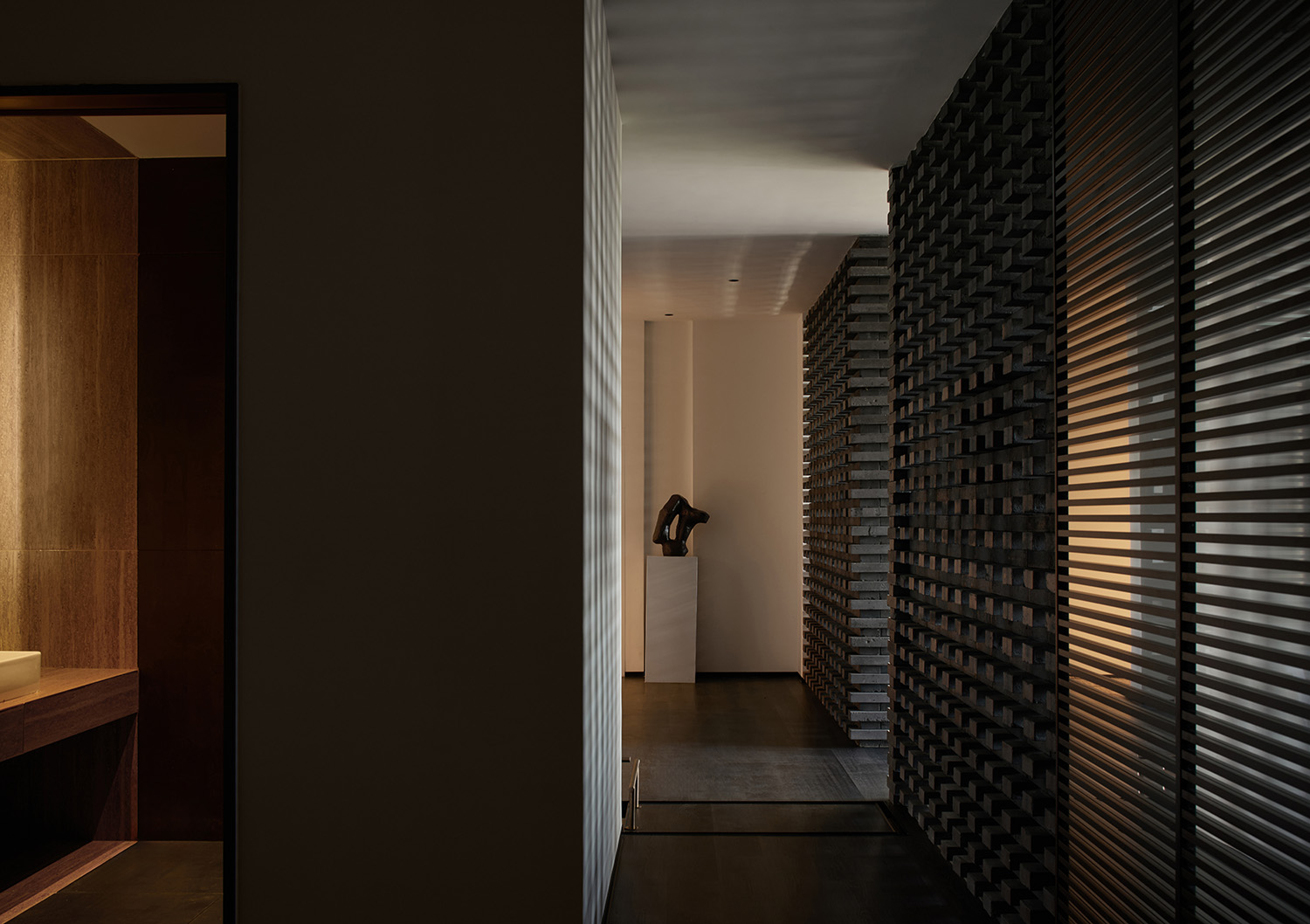
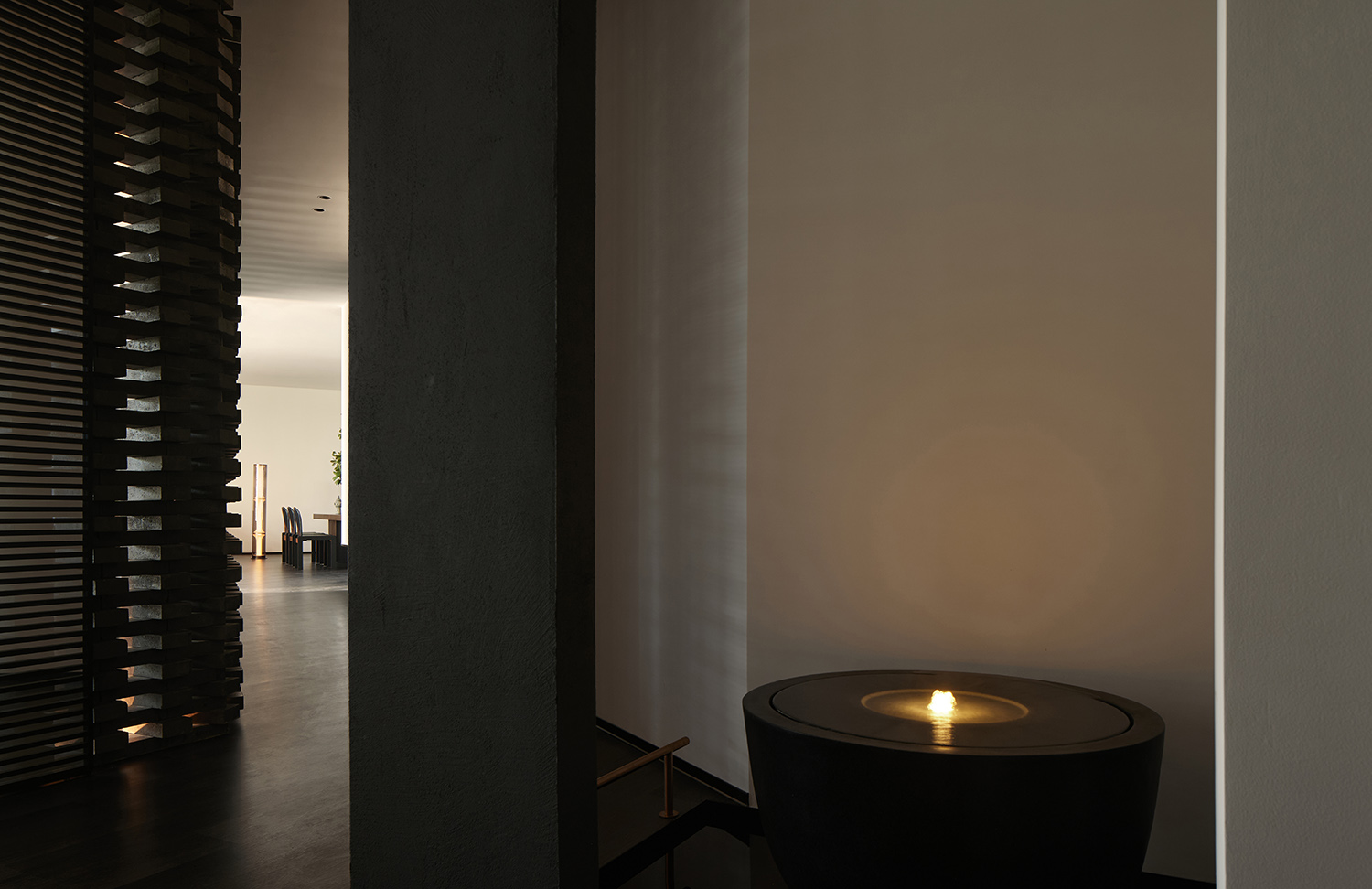
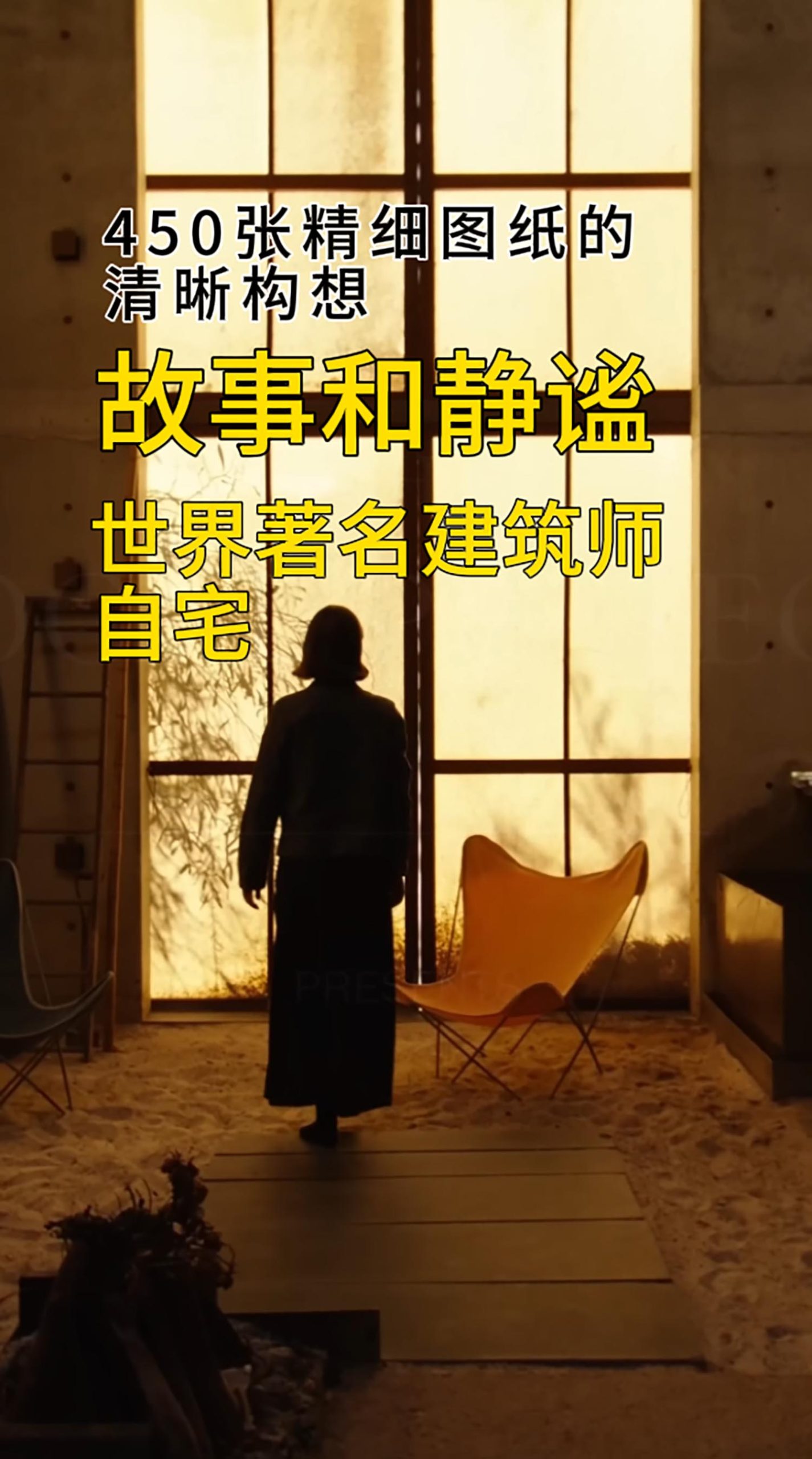
在建筑层面,受路易斯·康“静谧与光明”思想的启发,将空间视为可被光阅读的构造。承重结构与透光界面被清晰分离,墙体不仅是围合要素,更成为捕捉时间流动的容器。黑色体块锚定空间秩序,白色界面则如轻盈画布,在昼夜交替中演绎光影的变奏,实现建筑本体与自然之力在抽象层面的持续对话。
At the architectural level, inspired by Louis Kahn’s philosophy of “serenity and light,” space is conceived as a construct that can be read by light. The load-bearing structure and the translucent interface are clearly separated, with walls serving not only as enclosure elements but also as containers that capture the flow of time. Black volumes anchor the spatial order, while white interfaces act as lightweight canvases, performing variations of light and shadow during the alternation of day and night, enabling a continuous dialogue between the architectural essence and the forces of nature at an abstract level.
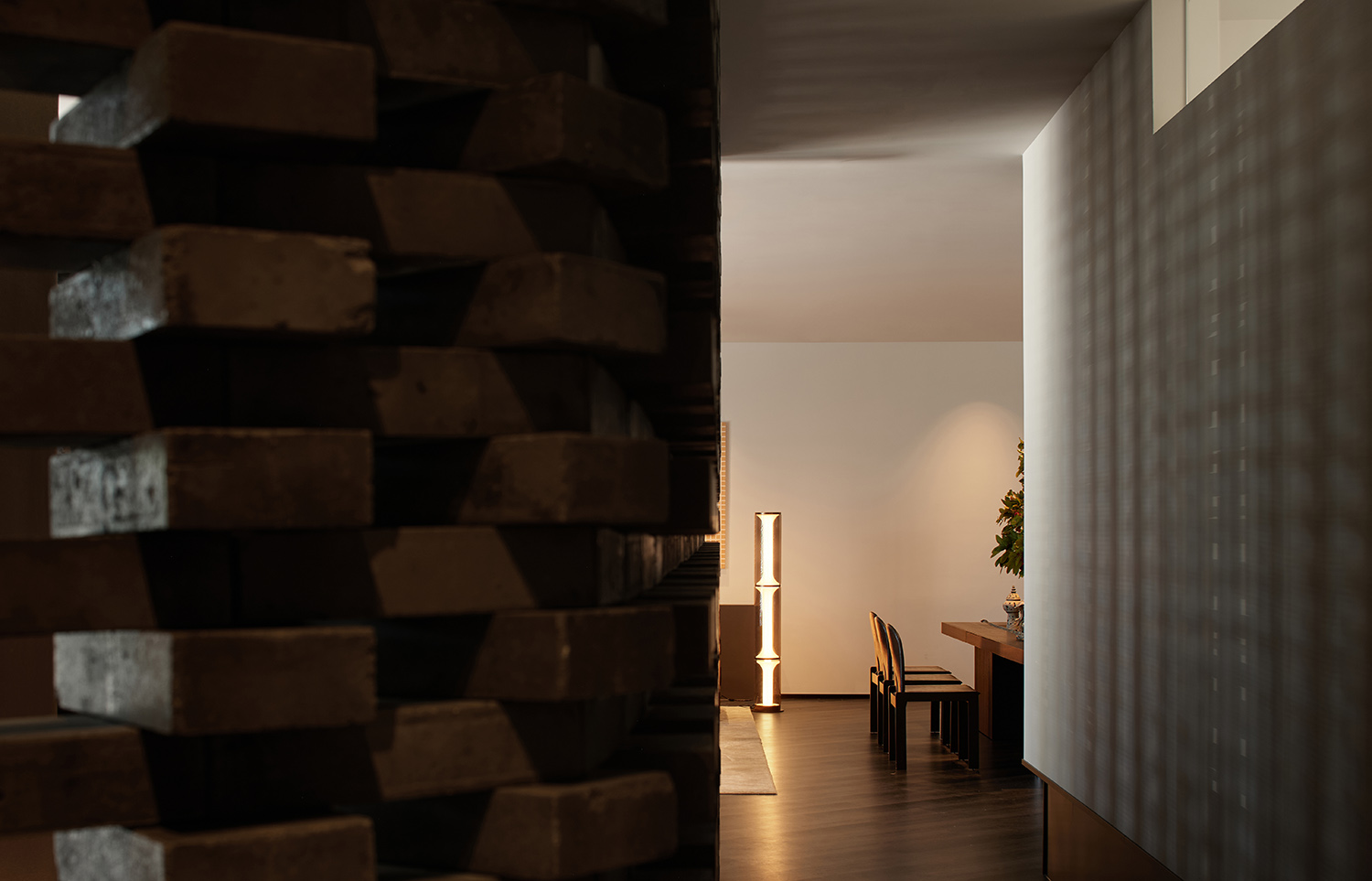
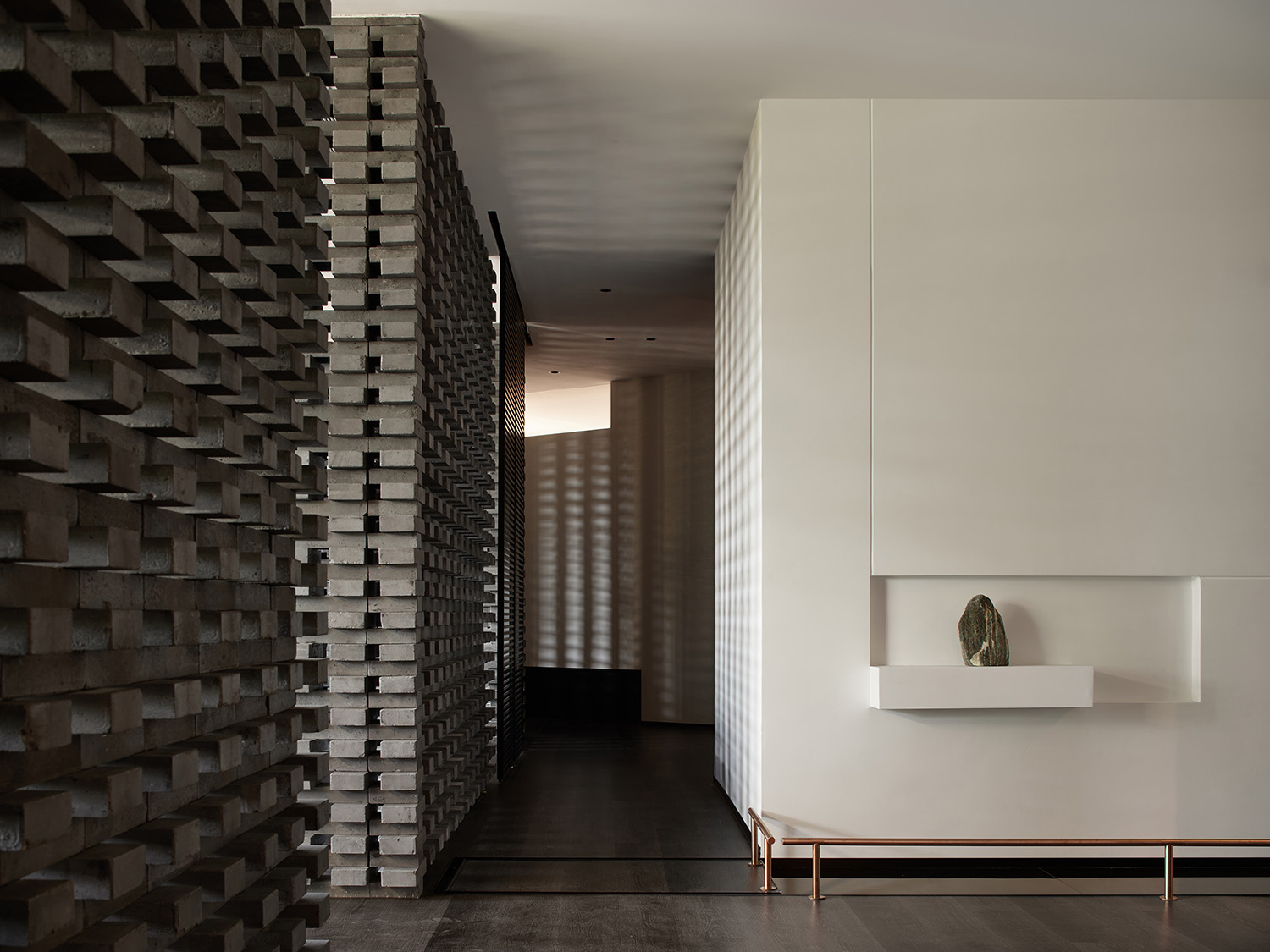
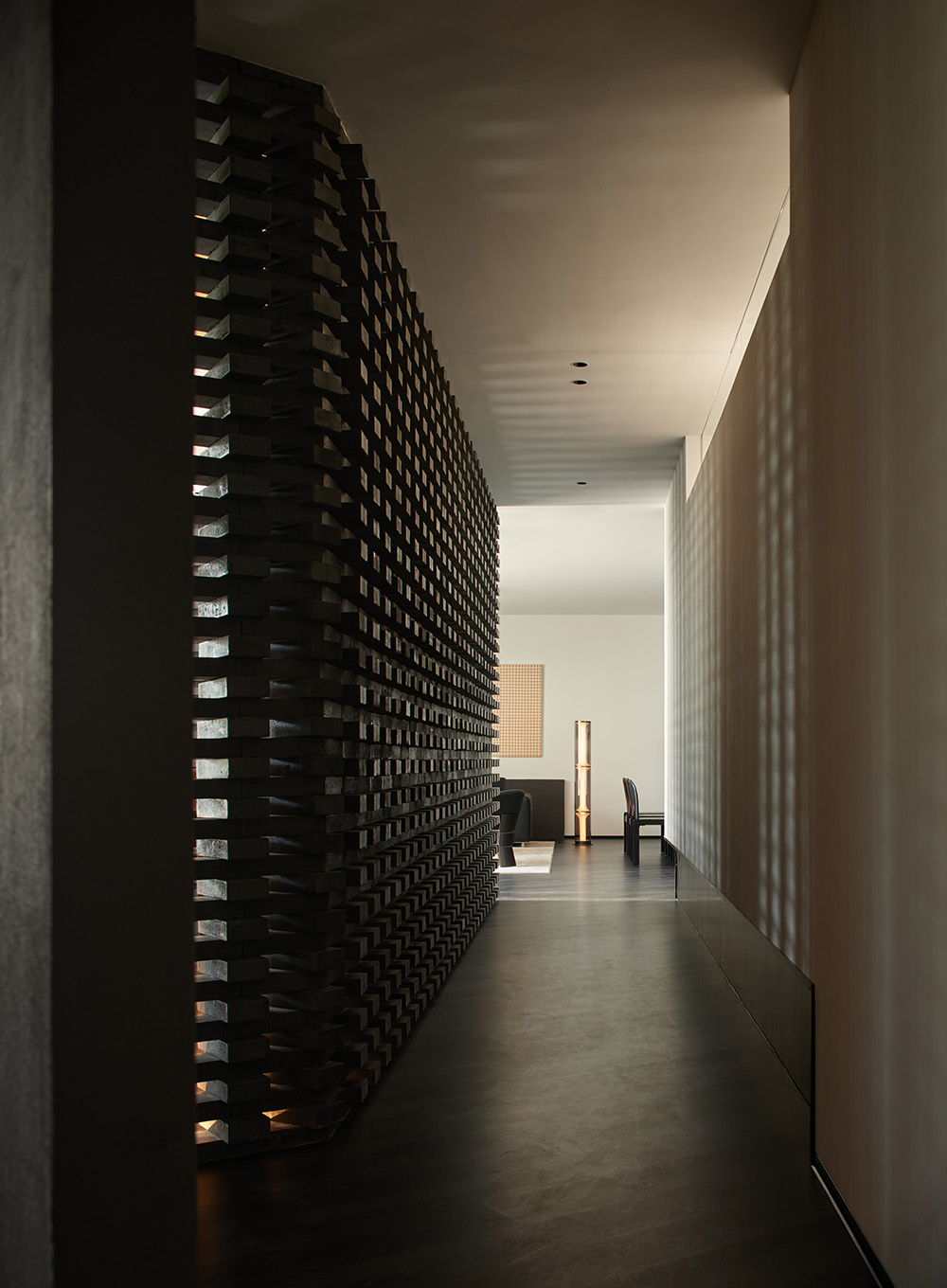
空间的本体是“实”,光影与倒影则是“虚”。设计摒弃繁复的装饰,将光作为第一设计要素。墙面采用手工打磨的青砖,其粗砺的肌理在侧光照射下产生微妙的阴影,使自然光与室内灯光在不同的时间段,以不同的角度渗入空间。
The essence of space is “solid”, while light and shadow, along with reflections, are “intangible”. The design eschews intricate decorations, prioritizing light as the primary design element. The walls feature hand-polished blue bricks, whose rough texture casts subtle shadows under side lighting, allowing natural light and indoor lighting to penetrate the space at different angles and during different time periods.




评论(0)