
创造一把打开空间盒子的密钥
怀旧、松弛、精致和味道交融
用高密度的空间记忆点点亮簋街、击中年轻人
成就非凡的品牌价值增量
Creating a key to unlock the spaceWhere nostalgia, relaxation, refinement, and flavor blendUsing high-density spatial memory points to energize Guijie Street and resonate with youthAchieving exceptional brand value growth
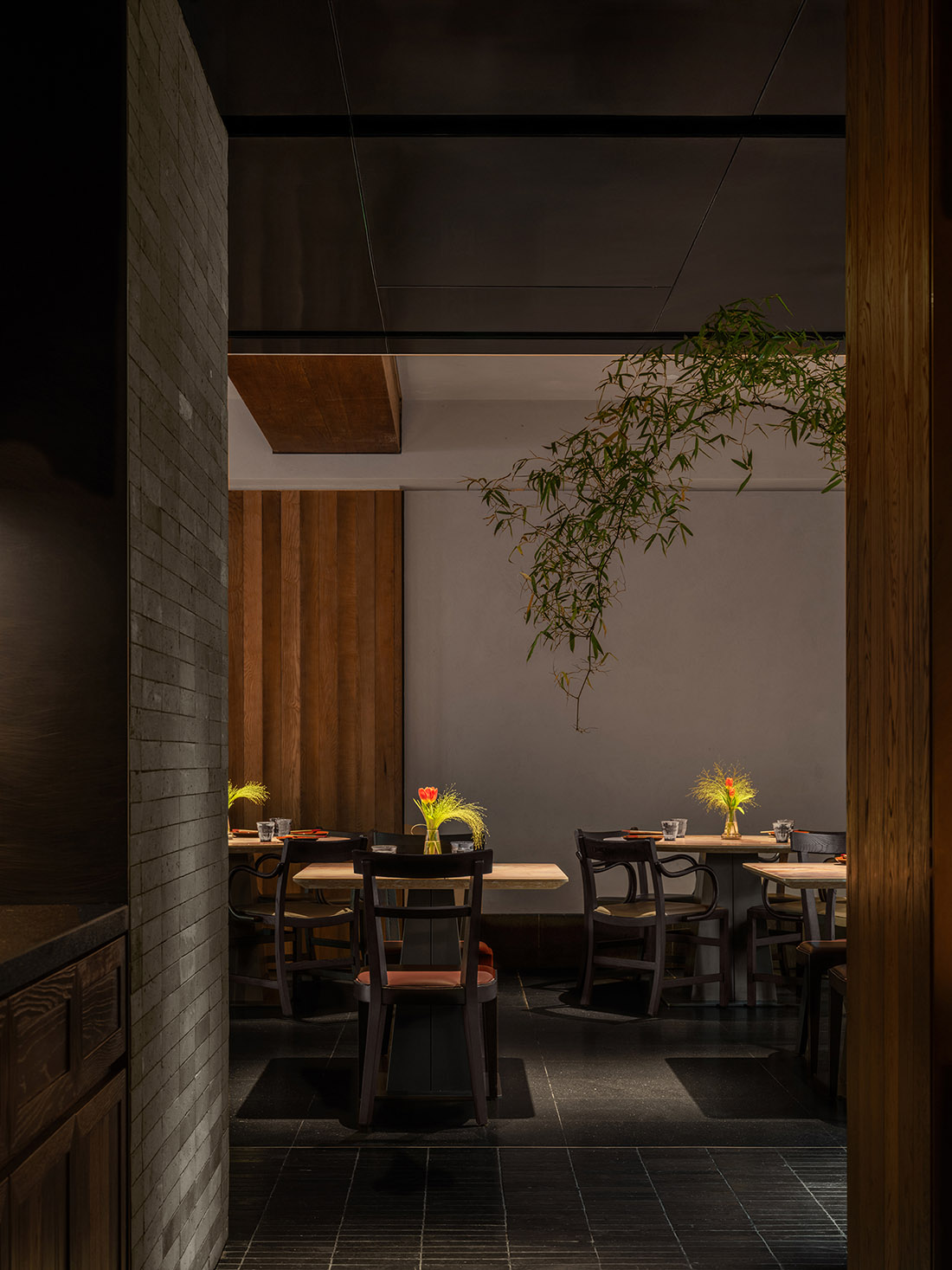
在簋街密集的肌理轨迹中,品牌无不想要清晰的可识别性,建筑甚至展现出某种“奇观”,使自己得以被记住。在这条视觉和商业信息的洪流里,有一个品牌“向后退”了一步,完成了从2016到2025这十年间的再一次跃升——它是胡大五店:更年轻、更北京、富于想象力。
On Guijie Street, a restaurant’s exterior is its strongest statement. Brands fight for visibility, often creating spectacle to be seen and remembered. But one brand stepped back — Hu Da’s 5th store (2016-2025) evolved to feel younger, more Beijing, and imaginative.
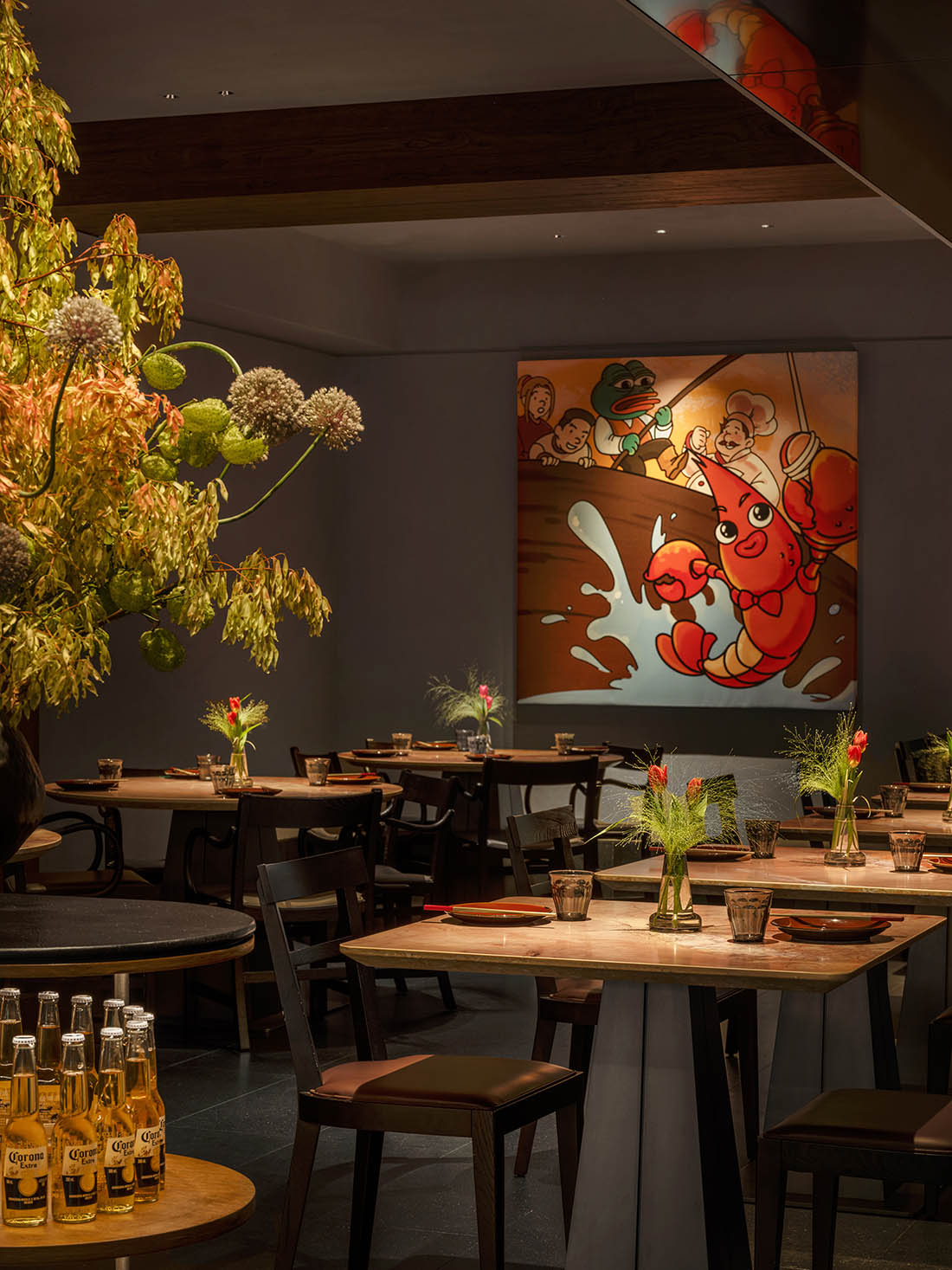
胡大五店以它的高度差异化从胡大系列中脱颖而出,它怀旧、休闲同时也充满热情,它不仅仅属于簋街、属于北京,更属于年轻人,属于炙热的生活。
Hu Da 5th Store out in the chain with its unique vibe — nostalgic, casual, yet energetic. It belongs to Guijie Street, Beijing, and above all, to young people and hot lives.
01. 建筑独白:融入 融入 绽放
Step Back, Blend In
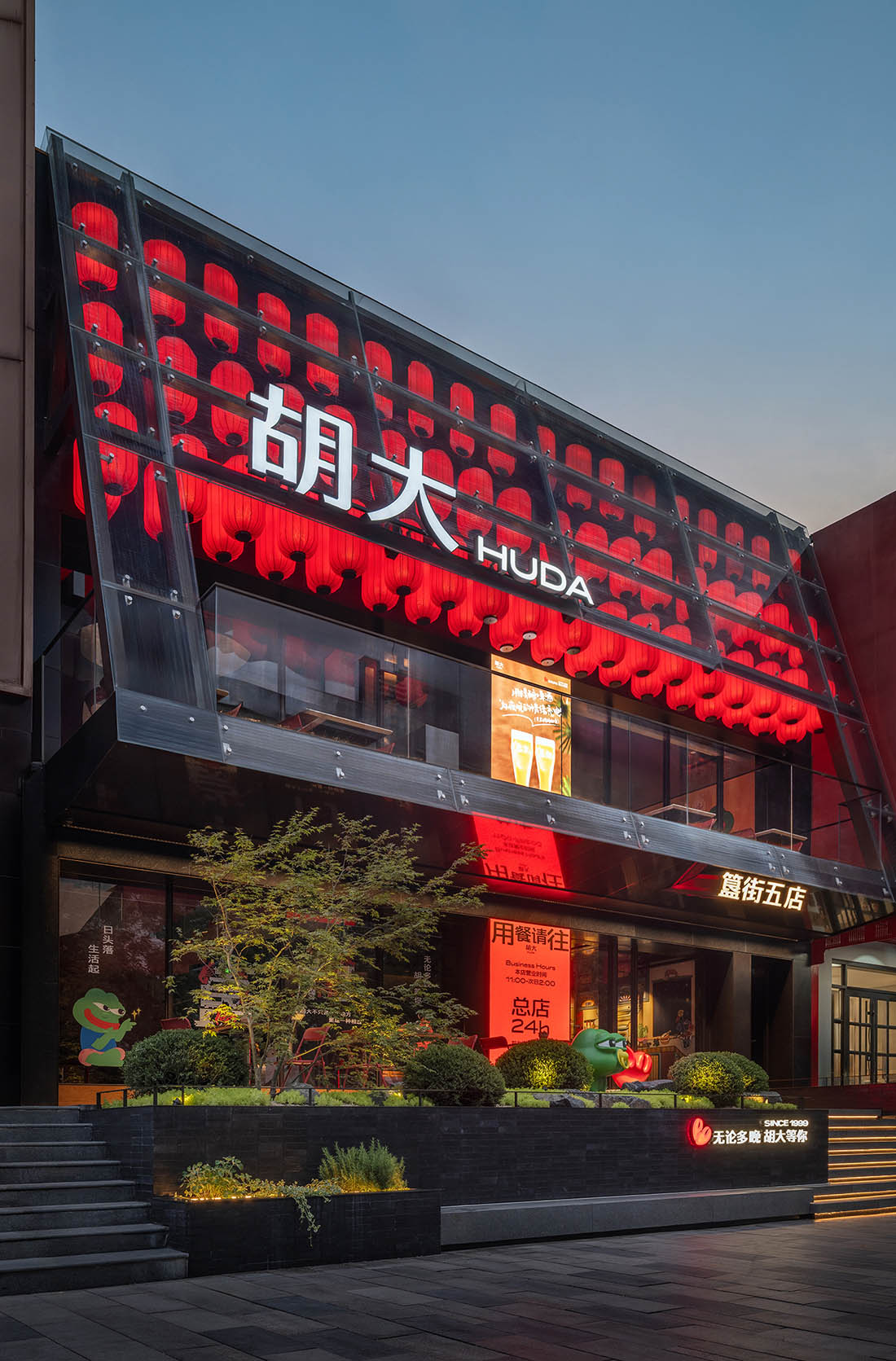
胡大五店的魅力开始于入口的显现和路径设计。路易斯·康 (Louis Kahn) 曾经精辟地定义过建筑入口的意义:入口是一个建筑表达它是什么和它如何开始的地方。它不仅仅是门,它是邀请。
Hu Da 5’s charm starts at its entrance. Louis Kahn defined an entrance as “where a building expresses what it is and how it begins” — not just a door, but an invitation.
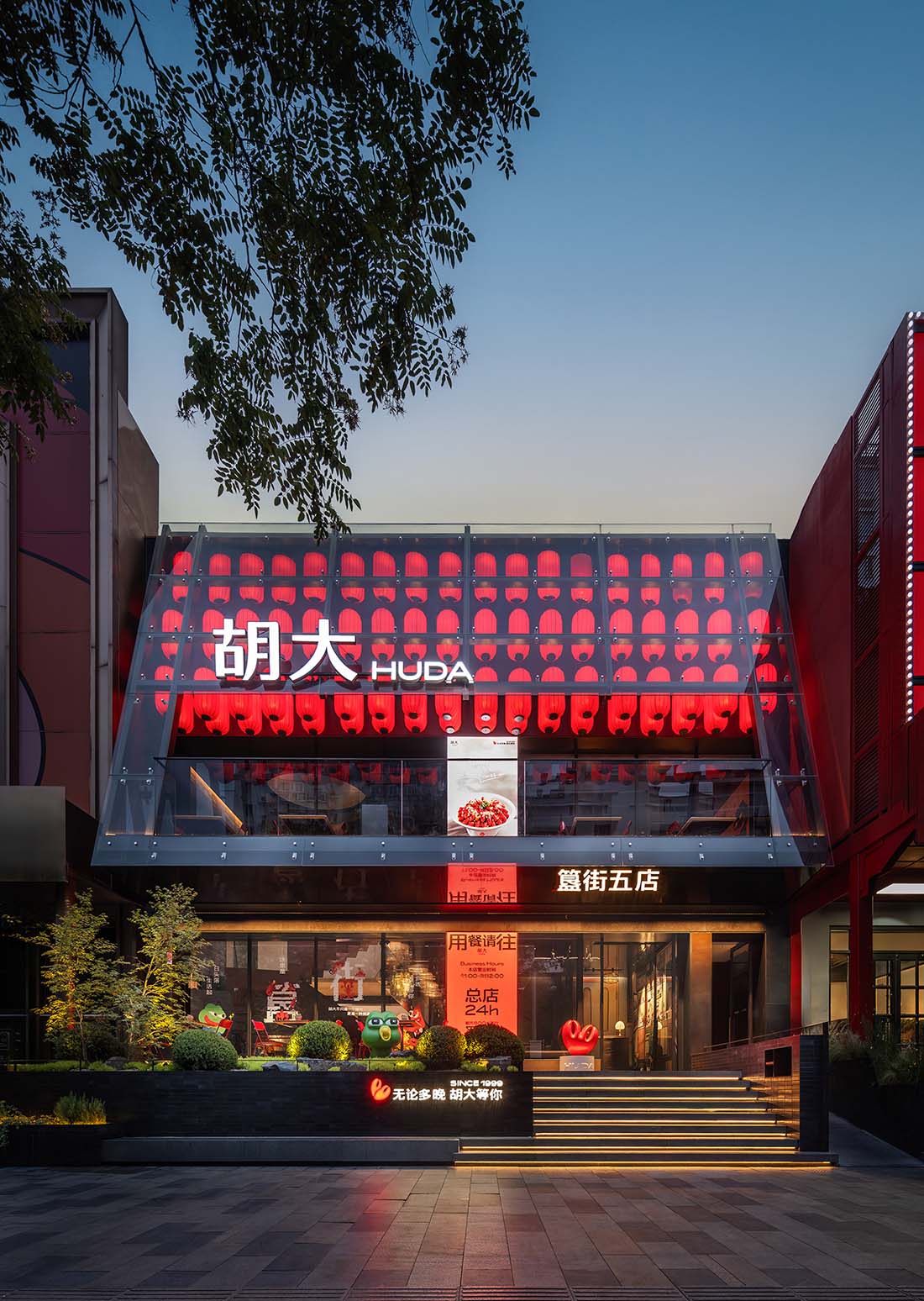
不同于尽可能探向街道的店铺,吴为在设计之初便决定将多余的用地退还给街区,使建筑退行至初始态,这不仅使胡大的建筑邀请呈现出成熟与谦逊,更为下一步的设计埋好了伏笔。
Unlike street-facing shops, Wu Wei of IN.X stepped the building back, returning space to Guijie Street. This move shows maturity and humility while setting the stage for design.
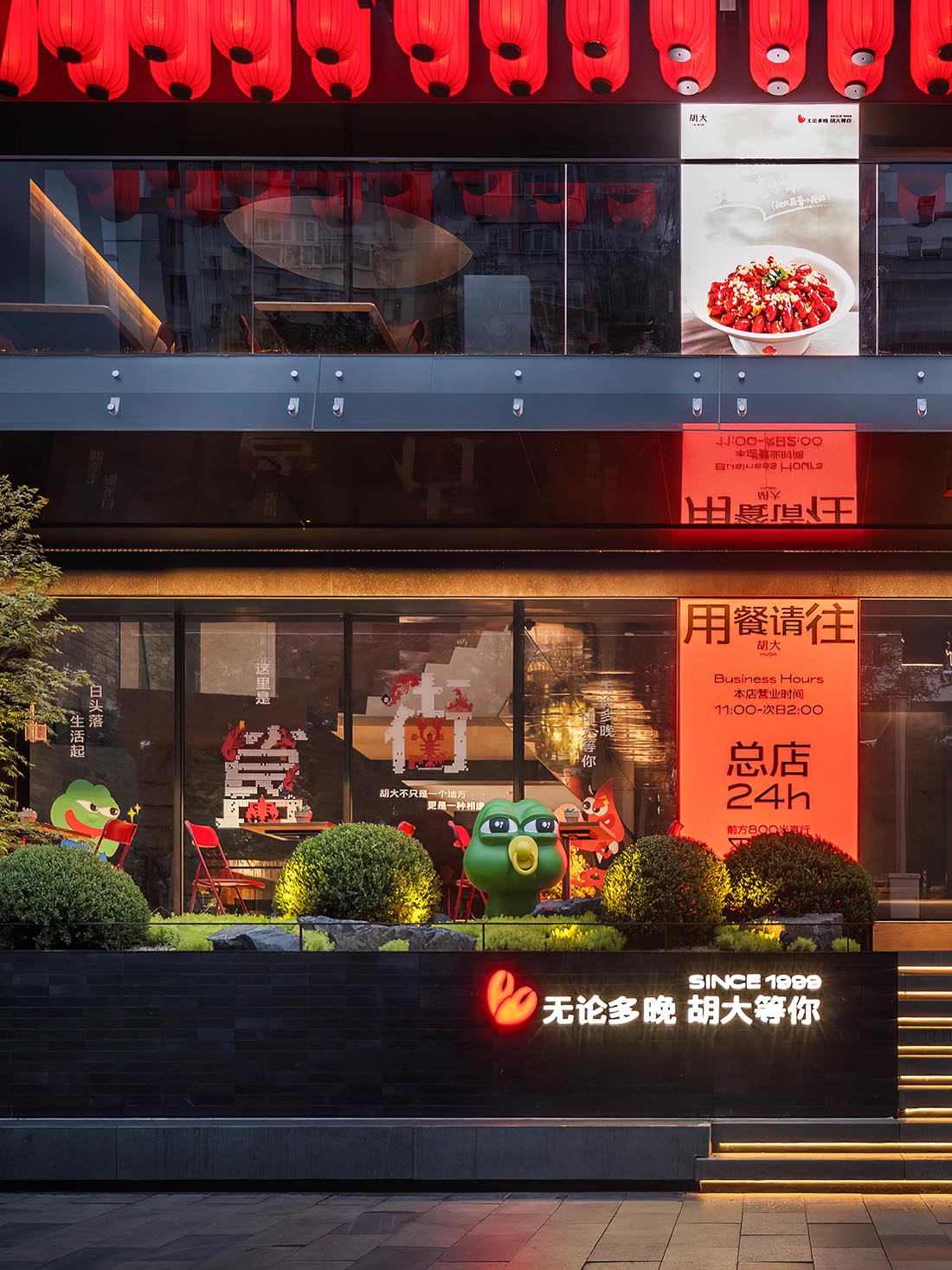
退还面积后,设计师将其整体形态还原为北京传统的带有台阶的坡屋顶建筑,以金属和玻璃材质代替砖瓦厚重实体,转化为餐厅与街道之间透明轻盈的流动界面。屋顶内部则阵列悬挂象征如意美好的红色灯笼,以震撼的集群形态触发人们的集体记忆与情绪,京城暖融融的市井烟火在玻璃介质的叠映中缓缓流动。
The structure echoes traditional Beijing pitched-roof buildings with steps. Metal and glass replace heavy bricks, creating a light, transparent interface with the street. Inside, red lanterns — symbols of luck — hang in arrays, triggering collective memory. Beijing’s warm street glow flows through layered glass.
相关文章推荐





评论(0)