
衣领太紧,就解开纽扣
If the collar is too tight,unbutton it.
秉持以“先舒适,再好看”的品牌理念,MOMO ERA在浦东前滩委托多么工作室打造第二家实体门店。设计之初,在我们面前有两个大方向可以选择。第一种是趋同大多数的商业空间策略,在塑造空间品质时,迎合前滩的商业感——作为一个聚焦“新奢”生活方式的商业新核心,其客流追求效率之上的精致、精准与直白的感官体验。当所有的街区连接起来,它们构成一幅整体的都市玻璃盒景观,街道立面趋于均质、通透,却也往往显得冷峻与疏离。第二种是在尊重商业规律的前提下,期待有一种新的品牌叙事空间方式,能在这个同质化的商业大环境下跳脱出来。对此,我们选择了后者。
Adhering to the brand philosophy of “Comfort First, Aesthetics Follow,” MOMO ERA commissioned Atelier d’More to design its second physical store in Shanghai’s Qiantan, Pudong.From the outset, we faced two distinct design directions. The first was to align with the prevailing commercial spatial strategy—crafting a space that caters to Qiantan’s upscale business ambiance. As a rising hub for “neo-luxury” lifestyles, this district attracts visitors who prioritize efficiency-driven sophistication, precision, and unabashed sensory appeal. When all its blocks interconnect, they form a seamless urban landscape of glass-box architecture, where uniform, transparent street facades often exude a sense of sterility and detachment.The second direction sought to redefine brand storytelling within commercial spaces, striving to break free from the homogenized retail environment while still respecting market logic. We chose the latter.
迎风
Facing the Wind
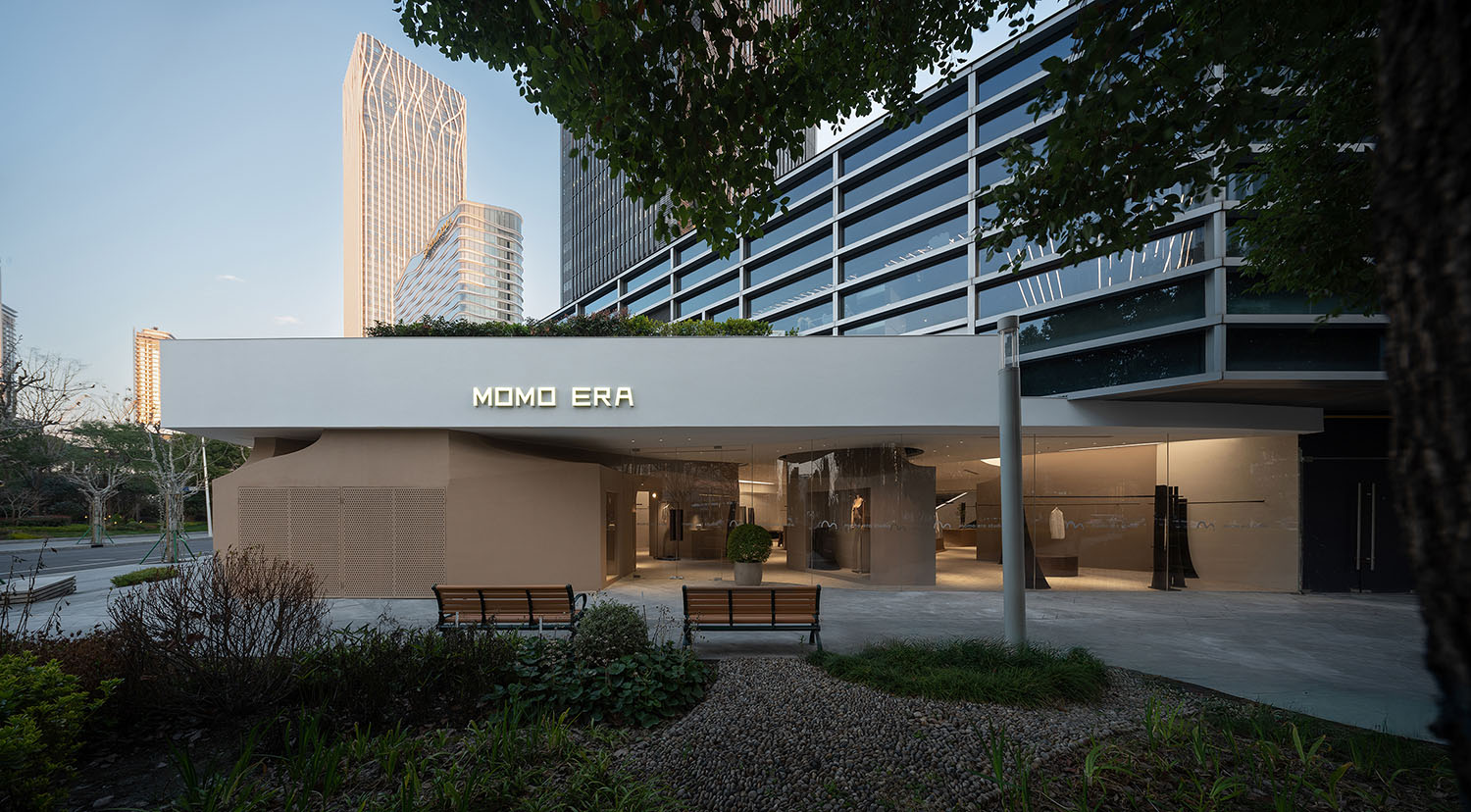
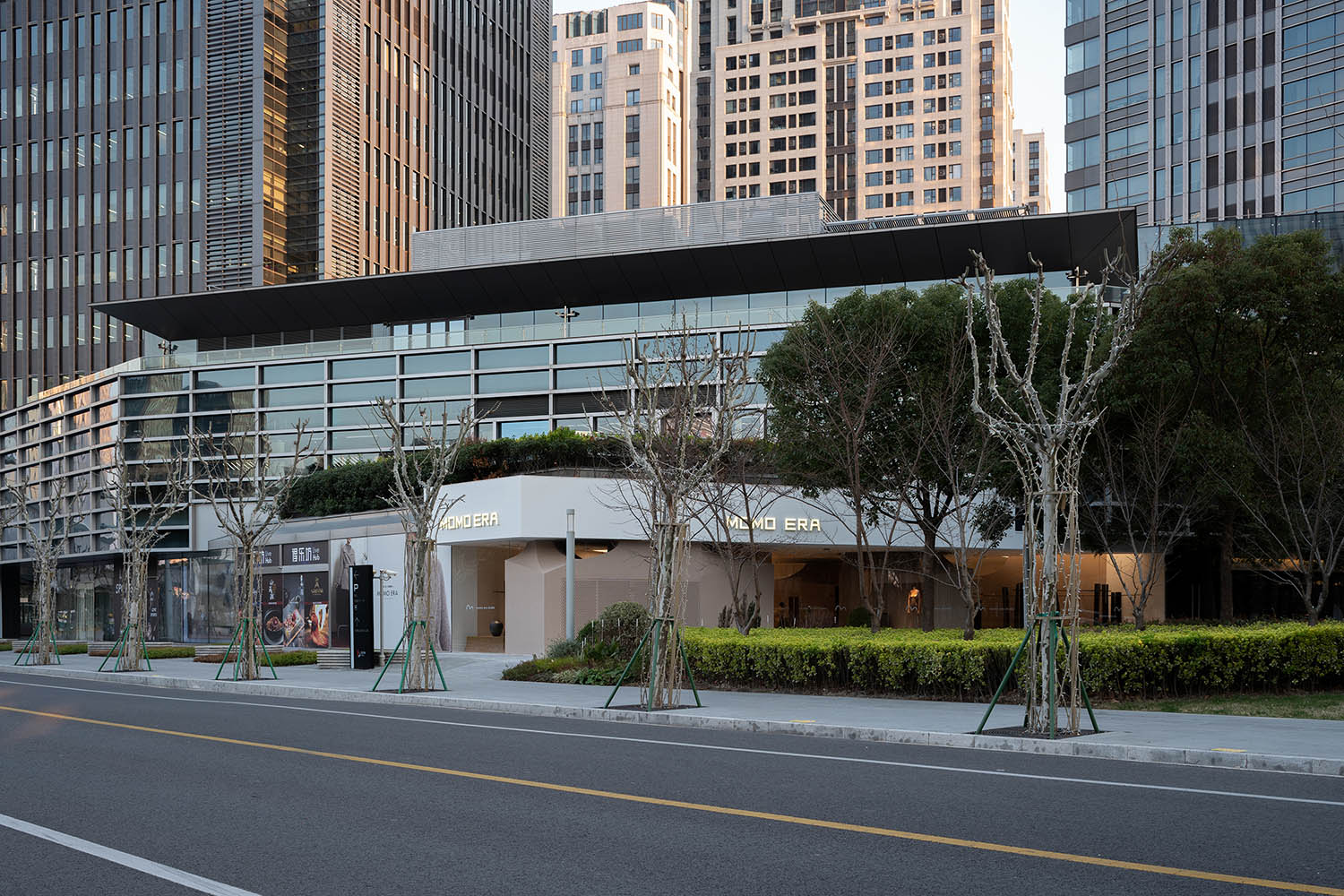
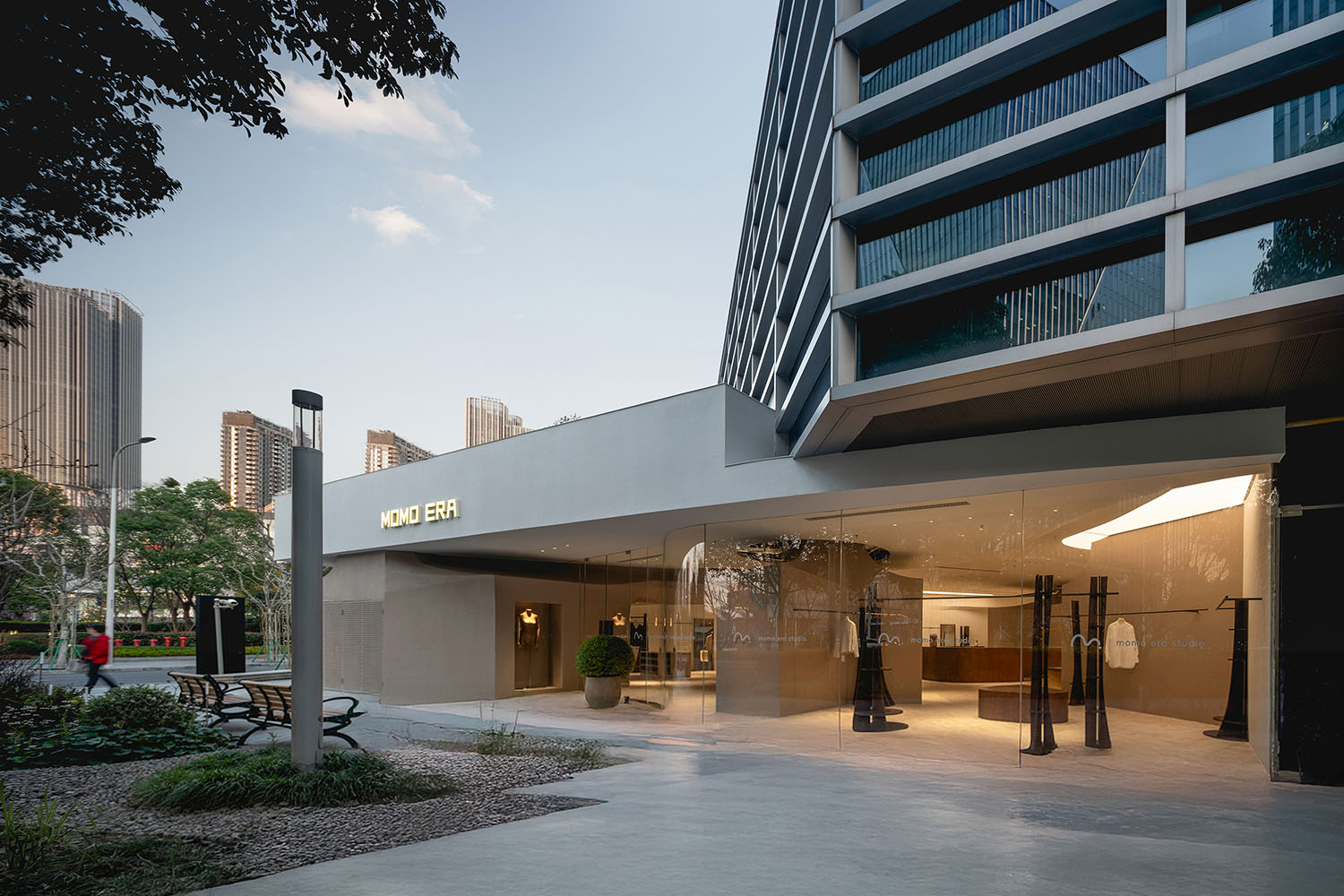
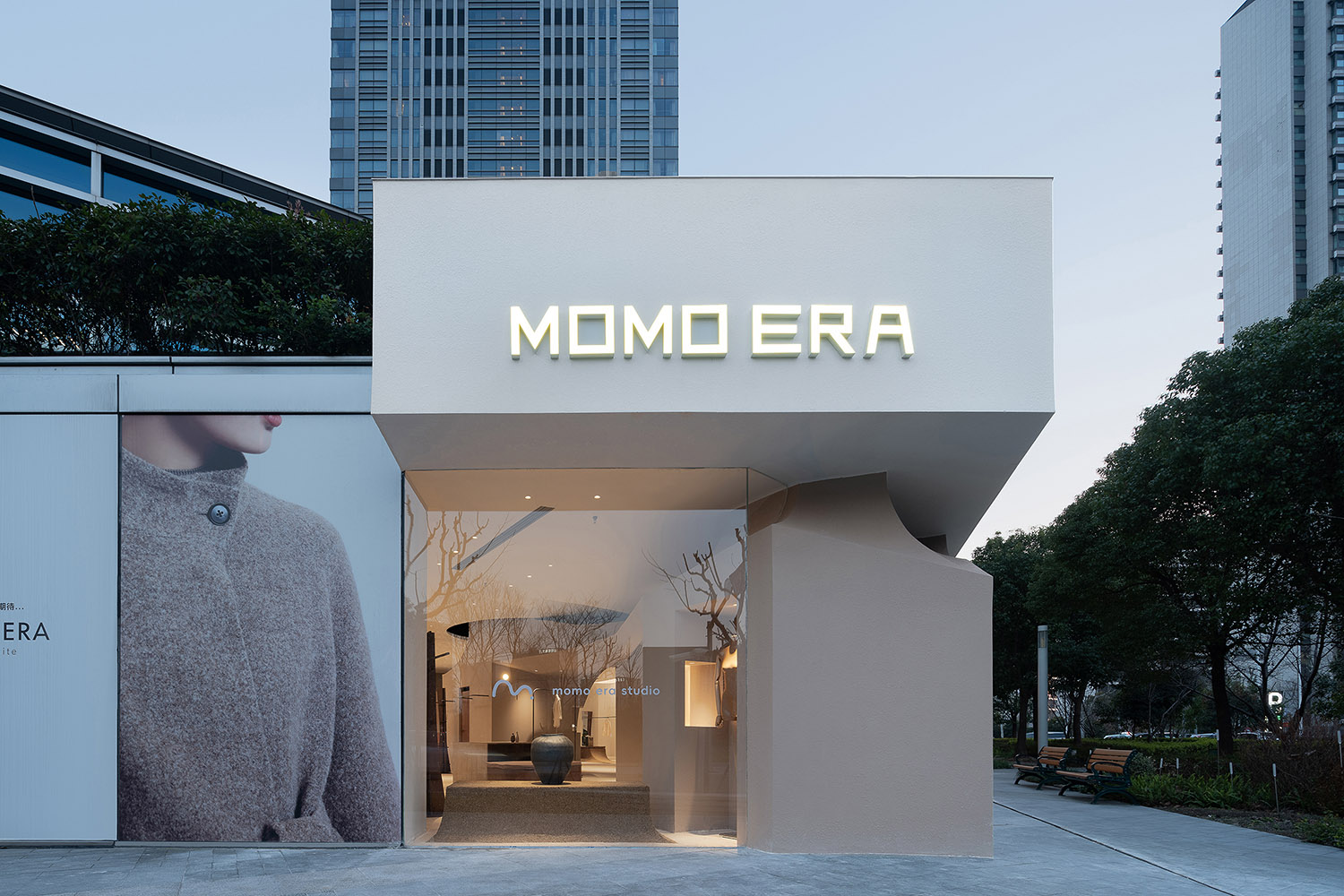
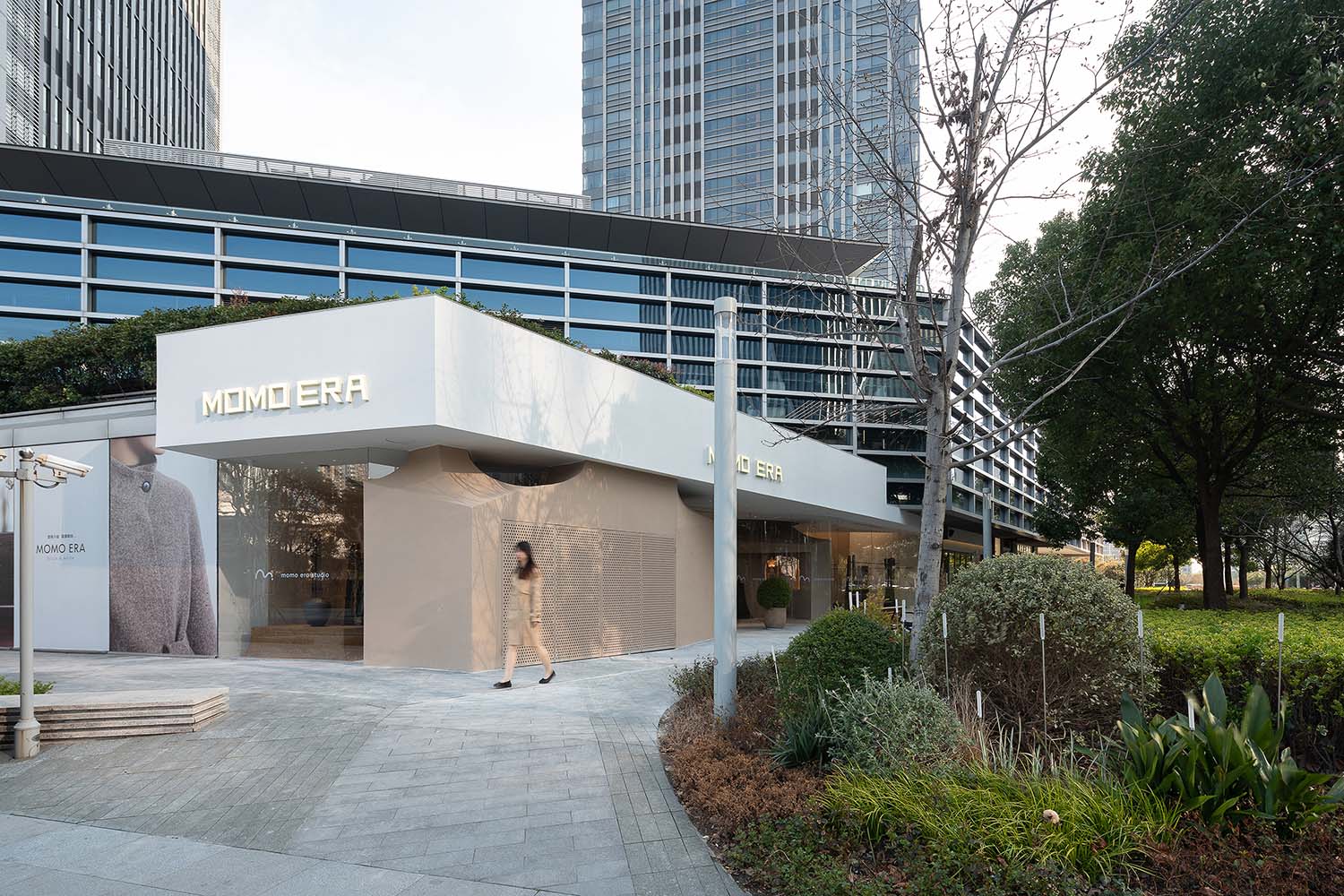
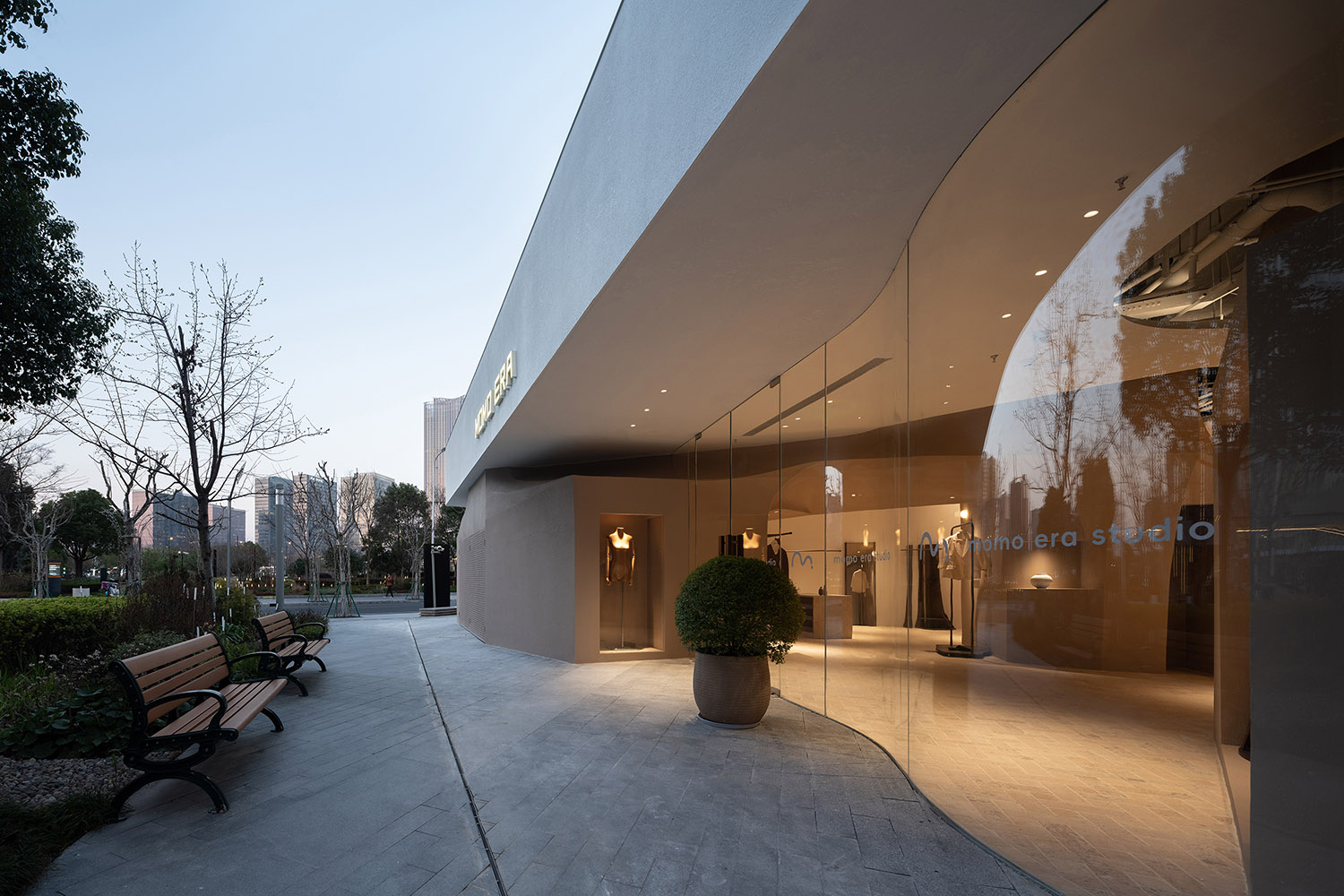
项目选址位于一片商业裙房的沿街一楼转角,空间入口正对街区的广场花园,外立面是连续的玻璃幕墙,有燃气管道正好在立面的转角端部,削弱了人流往这个方向的导向性,再加之沿街的建筑入口上没有雨棚构件,原本能直接吸引街区人流的入口,实际却成了摆设。这是对外空间上的明显缺陷。为了能最大化地打开沿街入口形象,我们解开了原本固有的玻璃盒外衣,取而代之的是在附加的外挑连续屋檐下,将室外广场砖继续延申进新的室内外边界——弧形玻璃面在入口处向内凹陷后,一头接上原空间边界,另一头接上从室内探出并包裹住室外燃气管道的体块,犹如被风吹散出的入口内退灰空间,打破了原先紧绷的沿街玻璃幕墙印象,形成一种非连续的、有松弛的立面形态。
The site is located at a street-level corner of a commercial podium, with the entrance facing the district’s plaza garden. The façade originally featured continuous glass curtain walls, but a gas pipeline running along the corner edge disrupted pedestrian flow conditionality. Additionally, the lack of a canopy over the entrance—despite its prime location—rendered this potential gateway ineffective, creating an obvious spatial flaw in the external design.To maximize the street-facing entrance’s presence, we shed the rigid “glass box” envelope. Instead, under an extended cantilevered eave, we blurred the boundary between indoors and outdoors by continuing the plaza’s paving tiles into the transitional space. Here, a curved glass surface recesses inward at the entrance, connecting on one end to the original spatial boundary and on the other to a new volumetric element that wraps around the exterior gas pipeline. Like a breeze carving out space, this intervention disrupts the taut uniformity of the street-facing glass façade, creating a discontinuous, relaxed elevation with deliberate asymmetry.
相关文章推荐





评论(0)